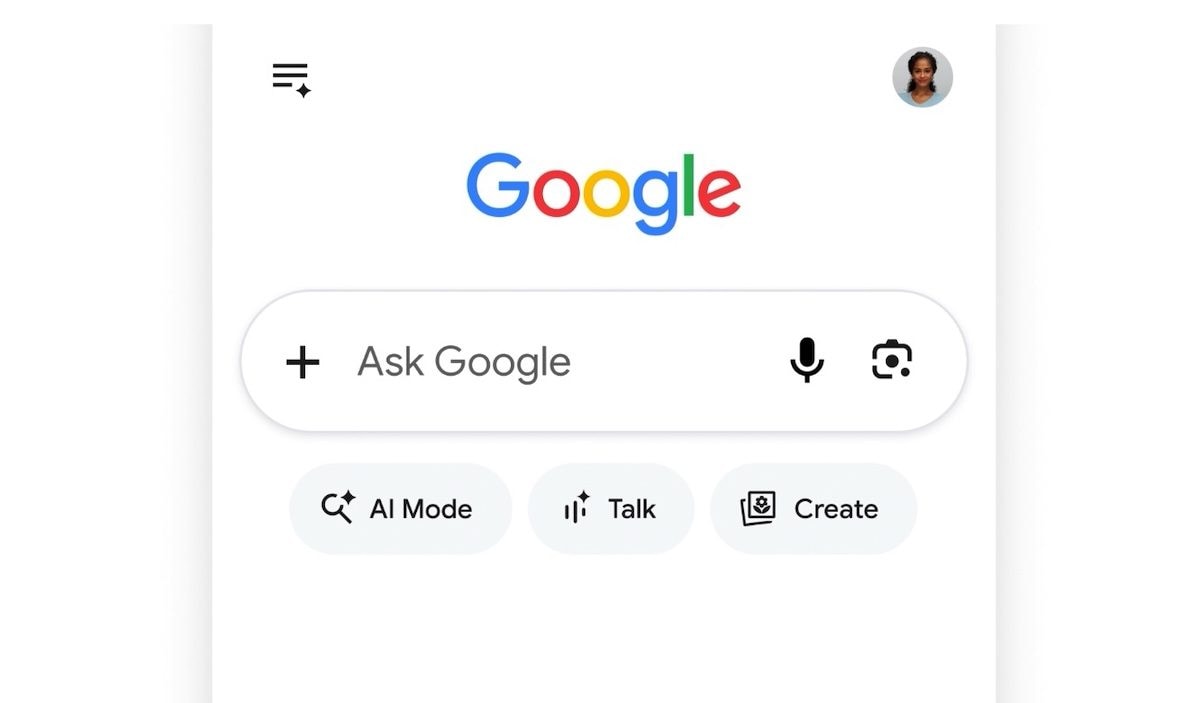
The historic blank page of Google is experiencing the most radical transformation of its 25-year history. The old paradigm of keywords typed one by one seems to belong to a completely different era. During the last one Google I/Oheld a few days ago, the Mountain View company presented a search bar – what allows you to browse the web and search for images – completely redesigned and powered by generative artificial intelligence. A new expandable and dynamic interface that no longer limits itself to passively collecting text, but exploits the linguistic model Gemini 3.5 Flash to read the deep context of our requests, allowing us to speak to Google as we would to a real person, therefore using colloquial phrases, images, videos and files.
Alongside all this are the “research agents”real autonomous digital assistants that operate in the background, and the ability to generate mini-applications and personalized graphics in real time. The result radically changes our relationship with the Web: the answers arrive directly into the search engine, without the need to open dozens of tabs.
A growth that forced change
Looking at the numbers, change seems almost inevitable. Over the past 12 months, AI Mode has surpassed the billion active monthly userswith query volume doubling every quarter. Such explosive growth has pushed Google engineers to rethink the input space from its deepest foundations.
With its update, when we start typing, the bar expands fluidly to accommodate detailed and complex questions. We no longer have to break up concepts to satisfy traditional algorithms: we can formulate complete, discursive, natural questions. The system no longer suggests simple automatic completions, but anticipates the logical development of the questioncombining text, images and videos from open tabs in the Chrome browser.
At the base of everything is Gemini 3.5 Flash, a model optimized for processing requests with high speed, low latency and a low energy footprint. This makes real continuous conversations possible: you receive an initial summary, you delve deeper with new questions, and the context remains intact, on desktop as well as on smartphones.
Agents always active, tailor-made responses
The most concrete turning point, however, concerns the agents: these they scan the network independently – news portals, social media, real-time market data – to monitor the parameters we have established in advance. We can instruct an agent to monitor the local real estate market according to precise criteria, being notified only when an opportunity emerges that is in line with our needs. Or we can entrust him with the search for availability and prices for services or reservations, without lifting a finger.
The answers turn into Graphical interfaces generated instantly. In this regard Google explained:
Whether you want to fully understand astrophysics or visualize how your watch works, Search can design custom layouts, assembling components (such as interactive visuals, tables, graphs, or simulations) in real time.
The features in question, which Google defines as «generative user interface» they will be available for free starting this summer. As for the agents, however, these will be available this summer in the United States for the Subscribe to Google AI Pro and Ultra plans.
A tailor-made Web, anywhere in the world
To complete the picture, thepersonal intelligence – now available for free in almost 200 countries – which allows you to securely connect your data from storage and messaging services. The algorithm thus acquires the context necessary to personalize the results, fully respecting the privacy preferences of each user.
This transition is not just a technological update: it is a real paradigm shift. The Web is transformed into an ecosystem in which information is processed and served on a tailor-made basis, redefining the digital flows to which we were accustomed until recently and profoundly changing the way in which, every day, we search online for the answers to our questions.
