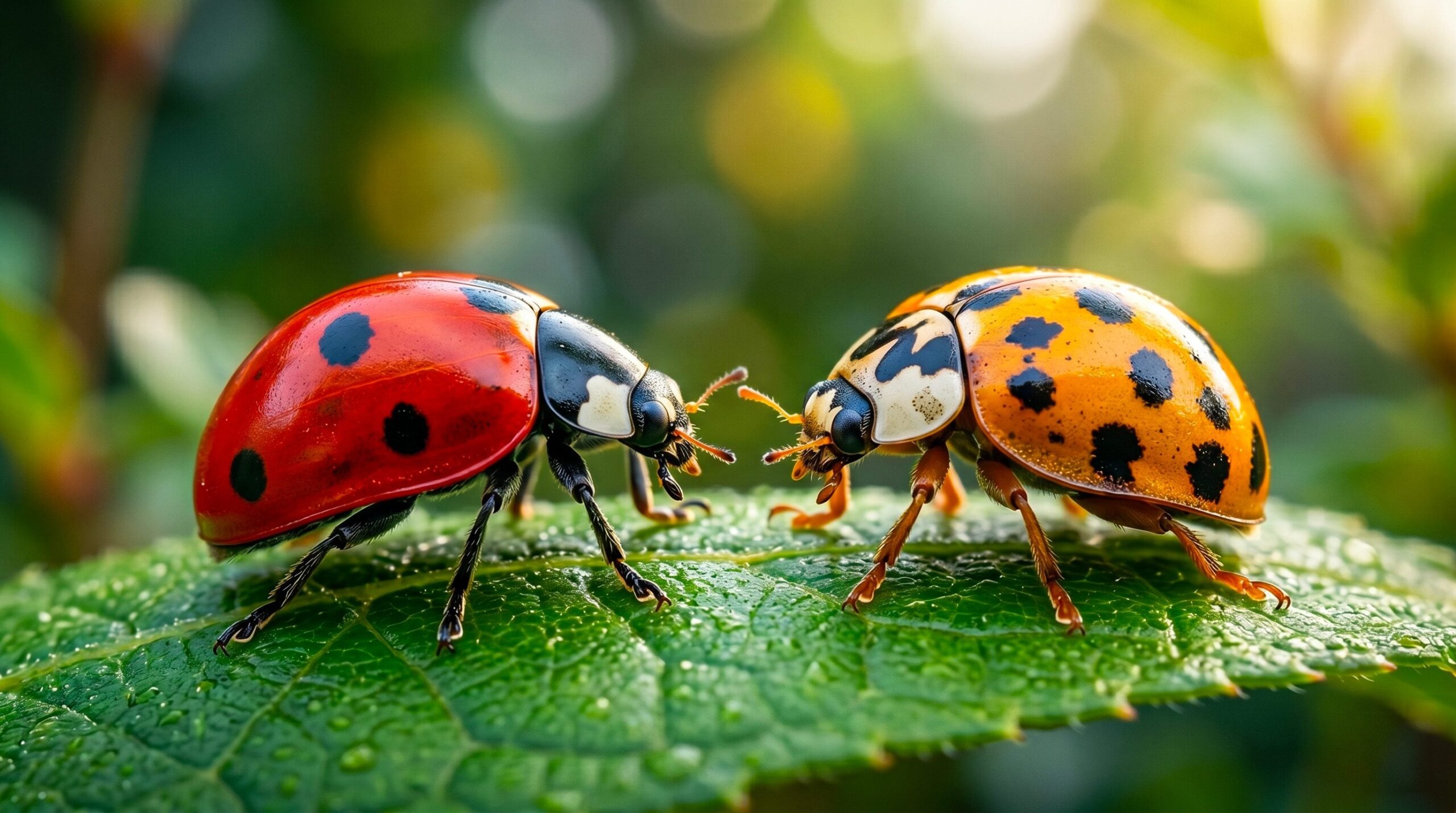
You find a ladybug on the windowsill and immediately think “lucky”. But if that ladybug is yellow and black, or orange with lots of dots, you’re probably not looking at the classic Coccinella septempunctata (the common ladybug with 7 points), but another species. And in one case out of two it is the Asian harlequin ladybug (Harmonia axyridis): an invasive species – whose color varies between yellow, orange, black – which is threatening native ladybugs in Europe, can release a smelly and toxic liquid in a process called reflex bleeding (reflex bleeding). The three main differences between red and yellow ladybugs concern appearance, nutrition and ecological role.
Features and differences in appearance
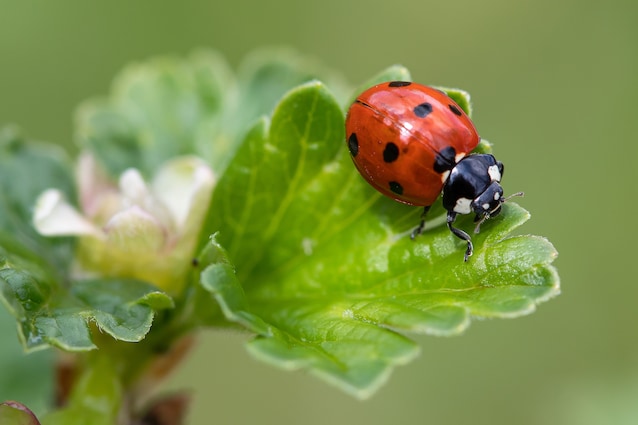
To the naked eye, the most immediate difference is size. There red ladybug (Coccinella septempunctata) measure between 6 and 7 millimetershas a very rounded dome shape and a fixed number of black dots: seven, hence the scientific name (septempunctata = “seven points”). Contrary to widespread popular belief, the dots they do not indicate the age of the ladybug but the number of spots is determined genetically and represents a characteristic of the species.
The yellow ladybugshowever, are a more diverse group. There Psyllobora vigintiduopunctata it is small (3-5 mm), lemon yellow, with exactly 22 black dots (viginti-duo = twenty-two).
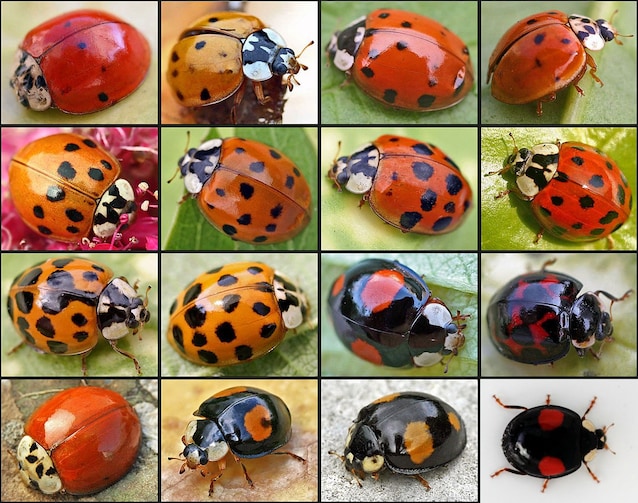
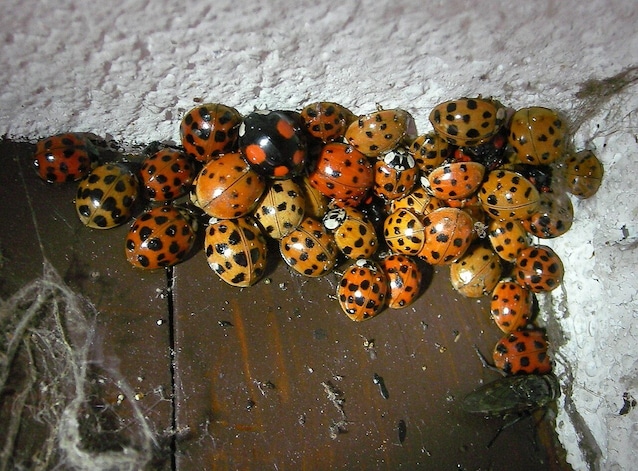
The latter is not to be confused with the harlequin ladybug (Harmonia axyridis) which, however, has an extremely variable color and can be yellow, orange, red or almost blackwith a number of points ranging from 0 to 19.
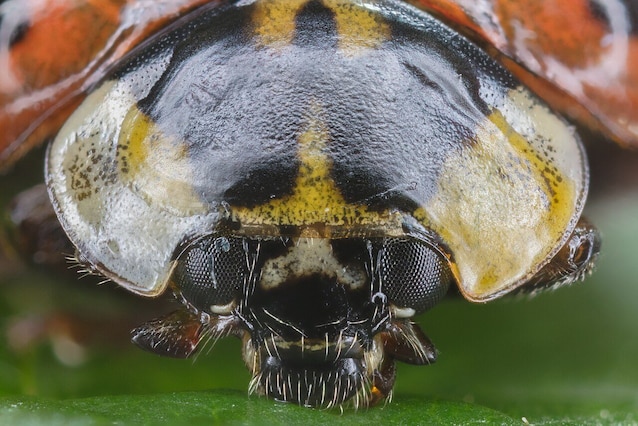
It is larger (5-8 mm) and has a feature Black “M” on the pronotum (the section behind the head), which is the most reliable distinguishing mark for recognizing it.
What they eat: one is predatory, one mycophagous and the other omnivorous
In diet we find a radical difference that tells of two opposing evolutionary strategies. There red ladybug it’s one carnivorous predator. From the larva stage it devours enormous quantities of aphids (small phytophagous insects known as “plant lice”), scale insects and mites.
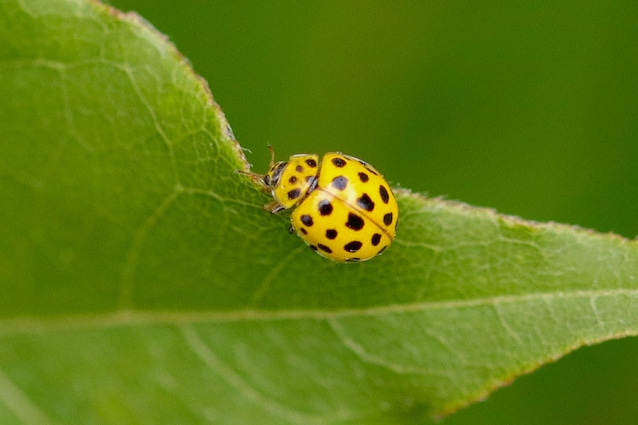
There 22 point yellow ladybug (Psyllobora vigintiduopunctata), on the other hand, does not eat insects but is mycophagousthat is, it feeds on mushrooms. Specifically, it cleans the leaves of spores badly white (powdery mildew), a fungal disease that attacks vines, roses and pumpkins.
There harlequin ladybughowever, is omnivorous and opportunist. It eats aphids like its European cousin, but in the absence of prey it attacks eggs and larvae of other ladybugs, including native ones. It is precisely this characteristic that makes it a serious problem for ecosystems.
Where does the Asian “harlequin” ladybug come from?
Harmonia axyridis is originally fromEast Asia (China, Japan, Korea, Siberia). Although the very first attempts at introduction in the West date back to the early 1900s, it has been used extensively in North America and Europe since the 1980s and 1990s as a biological control agent against aphids in greenhouses.
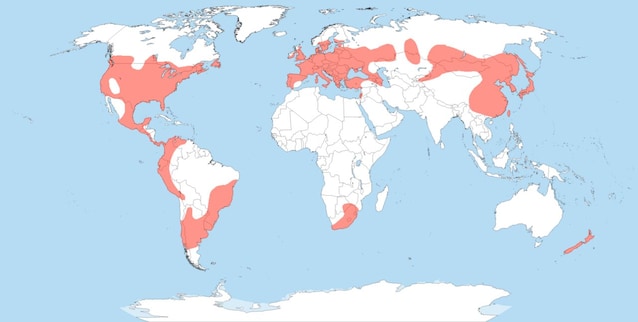
The problem? She ran away from control. Its voracity, its reproductive capacity and its resistance have transformed it into one of the most aggressive invasive species in Europe. According to data published on Biological Invasions in 2016, in some regions of Belgium the distribution area (the area where they live, so to speak) of native ladybugs has reduced up to 57% since the arrival of the harlequin. Likewise, according to a study published in 2020 on Insects, in Switzerland they have spread to the point of representing up to 80% of ladybug species collected in a certain habitat, quickly becoming the predominant species.
Then there is a very real nuisance for those who live in the countryside. In autumn, harlequin ladybugs form large aggregations looking for a warm shelter for the winter, and often end up inside houses, slipping between windows and cracks in the walls.
Is the yellow and black ladybug poisonous?
Poisonous for those who eat it, yes. Dangerous for humans, not (or almost). Brightly colored ladybugs exploit an evolutionary mechanism called aposematism. The bright color is a danger signal for predators. If a bird or lizard attacks them, ladybugs activate a chemical defense called “reflex bleeding“ (reflex bleeding or auto-hemorrhage) and from the joints of the legs they release drops of hemolymph (the equivalent of blood in insects) yellow-orange in colour, unpleasant smelling and rich in toxic alkaloids. Specifically, as reported by Röhrich’s study published in Biology Letters of the Royal Society, in the harlequin ladybug this defensive molecule is called harmonine (harmonine), a broad-spectrum antimicrobial alkaloid so powerful that it has even shown activity against the tuberculosis bacterium and against Plasmodium falciparumthe malaria parasite.
This behavior contributes to the invasive success of the species as predators quickly learn to avoid it.
For humans, hemolymph it is not lethal or dangerousbut it can stain fabrics persistently and, in closed environments where large colonies of harlequins winter, it can trigger rare respiratory allergic reactions in predisposed individuals. As documented by a review published on Allergy and Asthma Proceedingsharlequin ladybug allergy was first reported in 1998 and can manifest with rhinoconjunctivitis, asthma, urticaria, and angioedema, with the specific allergens identified in the insect’s hemolymph. Furthermore, unlike the peaceful local species, the Asian ladybug can occasionally bite if disturbed, a mild and harmless, but annoying bite.
Sources
Roy et al. (2016), Biological Invasions IUCN Global Invasive Species Database Insubria Olona Symbiont-mediated chemical defense in H. axyridis (PMC) National Geographic University of California Kenis, M., Nacambo, S., Van Vlaenderen, J., Zindel, R., & Eschen, R. (2020). Long Term Monitoring in Switzerland Reveals That Adalia bipunctata Strongly Declines in Response to Harmonia axyridis Invasion. Insects, Röhrich, C.R., Ngwa, C.J., et al. (2012). Harmonine, a defense compound from the harlequin ladybird, inhibits mycobacterial growth and demonstrates multi-stage antimalarial activity. Biology letters Goetz DW (2008). Harmonia axyridis ladybug invasion and allergy. Allergy and asthma proceedings,
