There nuclear fusion it is often described as the “Holy Grail” of energy: clean, safe, potentially unlimited and without long-lived waste. Nonetheless, it is particularly difficult to achieve: it would be necessary to replicate on Earth extreme conditions of temperature and pressure, similar to those of the solar nucleus, to overcome the repulsion between the nuclei and force them to fuse.
In recent years, however, the world competition to be the first to build a commercial reactor. United States And Asia — especially China, South Korea and Japan — are investing billions to turn a scientific dream into a industrial technology. But who is ahead and where is Europe positioned?
The situation in the USA
The United States lead the race from a scientific and industrial point of view with:
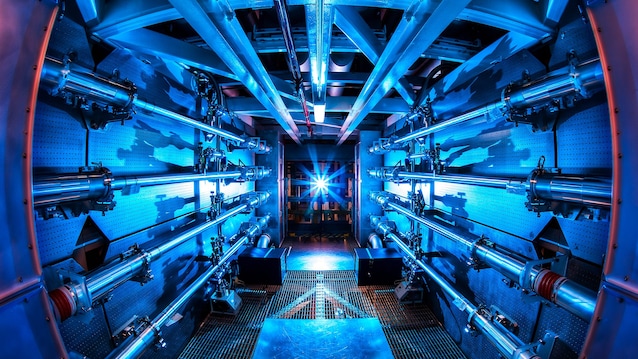
- National Ignition Facility (NIF): in 2022 the reaction produced more energy than was released by heating the plasma with lasers. A historic achievement, although still far from a commercial plant;
- Various start-ups eiprivate investments for more than $6 billion raised, according to the Fusion Industry Association;
- Different approaches such as Tokamak, inertial fusion, advanced magnetic fusion, pellet target fusion.
The US Department of Energy within the “Bold Decadal Vision for Commercial Fusion Energy” states that the United States aims to accelerate the development of new technological approaches to the merger and to create a prototype plant by the early 1930s.
The projects started in Ais
To date the China it is the country that invests the most in public mergers. For example, the project EAST (Experimental Advanced Superconducting Tokamak) has set world records for plasma confinement, such as 1,056 seconds stable operation in 2023. China is also among the most active partners of ITERthe large international reactor under construction in France.
There South Korea with the project KSTAR it reached temperatures of 100 million degrees for 48 seconds, a crucial achievement for plasma stability.
The Japanwith JT-60SAlaunched one of the most advanced tokamaks in the world in 2023.
Asia relies on large public infrastructure, continuity of financing, and incremental, steady progress.
The point on Europe
Europe also remains one of the most advanced fusion scientific centers in the world, thanks to a highly structured research network and stable public investments. The heart of the system is EUROfusiona scientific consortium coordinating over 26 countries.
For example, in the United Kingdom from the 1980s until 2023 the experimental tokamak was operational JET (Joint European Torus), with the aim of verifying physical and engineering solutions necessary for future projects.
Europe is the main financier of the project ITERwhich will serve to demonstrate the possibility of producing more energy than the fusion process consumes. We then want to get to the first demonstration reactor, DEMO (DEMOnstration Power Plant), to produce electricity.
Nuclear fusion, who has the advantage today
In USA there is a fast, competitive approach, with many startups and alternative technologies, often installed in Silicon Valley. In Asia there is a different approach, more state and centralized, based on tokamaks with a long tradition and record of stability. Both the USA and Asia are aiming for a commercial prototype by 2035–2040. Both see the merger as strategic response to energy security and decarbonisation. USA, China, South Korea and Japan are participating in the project ITERtogether with India, Russia and the European Union.
Today there is no true “absolute leader”. The US dominates in private innovation and technological diversity; Asia for continuity, experimental records and ability to build large projects. The merger it will not be a race with only one winner: when it reaches maturity, it will be the result of a global ecosystem. The more countries work on it, the more investors finance research and technological development, the faster it can become reality and contribute to the energy mix of the future.
