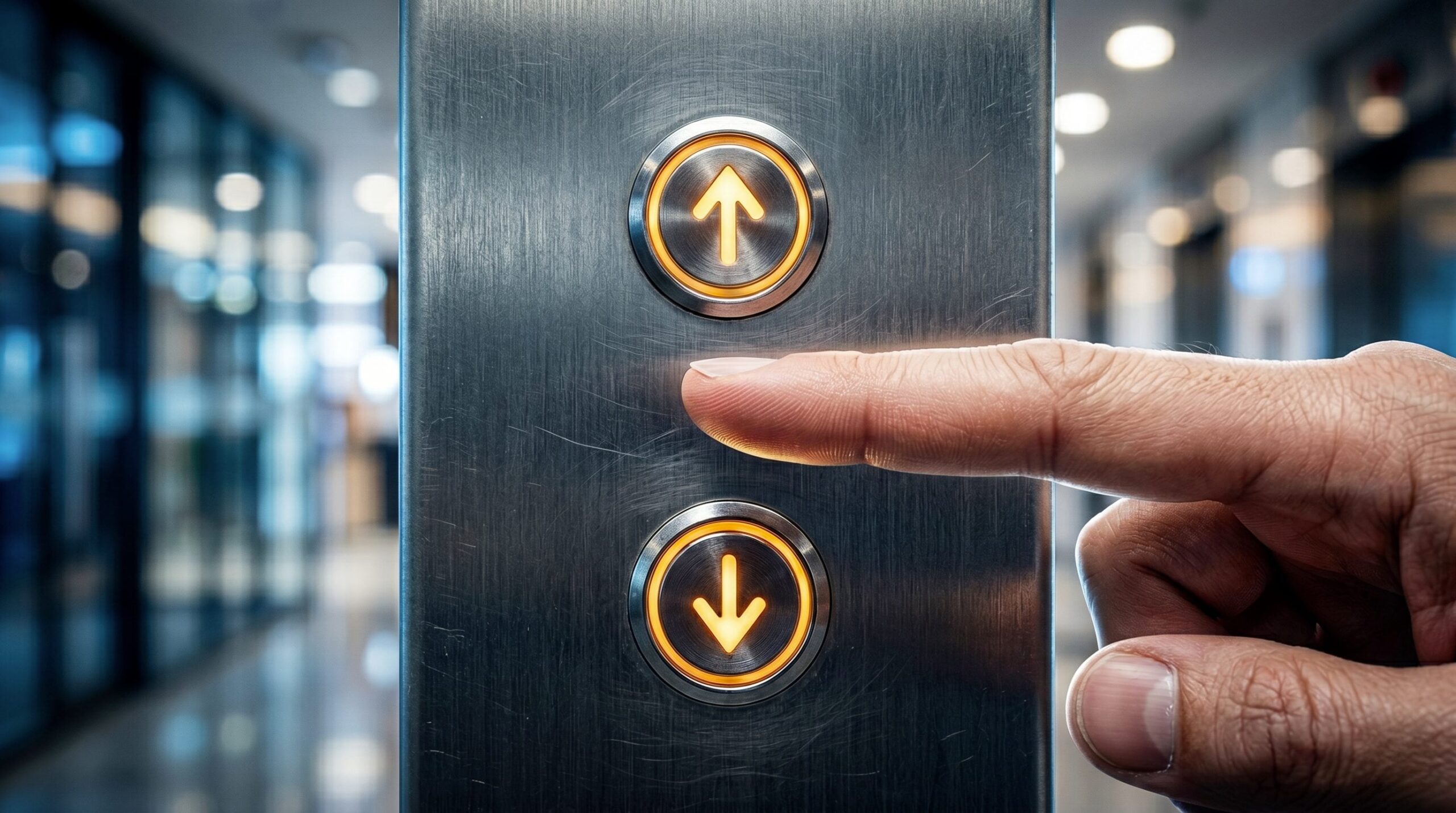
Many of us will have seen someone who, while waiting for theelevatorpress the «down» button because he would like to make the car go down towards the floor he is on. However, this is an error of interpretation (although very common), also documented in an analysis conducted by an MIT student, who admits that he himself made this mistake as a child, convinced that the “down” button should be pressed when the elevator was expected to arrive from an upper floor and descend towards us.
In reality, things don’t work that way at all: but let’s start from the basics.
As we all know, elevator buttons are usually divided into two categories: those placed outside the cabin, on each floor, which are used to call the lift, and those inside the cabin, which are used to select the destination floor. When the keys are pressed, an electrical signal is sent to the control system: at that point a microprocessor registers the request, decides which booth to send and in what order to serve the calls, all within milliseconds.
The «up» and «down» arrows of the external button, however, they do not indicate where the elevator will come frombut they serve to specify the direction you want to go. This functionality is also clearly specified in the manuals of companies that produce elevators: the “up” button is normally positioned above the one with the “down” symbol and the user must only press the one relating to the desired direction. Pressing both slows down the serve for everyonebecause the system has to handle two distinct calls instead of one.
In short, whoever presses the “down” button and then, once inside the elevator, selects an upper floor once is giving the system two contradictory pieces of information, risking making the system slower.
By the way, the same principle also applies inside the cabin. In this regard, the MIT analysis highlights another recurring but incorrect behavior: Since the confirmation light behind the button may take up to 300 milliseconds to turn on, many people hold their finger down for a long time or press multiple times, believing that the system did not register the request. In reality, the pressure is recognized from the first touch and pressing it does not change the call queue in any way.
