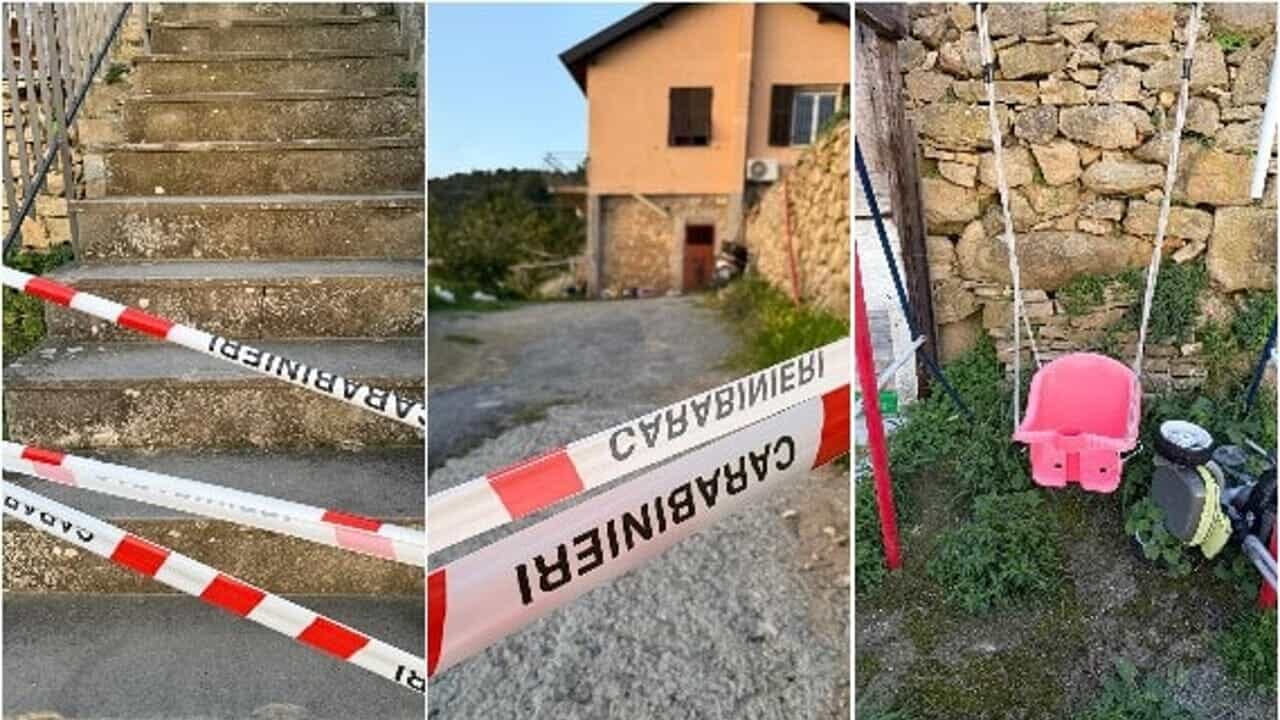
The atrocious story of little Beatrice is much more common than one might think
Beatrice, the two-year-old girl who died last February 9 in Bordighera (Imperia), may have suffered serious physical and psychological abuse from her mother and her partner, Manuel Iannuzzi, who was also arrested. The investigators even found photographs on the man’s cell phone, taken immediately after the alleged beatings, where Beatrice appears full of bruises. In one video, the parents also allegedly forced her to smoke, mocking her when the little girl started to cry.
A more common picture than you might think
The woman’s other two daughters, aged seven and nine respectively, would often have also witnessed all this. A dramatic picture that has rightly outraged public opinion, but which unfortunately is much more common than one might think. According to the survey published in June 2025 by the Guarantor Authority for Childhood and Adolescence, in collaboration with Terre des Hommes and CISMAI, in Italy there are approximately 100 thousand minors in the care of social services for having suffered mistreatment in their families (out of almost 114 thousand total cases). Compared to the previous report in 2018, the increase in cases was +58% nationally. Behind this drastic increase there is certainly also a greater ability on the part of local services to intercept abusive dynamics; yet, to assume that this is the only factor would be overly optimistic.
The discomfort after Covid
In fact, as is also underlined by the researchers themselves, these data reflect a worrying exacerbation of family distress, exacerbated by the long-term effect of Covid-19, but which also reflects a general deterioration in the socio-emotional health of our society. One of the factors of this deterioration can certainly be identified in the economic and labor crisis from which we are struggling to emerge. According to reports from the CESVI Foundation, there is in fact a direct correlation between the increase in job insecurity and the explosion of domestic violence, including that against minors.
“Assisted violence”
However, the problem is not only linked to direct abuse, but also lies in the so-called “assisted violence”, i.e. when boys and girls are forced to live in an environment full of conflict between the adults they care for. The extensive scientific literature on this topic agrees in considering this form of violence extremely dangerous for the mental health of minors, as much as direct violence. Also because psychological abuse, which includes witnessed violence, is much more difficult to intercept and prove than physical abuse, which leaves tangible marks on the body.
Loneliness
Behind the mistreatment of minors in the family, a picture of loneliness, fear and even depression can therefore be hidden, but this must not lead us to downplay the faults of parents, nor even to think that the phenomenon of violence against children is exclusively the reflection of a social and work crisis. Sometimes, as seems to have happened in Beatrice’s case, we may simply find ourselves faced with sadistic or sociopathic parents, who enjoy inflicting pain or who prove to be totally and pathologically incapable of recognizing and empathizing with the suffering of others, including that of their own children. For this reason it is necessary to raise awareness and train society and adults, in particular paediatricians and teachers, to recognize the “invisible” signs of psychological abuse early.
