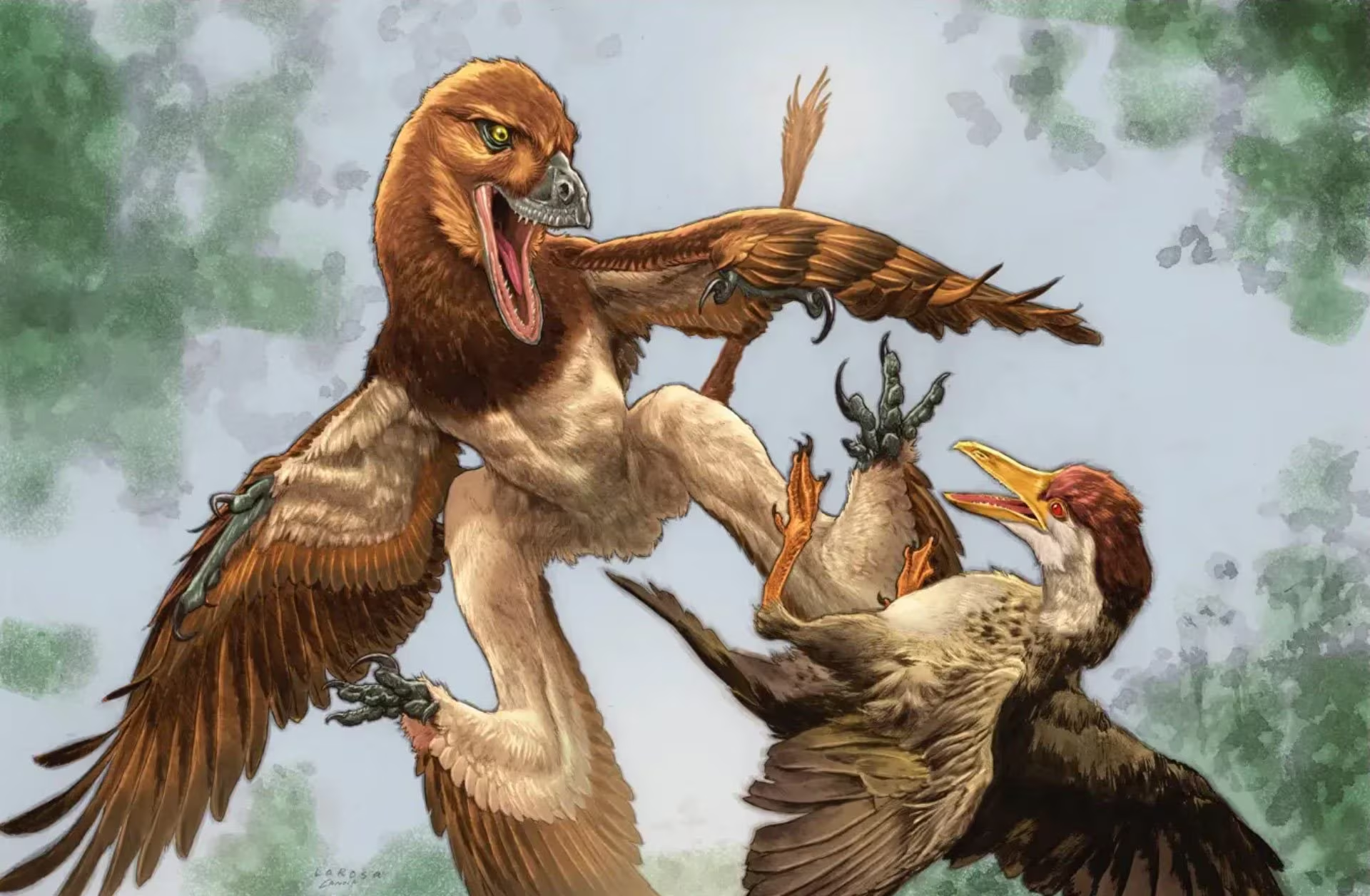
In the Xiagou training of the Changma Basin, in northwestern Gansu, in North-central Chinaa group of scientists fromInstitute of Vertebrate Paleontology Paleoanthropology of theChinese Academy of Sciences, he found further 100 skeletons partials of Lower Cretaceous birds (145-99 million years ago)many even with preserved feathers and soft tissue. This is a new relative of the Velociraptor, which lived in the area 124-120 million years ago.
No non-avian dinosaur skeletal remains have ever been described from this site. The study, published in Annals of Carnegie Museumwith Ling-Qi Zhou as its leader, fills this gap, describing the Jian changmaensisa new dromaeosaurid of the Microraptoria clade. The name refers to the Jian, a one-winged Chinese mythological birdreferring to nature similar to birds of the animal and the composition of the find.
The physical characteristics
Phylogenetic analysis placed Jian changmaensis within the Microraptoriaexpanding the geographic distribution of the clade to northwest China. All other Early Cretaceous microraptorines had been found in northeast China. Avian dinosaurs they are all modern birds and their extinct ancestors and descend from small feathered theropod dinosaurs that lived in the Jurassic and, unlike non-avian dinosaurs such as the T-Rex or Triceratops, have a skeletal system adapted to active flight. The avifauna was dominated by the ornithuromorph Gansus yumenensisthe first Mesozoic bird discovered in China in 1981.
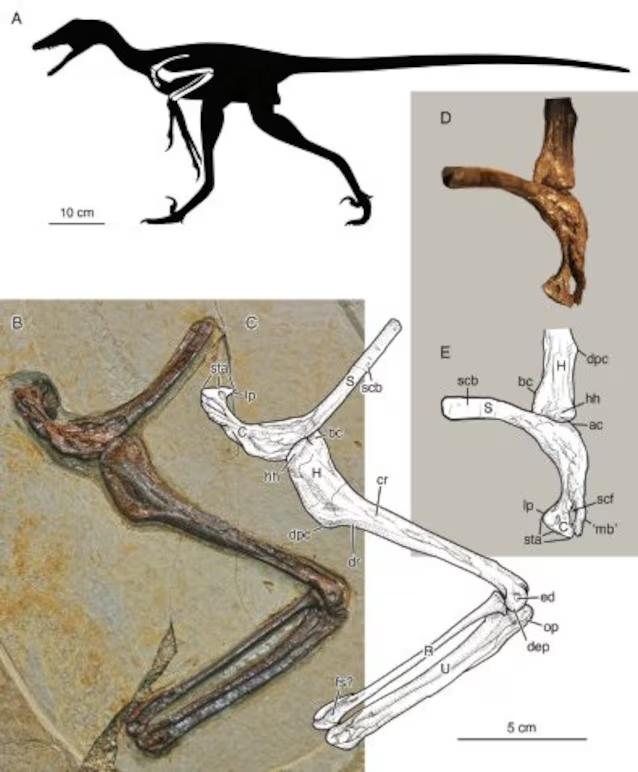
The holotype is a partial left forelimb and articulated pectoral girdlecataloged as GSGM-D050 and stored at Gansu Geological Museum. Includes complete scapulocoracoid, humerus, radius and ulna, attributable to a adult or almost adult individualas indicated by the smooth bone surface and complete fusion of the scapulocoracoid. According to the scholars’ reconstructions, the wings would have allowed the Jian changmaensis to glide like a flying squirrel, using the feathers as a useful membrane to slow down landings.
The dimensions are intermediate between the little one Microraptor zhaoianus and the largest Sinornithosaurus millenii. The species is characterized by three unique characteristics: a proportionally longer coracoid than the humerus of any other microraptoria known; distal condyles of the humerus developed on the cranial surface of the bone, a condition more like birds than to other dromaeosaurids; and a well developed foramen on the proximal ventral aspect of the radius, not described in any other known dromaeosaurid.