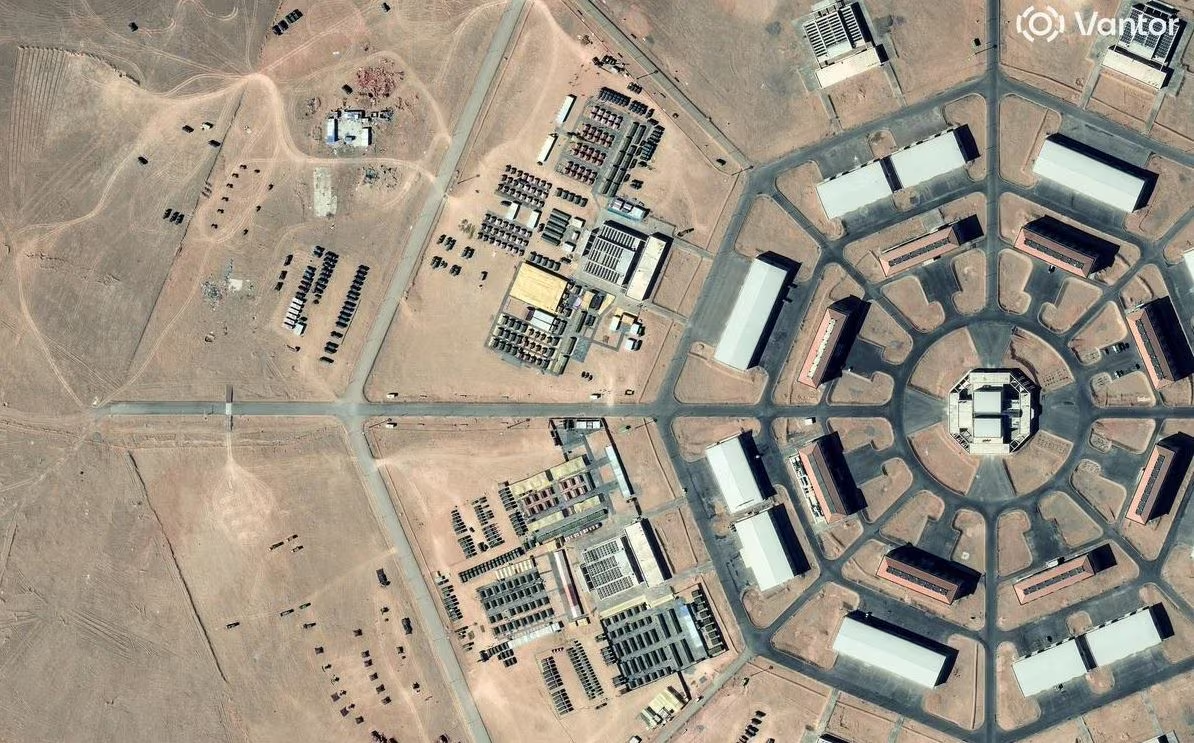
A recent investigative report by Reuters documented widespread activity infrastructural development attributable to nuclear capabilities Chinese in the Xinjiang Autonomous Region, in northwest China. Assessments made by international security specialists indicate that the new facilities could be intended for the use of intercontinental ballistic missiles (ICBM). The initiative is part of the modernization program of the nuclear forces of the People’s Republic of China, oriented towards the quantitative and qualitative strengthening of its strategic atomic deterrence.
What was discovered at the Hami nuclear site in China
Infrastructure expansion and adaptation activities concern three octagonal configuration installations carried out over the last six years in the vicinity of the so-called “Silos Field“, the nuclear complex located inHami desert area. The most recent analyzes of satellite images have allowed us to identify approximately eighty new platforms multifunctional reinforced concrete buildings (launch pads), integrated with existing infrastructure through unpaved roads and fiber optic connections. According to assessments formulated by various analysis centers and specialists in the sector, these structures could be intended for the deployment and use of mobile launchers for intercontinental ballistic missiles, air defense systems long range and electronic warfare equipment.
Two of the three installations identified, named Northern Octagon And Southern Octagonwould appear to be designed to support advanced capabilities satellite communication and to host infrastructures dedicated to the functions of command, check, intelligence, surveillance and reconnaissance. The buildings would include personnel housing, fortified bunkers, protected depots for the storage of armaments and logistics works connected to the silo fields via a dedicated rail network. Such developments suggest a progressive transformation of the Hami nuclear site, from a simple platform oriented to the deployment and conservation of missile systems to an articulated one integrated military complexcharacterized by the interconnection between strategic offensive capabilities, multi-level defense units and advanced digital architectures.
Possible purposes of the project in Xinjiang
The overall setup of the site was not never been documented previously with a comparable level of detail. The information recently acquired highlights the implementation of a complex support system for the strategic forces of thePeople’s Army Chinese liberation (PLA), suggesting a significant expansion of the infrastructure dedicated to the protection, operational deployment and command of the land components of national nuclear deterrence. The expansion of the Hami complex is part of the broader development process of theBeijing’s atomic war apparatusaimed at increasing the survivability of missile forces, mitigating vulnerability to potential external aggression and ensuring the possibility of conducting an effective retaliatory counterattackeven in the presence of serious initial losses. Although the People’s Republic of China already have of nuclear launchers based on ballistic missile submarines (SSBNs) and strategic bombers, the new silo fields and infrastructure located in Xinjiang appear destined to constitute one of the central elements of the future land-based deterrent device.
Chinese military strategy
In an international context characterized by the intensification of strategic competition between great world powers, the rapid expansion of the nuclear arsenal represents one of the most significant aspects of military modernization promoted by the president Xi Jinping. While formally maintaining the doctrine of “No First Use” (not first use), which includes the commitment not to use nuclear weapons first in a conflict, the creation of extensive strategic infrastructures indicate a growing emphasis attributed to atomic deterrence as a fundamental component of planning national security. Rather than indicating an imminent doctrinal shift, such developments appear to reflect an intention to provide the Chinese leadership with a broader range of tactical options to manage crisis situations. In this scenario, nuclear deterrence is not conceived exclusively as an instrument of extreme retaliation, but as systematic element capable of strengthening a state’s coercive capacity, dissuading external interventions and influencing the decision-making of adversaries during any regional discord.
