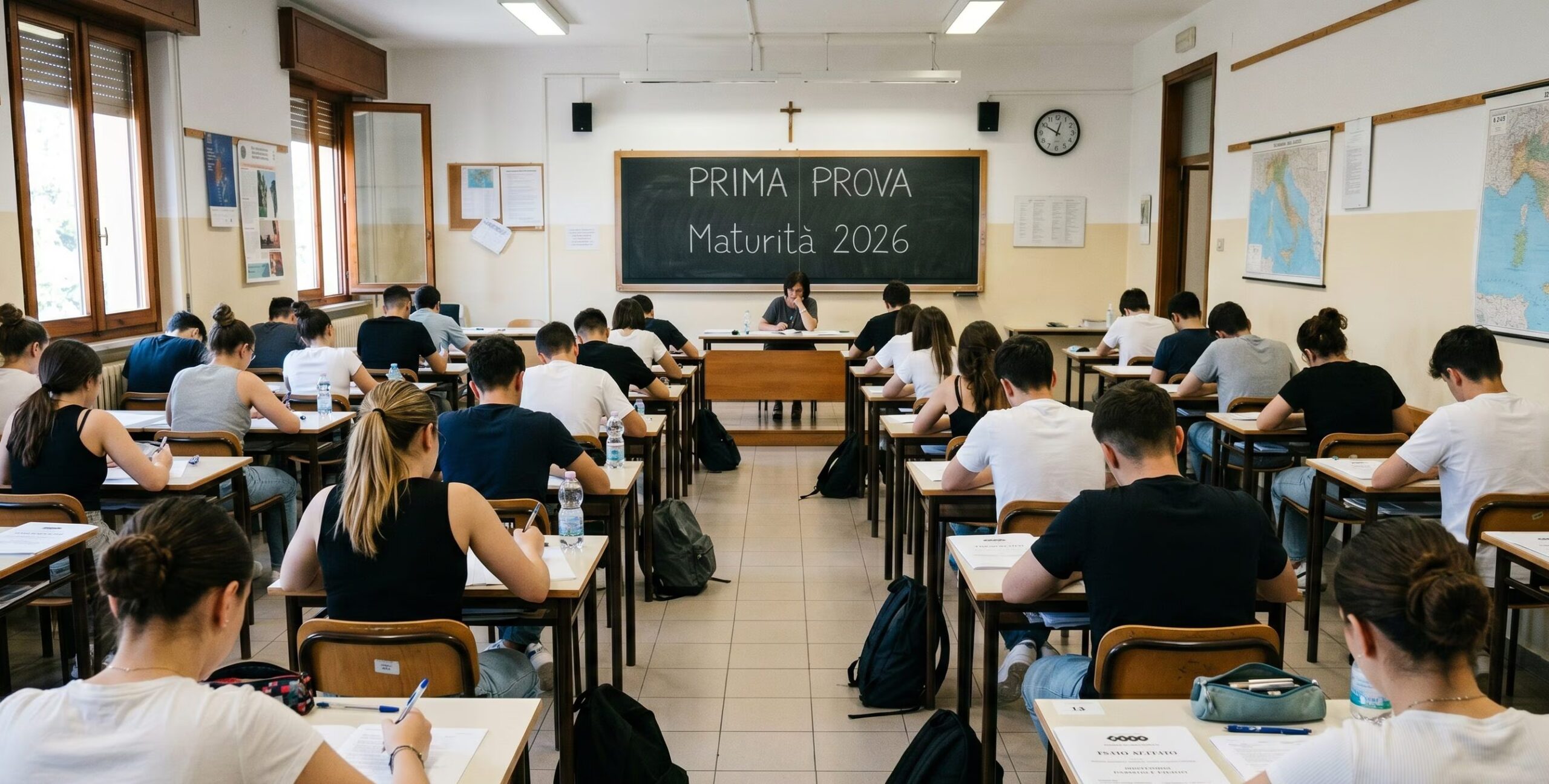
The first test of the 2026 Maturity Exam has officially begun: for the tema of Italian approximately 527,000 students will have to develop one of the titles of the seven tracks by choosing from a poem by Cesare Pavese and a song by Vitaliano Brancati (type A), passing through the argumentative text (type B) on Saragat’s inauguration speech atConstituent Assembly, a text from scientific journalism Piero Bianucci on the “science of writing to be understood” and an excerpt from the professor Frank Furedi – professor of sociology at the University of Kent (in the United Kingdom) – dedicated to the topic of borders.
Among the proposals for high school graduates there is also the topic of current affairs: in this case, the two tracks concern the concept of fatigue, taking inspiration from a text by the journalist Mario Calabresiand the concept of enchantment, with a reference from the German journalist’s article Wenke Husmann.
Among the possible tracks hypothesized for the first Maturity test, the predictions turned out to be correct in only one case: the 80 years of the Constitution and the work of the Constituent Assembly.
Students have six hours to choose and develop one of the proposals made available by the Ministry of Education and Merit.
The traces for typology A: the analysis of the text by Pavese and Brancati
For text analysis (type A) this year it was the turn of Cesare Pavese and of Vitaliano Brancati.
The work of Pavese proposed is poetry «I will pass through Piazza di Spagna», a love poem from 1950 taken from the collection “Death will come and will have your eyes”, centered on the unrequited love for the American actress Constance Dowling.
It will be a clear sky.
The roads will open
on the hill of pines and stone.
The tumult of the streets
that still air will not change.
The sprayed flowers
of colors at the fountains
they will stare like women
have fun. The stairs
the terraces the swallows
they will sing in the sun.
That road will open,
the stones will sing,
the heart will beat and jump
like water in fountains —
this will be the voice
who will climb your stairs.
The windows will know
the smell of stone and air
morning. A door will open.
The tumult of the streets
it will be the tumult of the heart
in the lost light.
It will be you — firm and clear.
The second proposal for text analysis, the one traditionally focused on prose (proposal A2), is instead dedicated to Vitaliano Brancatiwith an excerpt from his work «The pleasures», in which the writer expressed reflections and memories of experiences (even painful ones).
The argumentative traces for typology B: the Constituent Assembly, Bianucci e Furedi
Among the argumentative texts (type B), the first has a historical-political theme and is dedicated toConstituent Assemblywith a song taken from inauguration speech by President Giuseppe Saragat.
The second track of the argumentative text (B2) instead turns towards non-fiction and communication and is centered on a passage by the scientific writer and journalist Piero Bianuccitaken from his book «I’ll tell you in your own words. The science of writing to make yourself understood».
The third track of the argumentative text (B3) finally focuses on the concept of bordersmoving to the terrain of sociology and geopolitics. Food for thought for graduates comes from the essay by the professor and sociologist Frank Furedi«Borders matter. Because humanity must rediscover the art of drawing borders».
The two tracks of the current theme: the concept of effort and enchantment
The first track of the current topic (type C) focuses on fatigue conceptusing a passage from the journalist as a starting point Mario Calabresi taken from his book «Getting up at dawn».
The second proposal for the current topic concerns the theme ofenchantmentwith a reference to the German journalist’s article Wenke Husmann«It works like a charm», appeared in the magazine International in January 2026.
