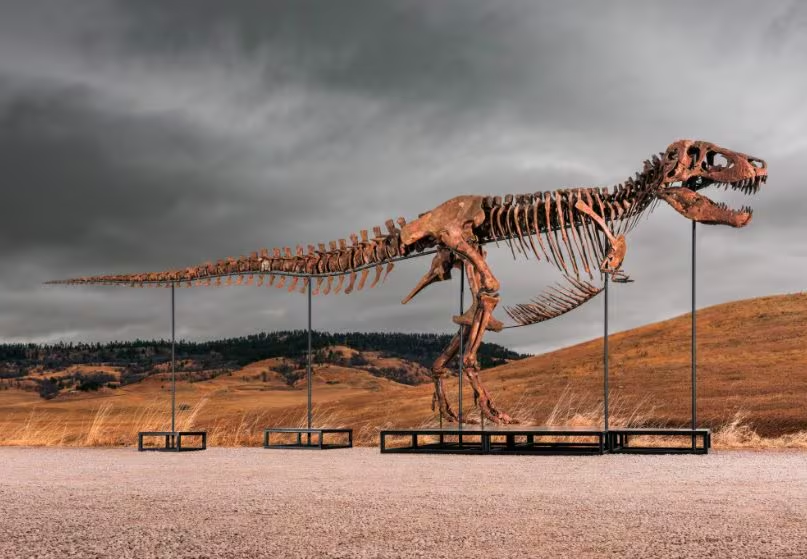
At a Sotheby’s auction in New York, an anonymous buyer paid 50.1 million dollars for an example of Tyrannosaurus rex. It is the most expensive dinosaur fossil ever sold at auction, on July 14, 2026, surpassing 44.6 million of 2024 for the Stegosaurus Apex hey 31.8 million of 2020 for the Tyrannosaurus known as Stan. The fossil is called Gusin honor of Gary Licking, nicknamed “Gus”, a rancher from Harding County in South Dakota where the animal was discovered in 2021. Licking died in 2022during the five-year period of excavations and restoration. The initial estimate at the auction was between 20 and 30 million: the final price is almost there doubled.
Gus measures 3.8 meters high And 11.5 in lengthcomposed of 183 bony elements: approximately 61% of the skeleton by number of bones, but between 75 and 80% by mass. The remains include an exceptionally preserved skull, both feet, a rarity shared with only one other known specimen, and the furcula, the wishbone homologous to the wishbone of birds. The skull was so heavy that it looked like a lightweight reproduction in the auction room. The animal dates back to 67 million years agofrom the geological formation Hell Creek.
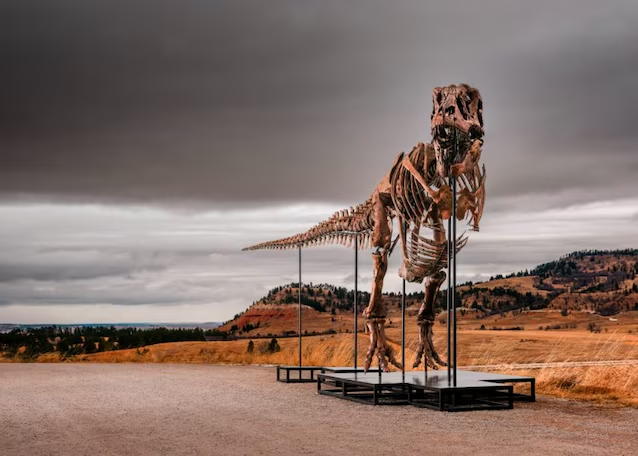
The sale sparked immediate scientific reactions. There Society of Vertebrate Paleontology declared that such significant fossils should remain in public museums: when a fossil enters a private collection, paleontologists will find it increasingly difficult to study it, unlike public bodies. A similar precedent from a few weeks ago was the sale in France of an example of Elasmosaurus. The company’s president-elect, Kristi Curry Rogers, said she hoped the new owner would donate Gus to a museum, as has happened in the past with other private acquisitions. This is the case of the aforementioned Apex, the stegosaurus of 2024, loaned to the American Museum of Natural History; and Sue, the first T-Rex at auction in 1997, now at the Field Museum in Chicago.
