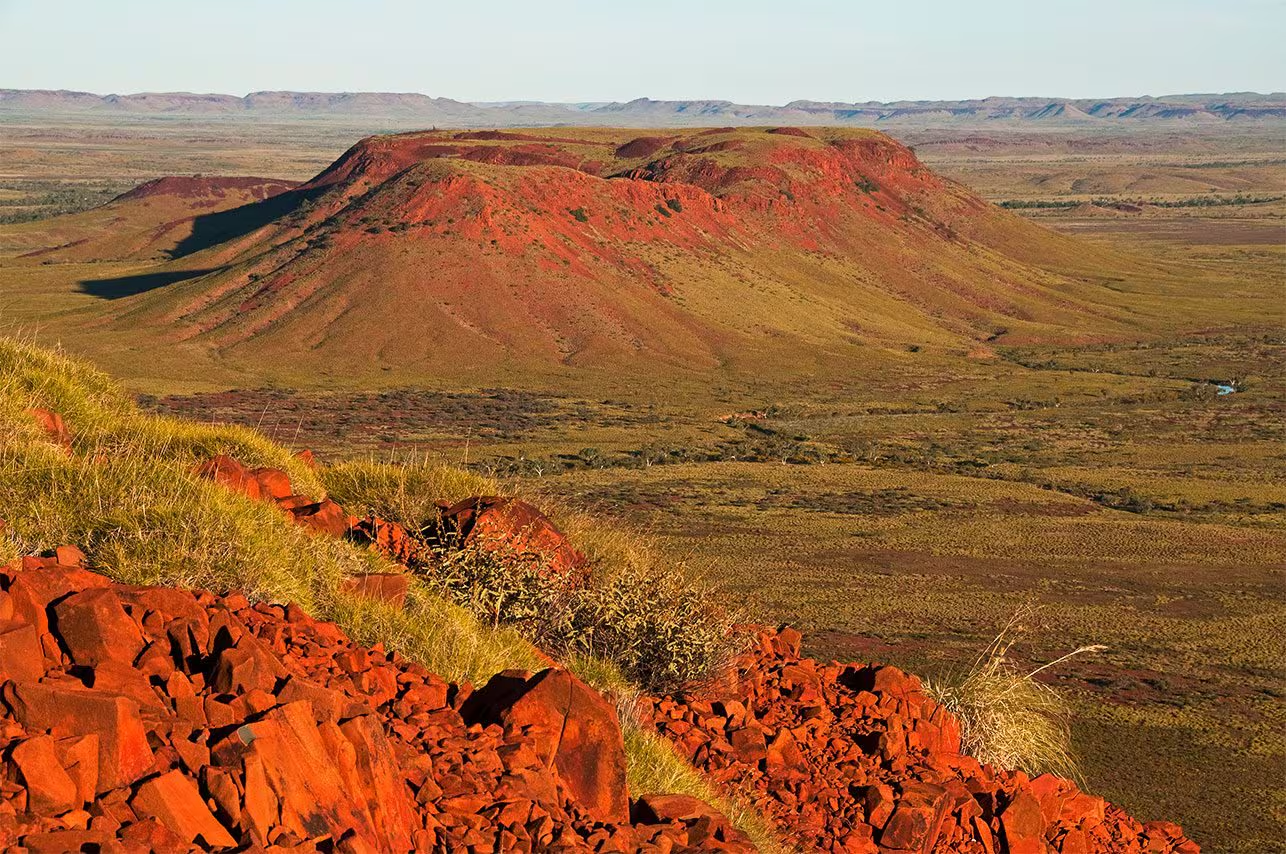
It has been identified oldest meteor impact crater ever discovered on Earth, with an age of over 3 billion years. It’s about the North Pole Dome Craterlocated in Western Australia, in the region of Pilbaraan area known to host some of the oldest rock outcrops on the Earth’s surface. A new study, conducted by an Australian research team and published in June 2026 in the scientific journal Geologyfinally made it possible to determine the age of the impact, dating it to 3,024 ± 7 million years ago.
The dating of the North Pole Dome
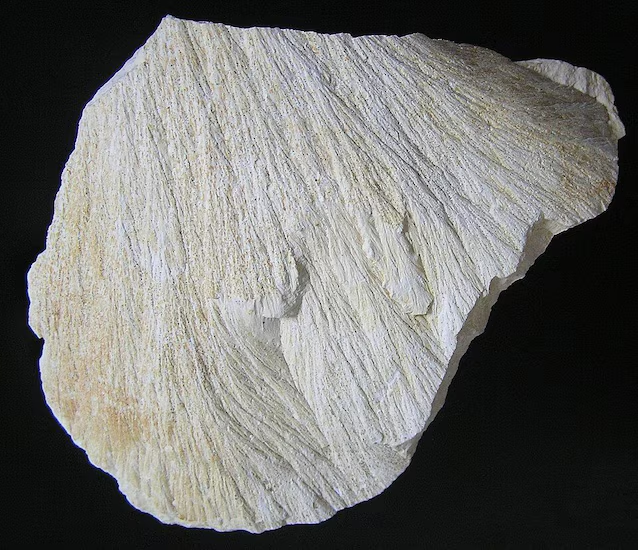
The hypothesis that the North Pole Dome Crater was very ancient was already well documented in the scientific literature. The main evidence is represented by the presence of shatter cones, or crushing conesin weakly metamorphosed mafic rocks of age paleoarcheanbetween 3.6 and 3.2 billion yearsof training Mount Ada Basaltlocated in Pilbara Craton. The shatter cones, in particular, they are fracture systemsand generally of macroscopic dimensions, therefore visible to the naked eye, characterized by a conical morphology and by surfaces that are striated or arranged according to nested structures. They are formed following the passage through the rock of a shock wave extremely intense. Due to the energetic conditions necessary for their formation, on Earth these structures are mainly associated with meteoric impacts and underground nuclear explosions. A meteoric impact would be the origin of the crushing cones found in the Paleoarchan rocks of North Pole Dome.
The North Pole Dome would then be the oldest meteor impact crater ever identified on Earth. To determine their age, researchers used several techniques mineralogical datinganalyzing minerals such as zircon, apatite, calcite And muscovite coming from two rock samples deformed by the shatter conesas well as an impact quartz vein, a laminar structure that can form when extremely hot, mineral-rich aqueous fluids circulate through fractures generated in shocked rocks. However, the main evidence comes from zircon dating through the concentrations of radioactive isotopes of uranium and lead inside them. Zircon is in fact one of the most resistant and stable minerals and can retain information about its geological history for billions of years. In particular, some of the zircons analyzed present an unusual feature branched morphology And skeletal which, according to experts, would have formed as a result of the alteration, recrystallization and growthin some places, of older zircons during theintense heating caused by the impact.
Chris Kirkland, lead author of the study and professor at the School of Earth and Planetary Sciences at Curtin University, Australia, said:
The impact left behind a “mineral clock”. By dating the minerals that transformed or formed anew in the damaged rocks, we can now determine precisely when this extraordinary event occurred. (…) These zircons recorded an event that occurred approximately 3 billion years ago, which we believe represents the best estimate of the age of the impact.
Why the discovery of the oldest crater on Earth is important
As the authors themselves point out, this is an exceptional discovery, since determining the age of ancient impact structures on Earth is often extremely complex, if not impossible. Subsequent geological processes, including hydrothermal alteration, metamorphism And diagenesisthey can in fact modify or completely erase the signal left over from the original event. The new dating of the North Pole Dome structures therefore places them among the oldest known impact structures on Earth and, according to the authors, among the few evidences of impacts dating back to the Archean Eon (about 4.0 – 2.5 billion years ago), an interval in Earth’s history during which the first continents were still forming.
