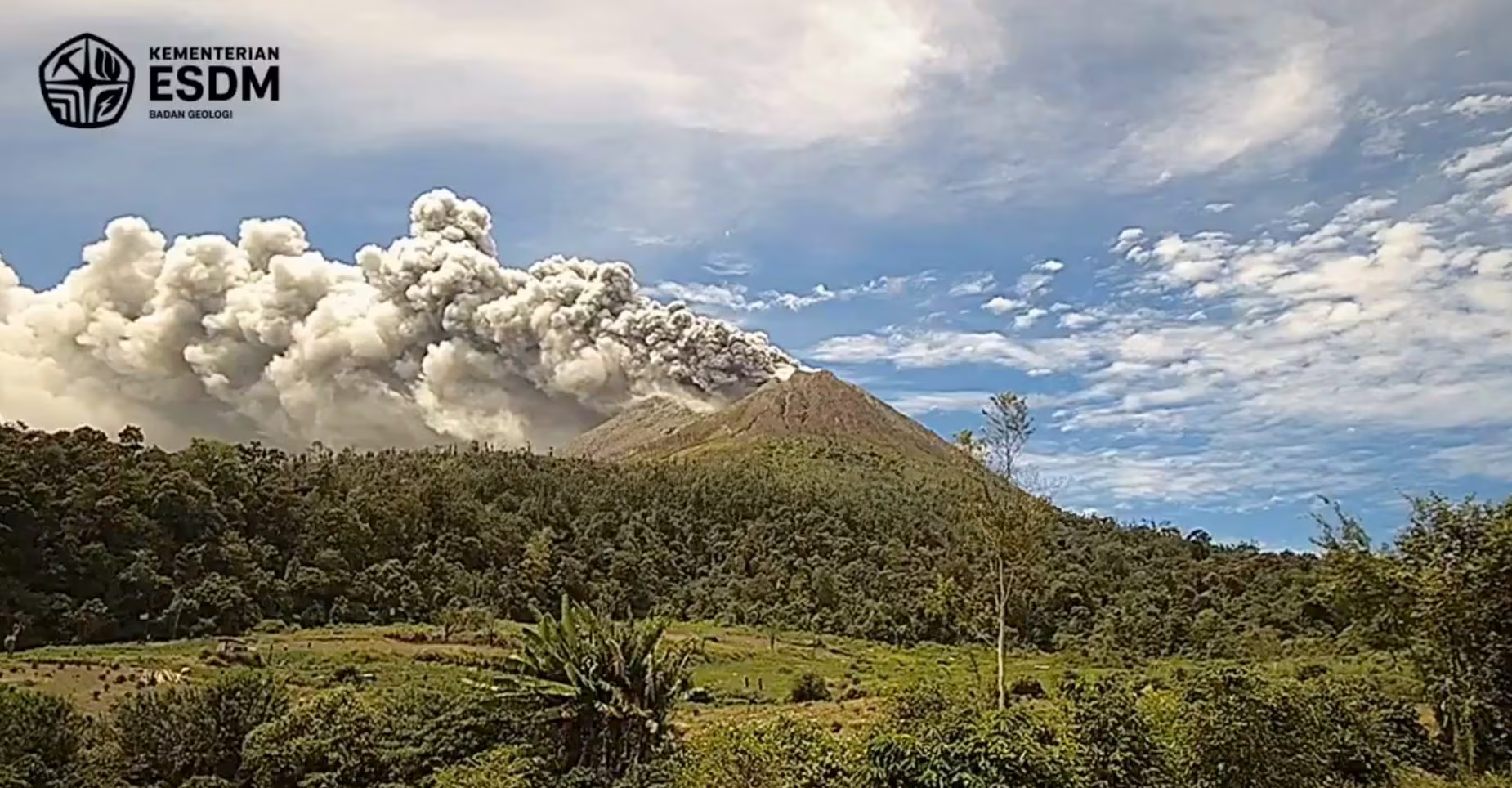
The Sinabung volcanolocated in the north of the island of Sumatra, Indonesia, has erupted for the first time after 5 years, with a tall column of ash and smoke 3,500 meters above the summit. The beginning of the new volcanic activity was recorded yesterday, August 31st, around 10.17am (local time, 05:17 in Italy) and lasted more than an hour: the volcanic ash was pushed up to 20 km in an east/south-east direction, reaching some inhabited areas around the slopes of Sinabung and in the Kabupaten Karoin northern Sumatra.
This is Sinabung’s first eruption since 2021: Armen Putraamong those responsible for monitoring the volcano, explained that observing the increase in volcanic tremor, it is not excluded that a second eruption even stronger.
At the moment, however, There were no casualties or significant damagealthough in the villages of the Karo district, in North Sumatra, roads, vehicles and buildings have covered in gray ashand masks were distributed to people to protect themselves.
The alert level III and the indications for inhabitants and tourists
Before this eruption, in fact, the Indonesian Geological Agency (PVMBG) had already detected approx 85 episodes of volcanic tremorwhich signaled much more intense activity than in previous days.
That’s why, in mid-August, the PVMBG had extended the exclusion zone from the volcano (now extended to a radius of 6 km from the southern and eastern sectors), while Lake Lau Kawar and nearby camping areas had been closed since 19 August. Meanwhile, following the eruption the alert was raised from level II to level III (called “Siaga”), the second highest on a scale of 1 to 4.
The local authorities have advised the population residing in the surrounding areas to pay the utmost attention: in these cases, in fact, the danger is not only represented by the volcanic ash (which can reduce visibility and worsen the quality of the air), but also by the risk of burning clouds from collapse (i.e. flows of gas and incandescent debris that can slide along river valleys) and mud and debris flows that form in the event of intense rainfall, with the water dragging the accumulated ash downstream.
The indications for inhabitants and tourists are clear: do not carry out any activity within the red zone established by the PVMBG; wear masks and protective glasses during outdoor activities, to avoid irritation to the respiratory tract or eyes due to ash; protect clean water sources from exposure to volcanic ash.
The characteristics of Sinabung: inactive for 400 years, it erupted again in 2010
After staying dormant for about 400 yearsMount Sinabung is back in business on August 29, 2010. In that case, eruptive activity gradually decreased in the following months, until a new eruption occurred on September 15 2013. Just in 2013, Sinabung entered a long phase of volcanic activitywith the most serious eruptions in the following years: on 1 February 2014 a pyroclastic flow killed 16 people (fifteen students and a professor who entered the forbidden zone), while on 21 May 2016 a collapsing pyroclastic current caused seven victims in the village of Gamber. At that stage the alert also reached level IV, the maximum, with thousands of residents in the surrounding areas who were evacuated.
The volcano continued to erupt for the next few years, before its alert status was downgraded to level III on May 20, 2019, after analysis of visual and instrumental data showed a decrease in danger.
Then, on 28 July 2021, the last eruptive episode, with the emission of volcanic ash up to 4,500 meters high and pyroclastic flows that reached up to 1,000 meters in an east/south-east direction. At least five districts were affected by the eruption, with a thick blanket of volcanic ash covering the territory.
Sinabung is a stratovolcano (characterised, therefore, by a typical cone shape) and is only one of the more 120 active volcanoes of Indonesiaan archipelago of more than 280 million people that sits on the Pacific’s so-called “Ring of Fire,” the belt of volcanoes and faults that encircles the entire ocean and is responsible for much of the planet’s seismic and volcanic activity.
