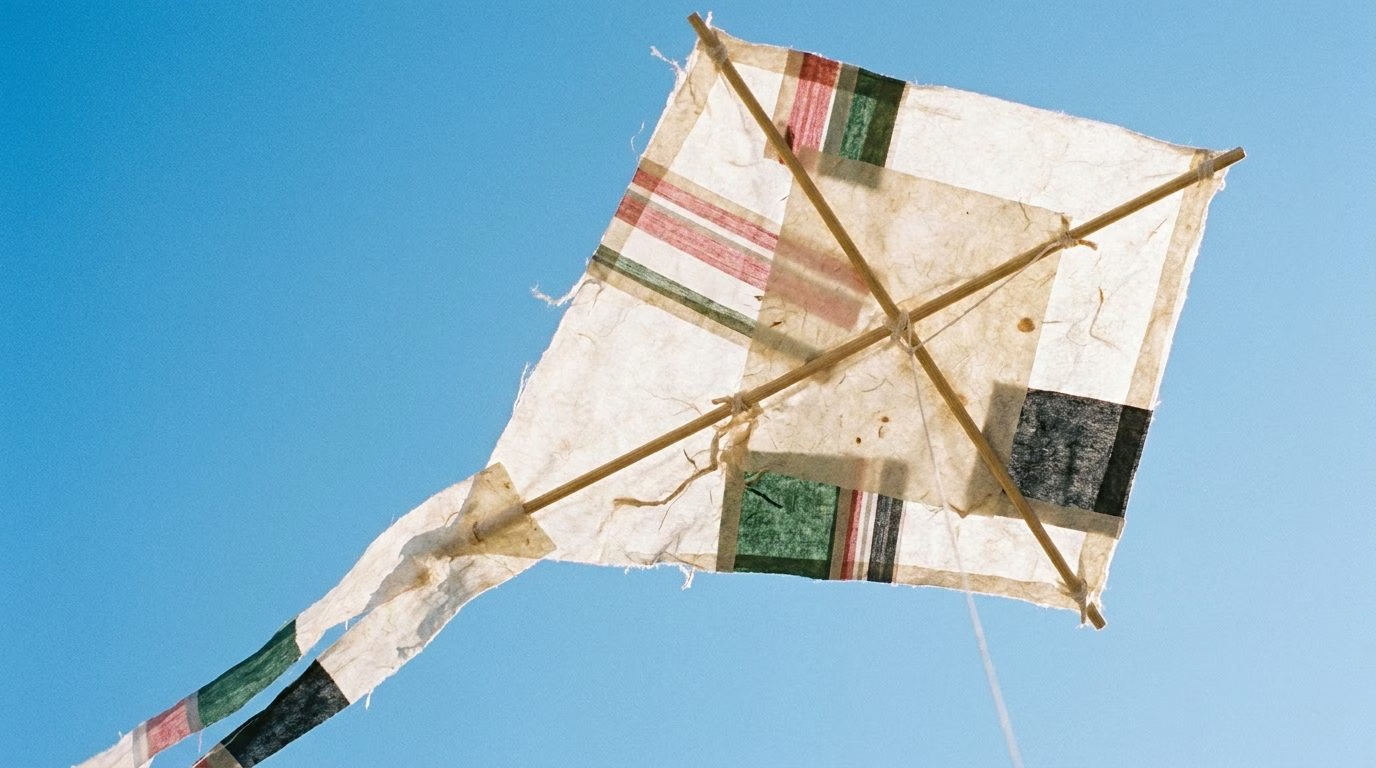
Seeing a fly eagle over a territory marked by war produces a very strong contrast: children’s play in a territory of death and destruction. In recent years the kite has entered the symbolic imagination of Palestinian resistance: from a simple toy, constructed in a simple way even with rudimentary materials, to Gaza has become a symbol linked tochildhoodto freedom and the possibility of looking beyond the boundaries of Strip. This is probably also why the image of kites had great media power: in the Palestinian case, it is something that physically overcomes a barrier and which has returned to the fore after the Israeli government last August 27 he threatened to also attack militarily the areas of the Strip from which they will be flown kites, specifying that they will be treated and considered as a threat similar to drones and weapons. But why the kite? What is the story related to the Palestine of this universal toy? To do this we must take a step back, precisely to 2018 and to Great March of Return.
The Great March of Return: kites as an instrument of protest in Palestine
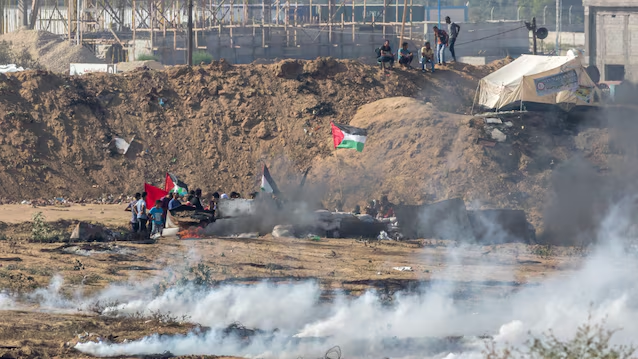
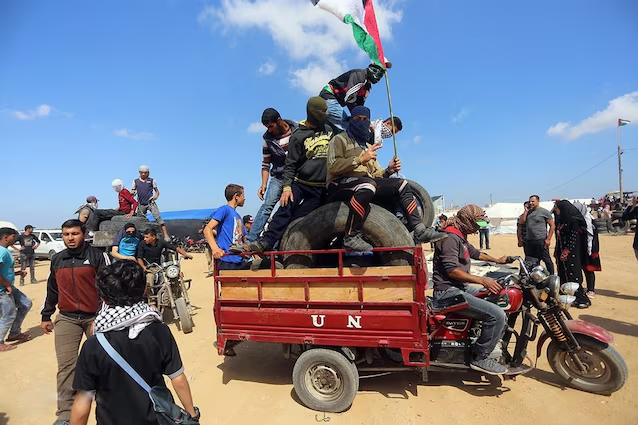
The March 30, 2018, on the occasion of Earth Day Palestinian, thousands of Palestinians began to participate in the so-called Great March of Return, a series of demonstrations along the barrier that separates the Gaza Strip from territory under Israeli control. The protest, initially scheduled to last only until May 15, the day of commemoration of the Nakbaasked among other things the right of return of the Palestinian refugees and the end of the blockade of the Strip.
Since March 30, 2018, seven times every Friday, thousands of Palestinian protesters marched in the border area between Israel and the Gaza Strip, with forms of civil disobedience, trespassing, throwing objects towards Israeli territories. Among them, some protesters began flying kites equipped with incendiary materials which caused fires in the surrounding area Israeli agricultural land to which the Israeli army responded with military attacks and increased tensions along the border. The result was that in the seven Fridays of mobilization, they were killed 47 Palestinians and injured more than 1400including numerous children.
The demonstrations then continued until the end of 2019, causing 220 Palestinian deaths, according to data from theUnited Nations Office for the Coordination of Humanitarian Affairs (OCHA). From that moment on, the kite took on a double meaning: on the one hand an instrument of protest, on the other a symbol of childhood and the resilience of the Gaza population. However, to understand why the kite has become such a powerful symbol we must start from before 2018.
The symbol of denied childhood and the children of Gaza
In Gaza the kite was already deeply associated with children and open spaces: between 2009 and 2011during the summer activities organized by UNRWA (the United Nations Palestinian Refugee Agency), thousands of Palestinian children participated in collective kite-flying initiatives. In particular, in July 2011, 12,350 children they gathered on the beach and flew at the same time their kitesestablishing a Guinness World Records on the beach Al-Waha, in the north of the Strip.
This recreational activity was included in UNRWA’s summer programs to offer the children of Gaza a relatively simple opportunity to play and socialize. Even then, therefore, the kite represented something that went beyond simple play: the possibility for children to appropriate, at least symbolically, a space of freedom. One particularly significant detail is that some children chose to decorate their kites with Palestinian flag, also transforming them into an element of collective identity.
In 2026 they return to the center of tensions with Israel
The link between kites and the Palestinian resistance has once again come to the fore August 2026. Between the August 21st and 23rdkites and balloons were flown by Palestinian children in Gaza during an initiative organized on the beach. On August 27, following the sighting of kites coming from the Gaza Strip in some Israeli areas near the border, Israel KatzIsrael’s defense minister, threatened to expel Palestinians from areas of the Strip from which kites and balloons were flown.
“A balloon is like a kite, and a kite is like a drone, whether it carries explosives or not,” Katz explained. The Israeli government has therefore specified that these objects will be treated and considered as one threat similar to drones and weapons, including the threat of attack the areas origin of the kites. According to Reuters, the authorities in Gaza therefore called on parents to prevent children from flying kites, even though the kites recently spotted near the border were not equipped with incendiary devices: some images show children and parents they destroy kites for fear of becoming a target of attacks byIdf.
Numerous organizations including Assopace Palestina and Amnesty International have condemned the Israeli decision to consider kites and – in some cases – balloons as drones or military objects, defending the children’s rights to onechildhood and a dignified educationeven in contexts of war.
Kites signify resistance
In the February 2024, Al Jazeera reported the presence of children flying kites in camps for displaced people Rafah, allowing them to have a feeling of normality for a few moments. The contrast is almost paradoxical: the same object that in 2018 had been associated with the fires across the border once again became, in the midst of the war, a toy in the hands of children.
For this reason today the kite can be read as a symbol of resistence Palestinian: it is above all the symbol of a population that continues to use a fragile object linked to childhood to represent something much bigger, namely the possibility of playing, living, remembering one’s own identity and imagine a freedom that, at least symbolically, can cross a border.
And this very story explains why his image has become so powerful: in the sky of Gazaa kite represents childhood, freedom, protest and resistance and it is precisely this ambivalence that explains why even today his image continues to be used when talking about Palestine.
