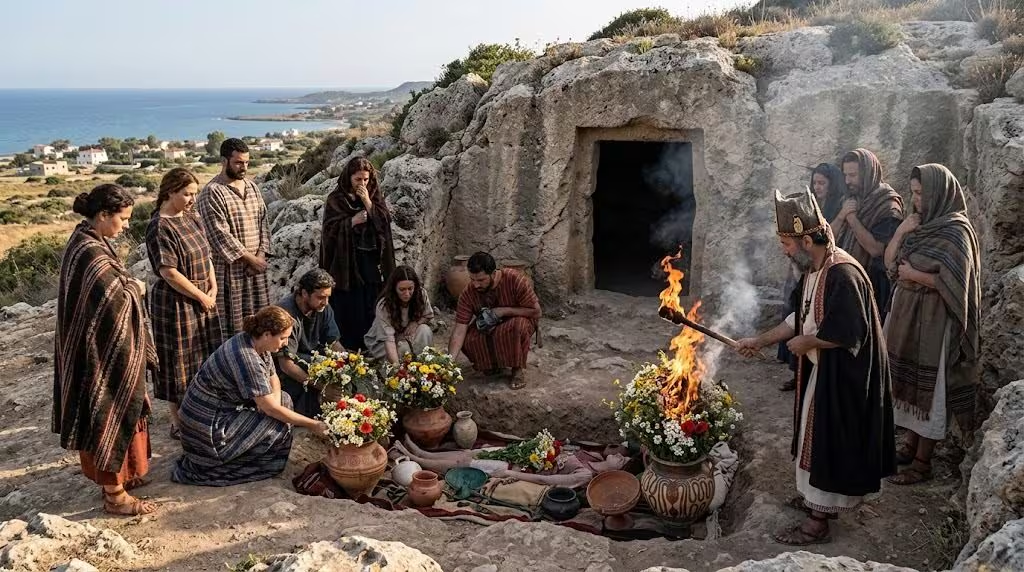
At Hala Sultan Tekke, Cyprus, Bronze Age plant remains suggest that cereals, fruits and flowers were used in funerary offerings not only for food purposes. Some plants may have been intentionally burned during rituals.
In CyprusBronze Agemore than 3200 years agoplants not only served as food or raw material: they could also have a symbolic role in funeral ceremonies and in others ritual practices. This is what emerges from a new study published in the journal Levantwhich analyzes i botanical remains found in the ancient port city of Hala Sultan Tekkeon the south-eastern coast of the island. This was conducted by Teresa Bürgefrom the University of Bern, Switzerland, and from Dominika Kofelfrom the University of Torun, Poland.
The site of Hala Sultan Tekke was an important trading center of the eastern Mediterranean during the late Bronze Age, especially between the second half of the 13th and the first half of the 12th century BC. In this period, the island of Cyprus was one of the most relevant of the Mediterranean. This owed its fortunes to the extraction of coppernecessary for the realization of the bronze. More than 3,000 years ago, copper from Cyprus was exported to Egypt, throughout the Near East, and even to Italy and in Sardinia. Archaeological investigations at Hala Sultan Tekke have brought to light residential and productive neighborhoods, wells and numerous tombs, some of which contained rich accoutrements and large quantities of ceramic containers. The new archaeobotanical analyzes (archaeobotany is the discipline that deals with the study of plant remains present in archaeological contexts) have focused on seeds, fruits and other charred plant remains coming from four gravesfrom a well and from another cavity on the site.
The samples studied include cerealsincluding barley and different varieties of wheatbeyond grapes, olives, figs, lentils and almonds. Their presence in the tombs could be linked to the deposition of food intended for the deceased or for ritual consumption during funeral ceremonies. In some vessels, however, the composition of the remains suggests a function different. Particularly interesting is the content of two jugs coming from one of the tombs studied, la tomb of SS. One contained a diverse set of cultivated cereals and wild plants; the other yielded plant remains that may have belonged to compositions similar to bunches of plants, flowers or ears, intentionally burned before being deposed. Similar hypotheses have been put forward for some remains recovered in a well in the inhabited area, where deposits of ash and plant material they do not appear to be randomly distributed.
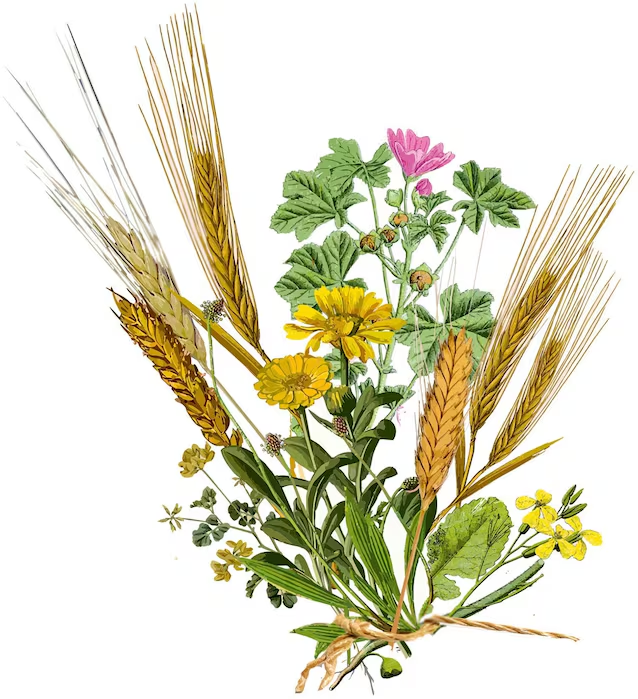
Among the floral plant species recognized in the possible compositions are marigolds (Marigold arvensis), centaurees (Centaury), daisies (Glebionis coronaria), rennet (Galium), mauve (Malva sylvestris), radish (Raphanus raphanistrum), silene (Silene) And violas (Viola). If food offerings are something rather common in funerary contexts, this is not the case for plant species that we do not traditionally associate with food consumption, such as those floral. There combustion it may have had a symbolic meaning. The fire transformed the offerings, while the smoke and odors produced by the plants could contribute to thesensorial experience of ceremonies. In the UU tombanother of the burials analysed, remains of cedar wooda resinous species that can produce when burned characteristic aromas and smoke. However, it is not possible to establish with certainty whether these properties were intentionally sought. The authors therefore distinguish at least two possible categories of offers: foods intended for consumption And burnt plant compositionsperhaps used in funerary rituals or other ceremonies. The two functions are not necessarily mutually exclusive and, in some contexts, they may be superimposed.
The new study highlights above all an interpretative and methodological problem: the plant remains found in archaeological contexts they do not indicate automatically food activities, but there could be something more, linked to symbolic and ritual sphere. To understand its meaning it is necessary to consider the composition of the samplesthe traces of combustion and the precise context of the discovery. At the Hala Sultan Tekke site, these elements suggest that plants participated in more complex ritual practices than the material evidence considered so far alone would suggest.
