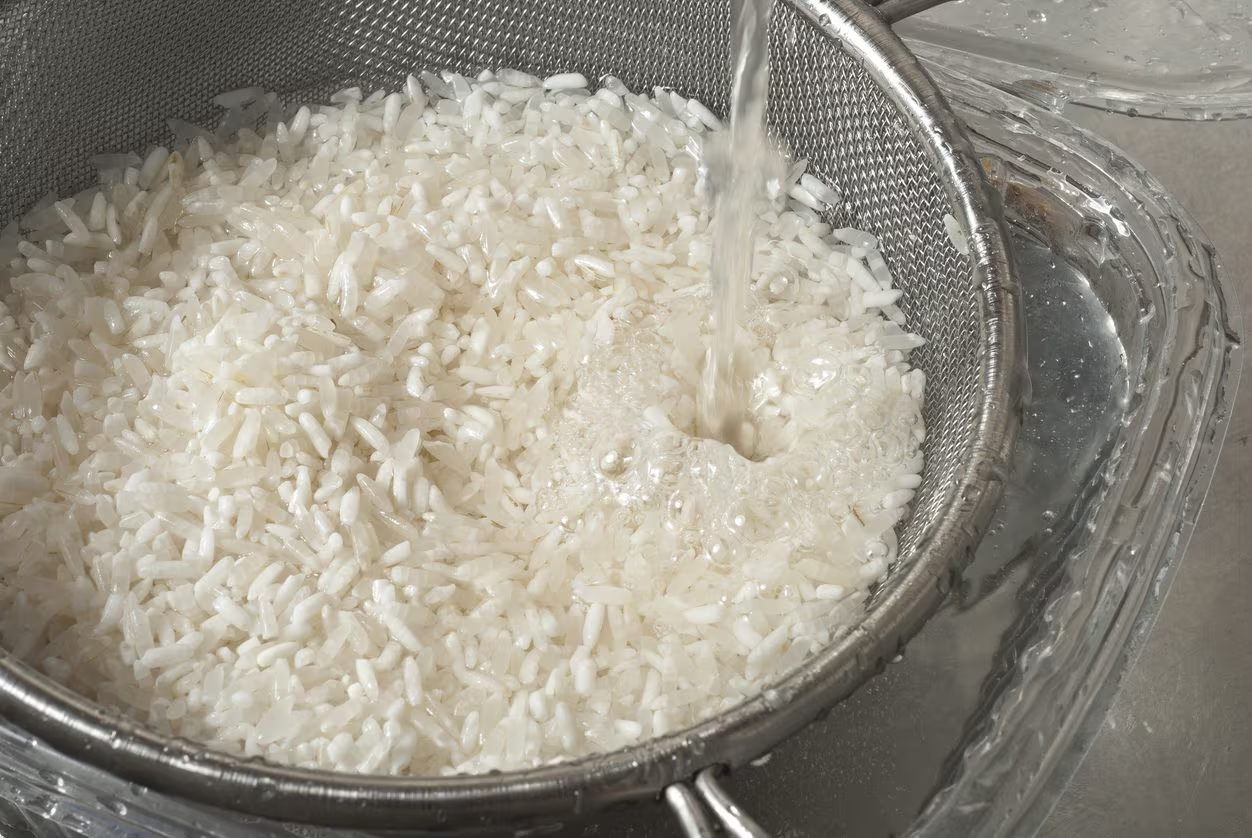
Washing rice before cooking it is an automatic gesture in many kitchens, but what really changes? Rinsing first helps to remove residues such as dust, bran or traces of pesticides. The case ofarsenicwhich rice tends to accumulate in large quantities compared to other cereals: a simple wash eliminates very little. According to the guidelines of Food and Drug Administration American, to significantly reduce the amount of arsenic in rice the most effective cooking in plenty of waterthen drained, with the risk of losing part of the water-soluble nutrients. And that characteristic whitish water that we see during rinsing? It also contains starchcoming from the surface of the grains and partly responsible for the creaminess of the final dish: for this reason, traditionally, the rice is washed several times with abundant rinses if we want well separated grains. Some studies, however, show that the issue is more complex: what determines the consistency of the final dish seems to be above all the quantity and type of starch contained within the grains, which depends for example on the variety of rice chosen.
What happens if we wash the rice, what is eliminated
The main objective of washing is remove all unwanted residues that may be on the rice. The grains can in fact harbor dust, fragments of bran or tracks of pesticides. A study published in Food Science and Biotechnologyfor example, analyzed three pesticides – etonfeprox, flubendiamide (whose use is no longer authorized in Europe, as reported by the European Food Safety Authority, EFSA) and tebufenozide – showing that the combination of the different industrial processing phases of rice can reduce its concentration. After the harvest, in fact, already the industrial processing with the processes of removing the cuticle and the whitening (which turns brown rice white) proves to be a formidable barrier, capable of already reduce over 90% of potential surface pesticide residues. The study also examines the effect of household washing and cookingwhich contribute to further lowering the percentage of residual pesticides. Specifically, by increasing the number of washes and the quantity of water used, the residual quantity of pesticides decreased, both in brown and white rice. However, this does not mean that washing the rice eliminates any pesticide without distinction: the result depends on the type of rice, the chemical characteristics of the pesticide and how much this is on the surface or inside the grain.
There is therefore no need to be alarmed: EFSA, among other things, confirms that for the rice grown and produced noin the European Unionthe limits of usable pesticides are strictly respected and the health risks are very low.
The arsenic problem: how to eliminate it
Then there is a contaminant that is often associated with rice:arsenica chemical element that occurs naturally in the earth’s crust and can therefore reach the soil and waters involved in agriculture. The problem of rice depends a lot on how it is grown: the rice fields are often maintained flooded and in the anaerobic conditions (with lack of oxygen) that are created, some forms of inorganic arsenic present in the soil are transformed into more “mobile” (and much more toxic) forms such asarsenite, which pass more easily from soil to water and then to rice. The rice plant has very efficient systems for absorbing il phosphorusThe iron and above all the siliconall very useful elements for its growth. Arsenite can partially exploit the same transport systemsthus ending up inside the plant and, to a certain extent, also in the grain. This is one of the main reasons why rice tends to accumulate arsenic more easily than other grains.
Can washing rice before cooking remove arsenic? According to the Food and Drugs Administration (FDA) simple rinsing has a minimal effect on the amount of arsenic present in cooked rice, while cook it in plenty of waterusing approximately 6-10 parts of water for one part of rice and then draining the excess, can reduce inorganic arsenic by about 40-60%depending on the rice. However, there is a downside: by using a lot of water which will then be drained, some can also be lost water-soluble nutrientssuch as some B vitamins.
Does washing away the starch change the texture of the rice?
When we rinse the rice, the water quickly becomes whitish: part of the material present on the surface of the beans is in fact dragged away by washing. Among the substances that end up in water there is alsostarch.
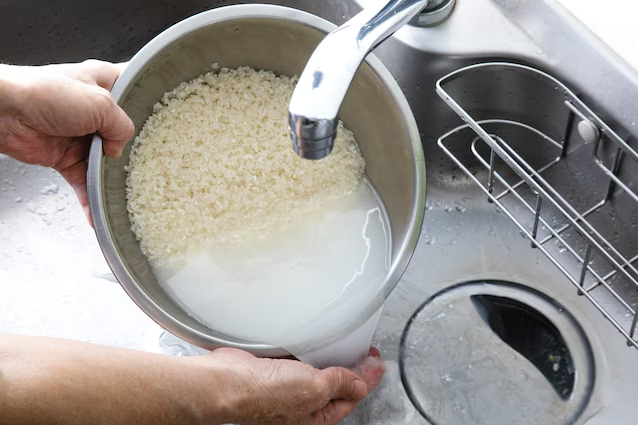
Starch is the main one reserve carbohydrate of plants and is a polymer: you have to imagine it as a chain, a long necklace where each bead is a molecule of glucose. When rice is heated in the presence of water, the starch granules absorb it and swell: this is the phenomenon of starch gelatinizationwhich will influence the final viscosity of the dish. It is no coincidence that if we want well separated grains, for example in many Asian preparations such as sushi or Cantonese rice, some recipes indicate washing the rice with several rinses until the washing water is completely clear. In other preparations, first of all the risottowhere we want to obtain a creamy liquid that binds the beans, abundant washing is normally not considered a crucial step in the recipe.
From an experimental point of view, however, this distinction is not so clear. A study published in Food Chemistry in 2019 compared rice subjected to different washes and observed that the number of rinses it did not significantly change either the hardness or the final stickiness of the cooked rice. This doesn’t mean that washing or not washing the rice is irrelevant to what we want to achieve in the final dish, but that the starch on the surface does not appear to be the main cause of the final texture: the variety of the grain matters much more, correlated to the quantity and characteristics of the starch it contains. Different rices can therefore behave differently during cooking regardless of how many times we have rinsed them. The idea “I remove the surface starch, so the cooked rice will necessarily be much less creamy” is a simplification.
