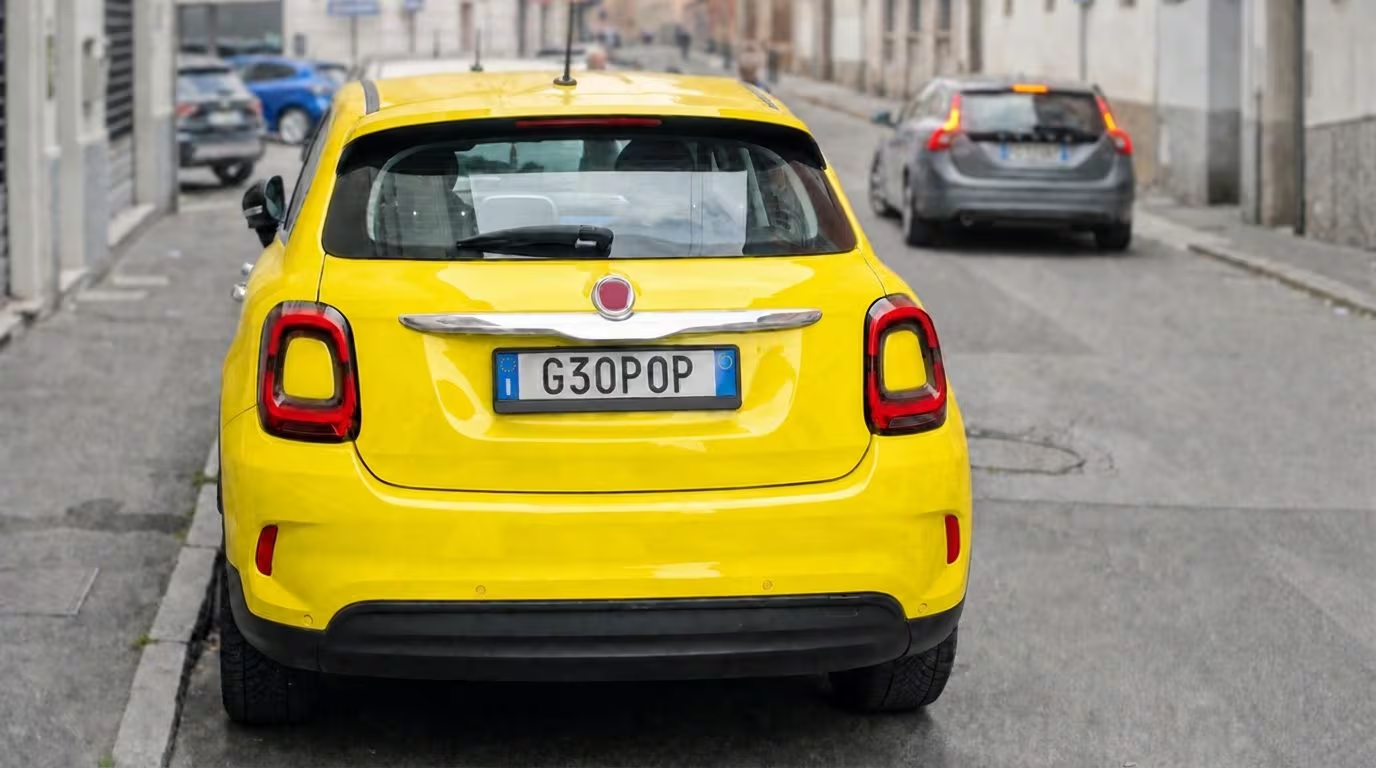
With the new Highway Code, personalized license plates arrive: the novelty relaunched by Giorgia Meloni will cost around 600 euros. But how will they work and how have license plates changed in Italy from 1901 to today?
Italian motorists will be able to personalize the registration plate of your carrespecting the criteria established at national level. The measure, in reality, had already been provided for by law but never became operational due to the absence of implementing regulations; it was the Prime Minister who relaunched it with the new maneuver Giorgia Meloni.
The text will still have to complete the process and wait for subsequent ministerial decrees (the actual introduction will take place in 2028), but the price set by the new Highway Code for having personalized car license plates is already established: 600 euros to choose letters and numbers for your car and 360 euros for motorbikes.
Introduced to late nineteenth century and made mandatory in Italy since 1901, since then the license plates – whose primary function remains that of identifying each vehicle uniquely – have seen the format and numbering criteria change several times.
Why are registration codes and origins used?
Cars and other motor vehicles are equipped with license plates for can be easily identified.
In case of violation of the highway code or accident, thanks to the license plate it is possible trace the car and its owner. Furthermore, through license plates it is possible to identify a stolen car, regulate access to special zones (such as the restricted traffic zones in our cities) and obtain other results.
Not surprisingly, license plates are used all over the world: There are no countries in which motor vehicles are authorized to circulate freely on public roads without an identification plate.
The origin of license plates predates the invention of the internal combustion engine and the automobile. In some cases, quite rare, yes they already used for carriages.
In 1851 in Papal State a provision required that horse-drawn vehicles be equipped with a plaque with an identification number, in order to prevent bandits, after having stolen them, from using them.
A carriage numbering system was also adopted at Parisat least for public cars, in the 1860s.
However, it is only with the birth of motor vehicles – which occurred, as we know, in the 1880s – that license plates became indispensable and were made mandatory almost everywhere. The first country to introduce the obligation was France in 1893followed by Germany in 1896 and, in the following years, by the other countries.
Originally the license plates were composed of a single progressive numberfrom 1 going forward, but gradually other systems were introduced, such as the alphanumeric codes.
Over the years the materials have also changed and since the Second World War they have established themselves plastic materials and aluminium.
How the Italian ones were made in the past
In Italy the first regulations on license plates were issued at the end of the nineteenth century. In 1897 a decree established that cycles had to be equipped with license plates issued by the municipalities; the following year the Municipality of Milan decreed that, in its territory, the measure also applied to motor vehicles.
However, a national law was enacted only in 1901. In that year, in fact, the government introduced Royal Decree 416 of 28 August, called “Regulation for the circulation of cars on ordinary roads”, i.e. the first Italian organic law on road traffic.
In article 32, the Regulation introduced thelicense plate requirement:
Each car must have a fixed metal plate on its rear part, on which the name of the province and the license number will be printed in highly visible characters. The light placed in the rear part of the car, or of the last of the cars towed by it, must have the same indications, engraved in white on the red enamel of the glass.
Since then, license plates were never abolished. Over time, however, the aesthetic appearance and the numbering criterion have changed several times.
Originally, the license plates read the name of the province in full and the progressive number: for example “Firenze 220” or “Bari 345”.
But what was it, specifically, the first registered Italian license plate? The record goes to a plate registered in Milan in 1904: it belonged to a De Dion-Bouton car owned by Mr. Remo Castoldi.
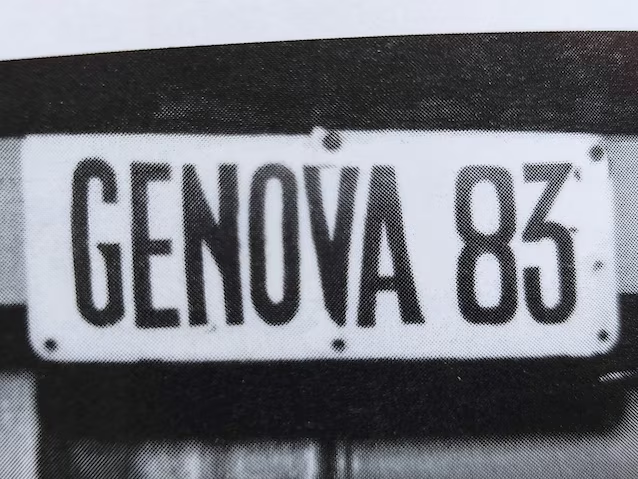
In 1905 the name of the province was replaced by a identification number: for example, 2 was Ancona, 40 Naples, 55 Rome. The license plate consisted of the province number in red and the progressive number in black: for example, 40 – 1235.
The system remained in use until 1927when, instead of the number, the initials of the province of registration: MI for Milan, PA for Palermo, etc. The license plate was therefore composed of the province’s initials and the progressive number (for example, MI 34582).
This provincial format has accompanied us for decades, but has changed materials and colors: if we think about what license plates were like in the seventiesthe memory immediately goes to the iconic “black plates” (made first in metal and then in plastic), characterized by a black background with white numbers in relief and the provincial acronym in orange.
The eighties instead they represented a real period of transition: starting from 1985 we definitively moved from the classic black background to the reflective white one with black characters, introducing a format visually much closer to the contemporary one.
Ordinary car license plates and those in the new Highway Code: rules and costs
In the 1994 the provinces were formally removed from the ordinary license plates, and from that moment Italy adopted the national alphanumeric system with sequential reading (of the AA 000 AA type): since then, the license plate is no longer linked to the place of residence or registration, but uniquely identifies the vehicle throughout the national territory.
The old model had been abandoned because it presented a problem: due to the increase in cars in circulation in the larger provinces the available numbers ran out.
The alphanumeric system, however, allowed (and still allows) the registration of a greater number of vehicles. The available combinations, in fact, are as many as 234,256,000although some letters are not used (I, O, Q and U or combinations reserved for state bodies and trailers) to avoid ambiguity.
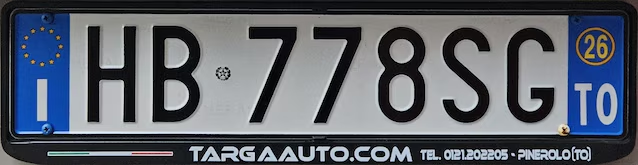
Two have been added since 1999 blue side bands which show the province’s initials, the symbols of Italy and the European Union, and the year of registration. However, this data is not part of the license plate number.
But how they will workinstead, the personalized license plates provided for by the new Highway Code?
Unlike countries like the United States, where you can often enter full words or fictitious names, in Italy the basic format will remain strictly unchanged. You will always have to respect the standard seven-character scheme, but the motorist will be able to choose the desired alphanumeric combinationas long as the sequence has not already been assigned to another vehicle and does not contain vulgar, offensive combinations or letters excluded by law.
THE fixed costs to obtain this customization are:
- 600 euros for cars
- 360 euros for motorcycles
While the the ordinary license plate in Italy is linked to the vehicle and not to the owner (if a vehicle is sold and the owner changes, the license plate remains the same), the personalized one will be nominal: it will remain tied to the owner, who in the event of sale will be able to retain it and transfer it to a new vehicle.
