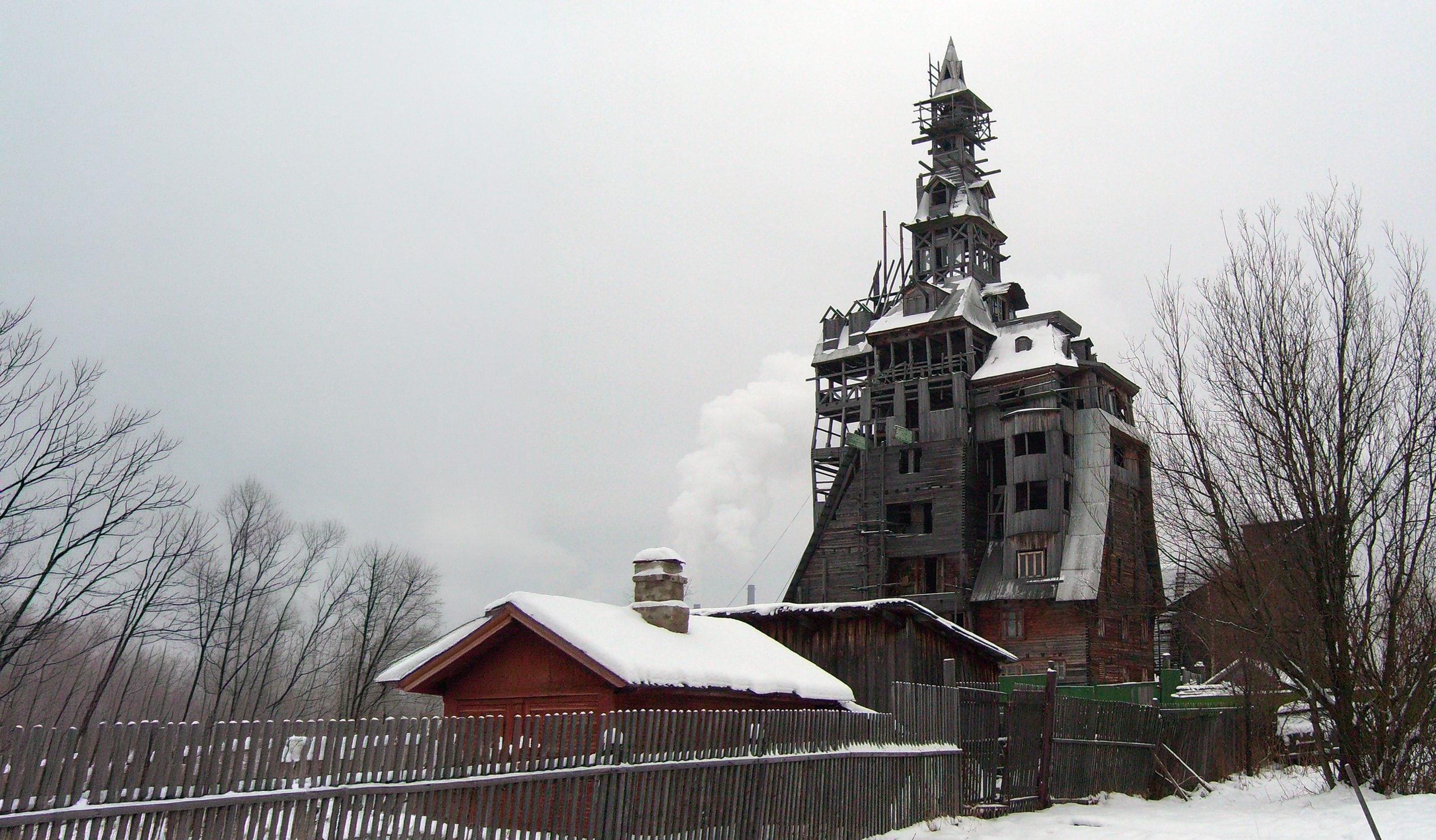
Imagine yourself in Russia, in the freezing port city of Arkhangelsk. On the horizon you notice a wooden tower so high that it seems like the lair of a fairy tale villain: however, that is not a film set, it is the tallest independent wooden house in the world, the Sutyagin House. Demolished in 2008, that structure approximately 44 meters for a total of 13 floors has held this bizarre record for years, which today belongs to Mjøstårnet in Norway (85.4 metres).
The most absurd thing, however, is that the Sutyagin House was made by Nikolai Petrovich Sutyagina Russian ex-gangster. But for what reason? And how was it made?
How the Sutyagin House was built by the former gangster in Russia
Construction began in 1992 in Archangel (Arkhangelsk), in north-west Russia. The original project was actually much more modest: it envisaged a building of only two floors. Nikolaihowever, was quite familiar with the principles of construction and, together with his family, began the work without requiring any building permit.
As the building took shape, the owner began adding levels upon levels believing that home was “never enough.” Inspired by the majestic wooden structures he had admired during his travels in Japan and Norway, he continued to build upwards until he reached the incredible height of 44 metersfor a total of 13 floors.
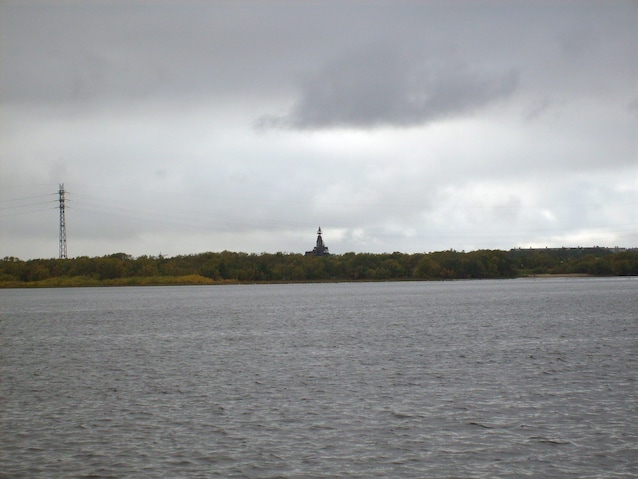
The structure was so imposing that it was visible from the opposite bank of the Northern Dvina River. Inside there was no shortage of luxury: a huge sauna was even installed to entertain guests and suppliers.
The story of the tallest former wooden house in the world
As anticipated, there was something behind this crazy engineering feat Nikolai Petrovich Sutyagina Russian businessman with a solid gangster reputation, who enriched himself through criminal activities. Sutyagin had very humble origins and grew up without having much. Once he became the richest man in town, he began to become obsessed with house of his dreams: He wanted to build a building that reflected his new social status, to throw his wealth in everyone’s face.
He was so proud of his wooden skyscraper that he even called it “the eighth wonder of the world“. His lumber empire, however, began to collapse in 1998when he was arrested for racketeering and sentenced to four years in prison. During his detention, business rivals ransacked him, stealing everything he had and destroying his equipment. His dream was then shattered and only the imposing and incomplete wooden structure remained of that enormous house.
The demolition order for the 13-storey, 44 m house
While Sutyagin was in prison, the building remained abandoned for four yearsbecoming a threat to the entire neighborhood. The inhabitants began to complain: the tower was unstable and leaking debris at the slightest breath of wind, threatening to collapse onto nearby courtyards. But there was an even more serious problem: the risk of fires. The city authorities pointed out to Sutyagin that a wooden colossus of that size was in fact a gigantic matchstick. If it had caught fire, it could have started a fire capable of burning the entire port or the entire city. Furthermore, the city’s building codes were clear: it was forbidden to build wooden houses more than two stories high without special permission. Sutyagin had even attempted to circumvent the law, rather imaginatively claiming that the structure consisted of two floors and that all the remaining 11 were simply a “decorative roof“.
Clearly the excuse didn’t hold up. In the 2008a court issued a demolition order for the building, as it is classified as a serious fire hazard and was built illegally. Almost all the floors were therefore demolished, while the last four were razed to the ground by a large fire that occurred in 2012. And today? Of the entire structure, all that remains are very few fragments of wood on the groundthe only trace of a crazy and abusive architectural undertaking.
