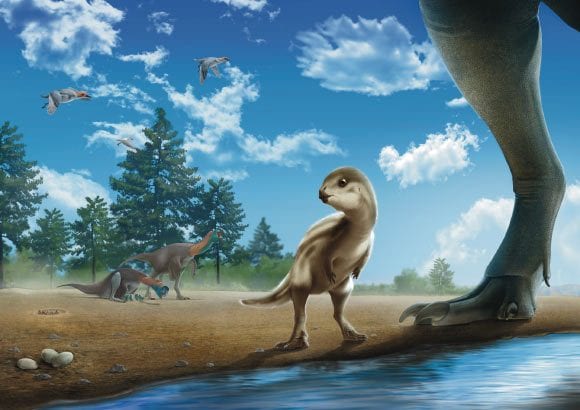
A recent study published in the journal Fossil Records described a new species of dinosaur, Doolysaurus huhminibelonging to the thescelosaurid family, just discovered in South Korea and dating back to Lower Cretaceous. The fossil was found in Ilseongsan formation (in the southwestern part of the country) and is dated to a range inclusive between approximately 113 and 94 million years agoin the transition between the Lower and Upper Cretaceous. The name Doolysaurus comes from Doolyprotagonist of a cartoon famous in South Korea, where a new species had not been discovered for 15 years.
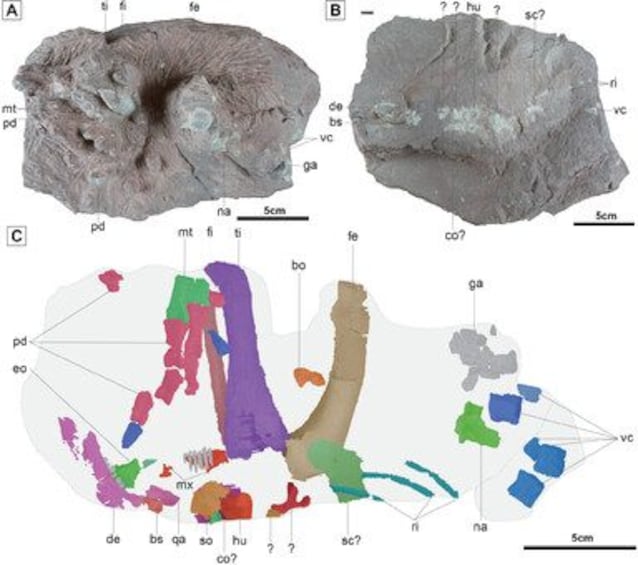
The find consists of one well-preserved partial skeleton attributed to a juvenile individual (estimated between 0 and 2 years), with overall size comparable to that of a turkey. Despite the incomplete state and the young age of the specimen, the study was able to derive relevant anatomical information thanks to the use of computed tomography. This technique made it possible to analyze internal structures not visible externallyparticularly elements of the skull and jaw, through the creation of precise digital models. The morphological analysis of the bones allowed the fossil to be assigned to ornithischiansa large group of herbivorous dinosaurs. However, some observed characteristics suggest one taxonomic position not completely defined within the ornistischian group. In fact, the authors highlight a combination of traits that does not allow precise attribution to already well-characterized clades, indicating the possibility that Doolysaurus huhmini represent one distinct evolutionary lineunknown to date.
A significant element that emerged from the study concerns the presence of gastrolithsor small pebbles ingested and stored in the abdominal region. In vertebrates, gastroliths are generally associated with mechanical shredding of food in the stomach. Their presence in this specimen suggests a digestive adaptation that may be compatible with a predominantly plant-based diet (as in other ornithischians), but does not exclude more varied feeding behaviours.
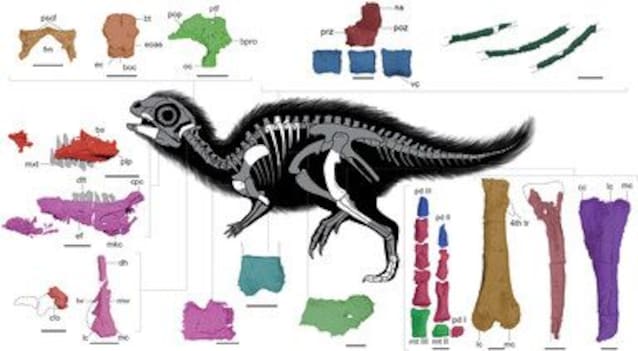
The use of micro-computed tomography played a central role in the analysis. The scan allowed identify otherwise inaccessible anatomical details without damaging the fossil, demonstrating the usefulness of this approach in studying fragile or incomplete specimens. In particular, the technique made possible the three-dimensional reconstruction of parts of the skull and the identification of gastroliths. From a scientific point of view, the discovery contributes to expand knowledge of dinosaur diversity in the Early Cretaceous of East Asia. Fossils of small ornithischians in this region are relatively rare and often fragmentary; therefore, even a single well-analyzed specimen can provide relevant information on the composition of local faunas.
