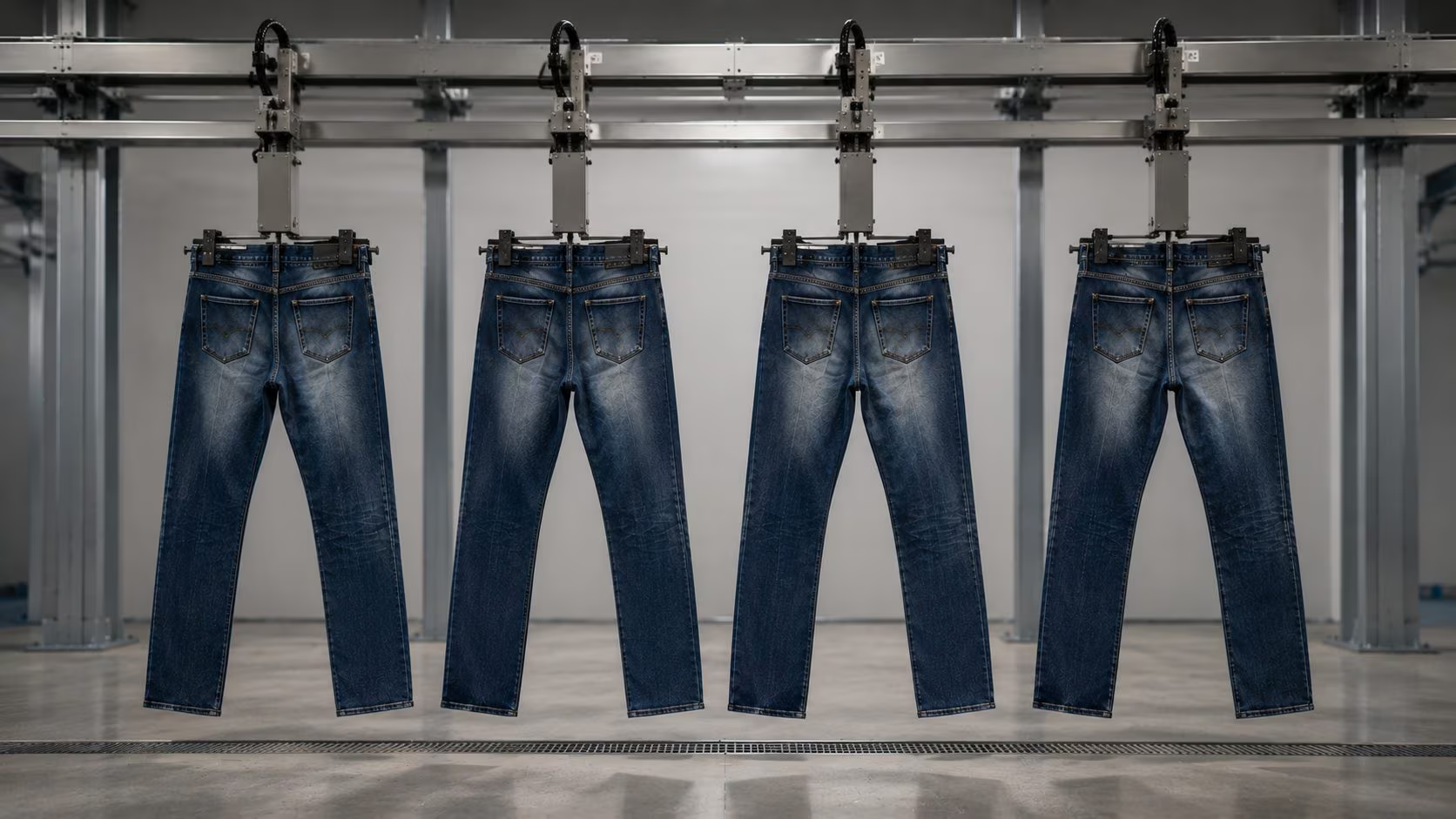
Linked to a long textile tradition that also goes through Genoa – city to which the term jeans is traditionally attributed, from the French Gênes – jeans have become a global icon. However, their production involves a considerable environmental impact: according to an analysis conducted by Levi Strauss & Co. on a pair of Levi’s 501, the steps preceding the purchase require approximately 2,900 liters of water, largely intended for cotton cultivation. Consumption rises to 3,781 litres also considering the washes carried out during the life of the garment, while the overall emissions reach 33.4 kg of CO₂ equivalent. Behind their casual appearance, in fact, a unique development develops articulated supply chain. To transform cotton into classic blue denim spinning, indigo dyeing, weaving and finishing are needed; to get the effect vintageor experienced, instead washing with pumice stones, lasers and ozone come into play. Even thelabel tells a lot: today jeans, in addition to cotton, contain small percentages of elastane or other fibers which change their fit, durability and recyclability.
How they are produced: from cotton to blue denim
Characteristic of every pair of jeans is the denim: fabric with a typical twill weave, the weave that creates the famous diagonal lines on the surface. Its production begins with the preparation of the fibres: the cotton it is collected, cleaned and separated from impurities, then selected based on length, resistance and uniformity.
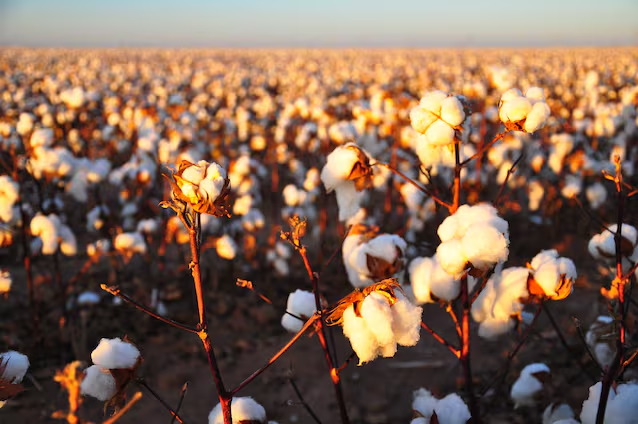
It is a crucial step, because the quality of the cotton directly influences the durability of the fabric. At this point we move on to spinningthat is, the transformation of fibers into yarns: this is where a large part of the character of denim is decided, because the thickness, twist and regularity of the thread affect its resistance and final appearance. Next comes the phase of dyeing with indigo. The yarns intended for the warp – i.e. the longitudinal threads of the fabric – are immersed several times in indigo dye baths and, once exposed to the air, gradually take on the typical denim blue color. It is precisely because of this surface dye that jeans they discolor with use: the dye does not penetrate deeply, but remains more concentrated on the outside. After dyeing, the yarns are treated with sizea sort of “protective film” that makes them more resistant during the weaving. The latter occurs by means of industrial loomswhere the dyed warp threads are intertwined with the weft threads, generally white, according to the typical twill weave of denim. In this weave the thread passes over and under other threads with one regular offsetforming the characteristic diagonal lines on the surface of the fabric. The denim thus obtained is finally subjected to finishing to stabilize it, limit its shrinkage and improve its appearance and performance.
Read the label: what modern trousers are made of
If once upon a time jeans were almost always 100% cottontoday the label tells a different and more complex story. Many modern models are made with a blend of fibres designed to improve fit, comfort and aesthetics. Cotton generally remains the main fiber, but can be accompanied by small percentages of elastane – between 1% and 5% – which they make the fabric more elastic and allow the jeans to better follow the movements of the body. In other cases, polyester, lyocell, viscose or linen are added, used to lighten the fabric, make it softer or increase its resistance. Read the labeltherefore, serves to understand not only what a pair of jeans is made of, but also how it will behave when we wear it: a model with 5% elastane, for example, may be more comfortable to wear, but also less durable, because the elastic fibers tend to degrade more easily with frequent use and washing, as well as complicating the recycling of the fabric.
How do you get the “vintage” effect?
Many jeans on the market are not sold in their original appearance, but are subjected to treatments that attenuate the color and give the typical lived effect. To quickly reproduce the appearance that jeans would develop after years of use, the garment is subjected to intensive industrial washing and treatments. Among the most widespread is the stone washingwhich requires the jeans to be rotated in large industrial washing machines together with pumice stones: the rubbing consumes the surface layer of indigo, lightening the fabric.
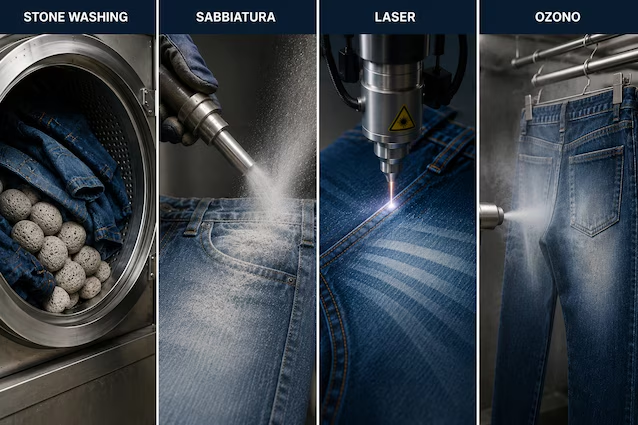
Much more controversial is the sandblastinga technique that projects silica sand at high pressure against the fabric to selectively wear away its surface. The method was progressively abandoned It was banned by many brands and in some countries because inhaling crystalline silica dust exposed textile workers to the risk of silicosis, a serious chronic lung disease. Today we increasingly use technologies such as laserwhich allows you to reproduce lightening and signs of wear without mechanical abrasion, orozonea gas capable of oxidizing indigo and lightening it, reducing water consumption compared to traditional washes.
How many liters of water are needed to make jeans and how much they pollute: the environmental impact
Behind a pair of jeans there is not only a long production chain, but also a significant environmental impactespecially on the water front. Its water impact is distributed throughout the garment’s life cycle: from the cultivation of cotton, which requires large quantities of water, to indigo dyeing, finishing treatments and even home washing after purchase. According to the report The Life Cycle of a Jean published by Levi Strauss & Co.the overall average consumption associated with the production and use of a single pair of jeans (the 501 model specifically) is approximately 3,781 liters of water. To have an order of magnitude, this is a quantity of water comparable to that which a person drinks on average over a 5 year period. The impact, however, does not end at the moment of purchase: the use phase also matters, because frequent washing means more water and energy consumed and, often, a shorter useful life for the garment. For this reason, the sustainability of denim does not depend on just one factor, but on the entire supply chain, from the cultivation of cotton to the habits of the wearer.
