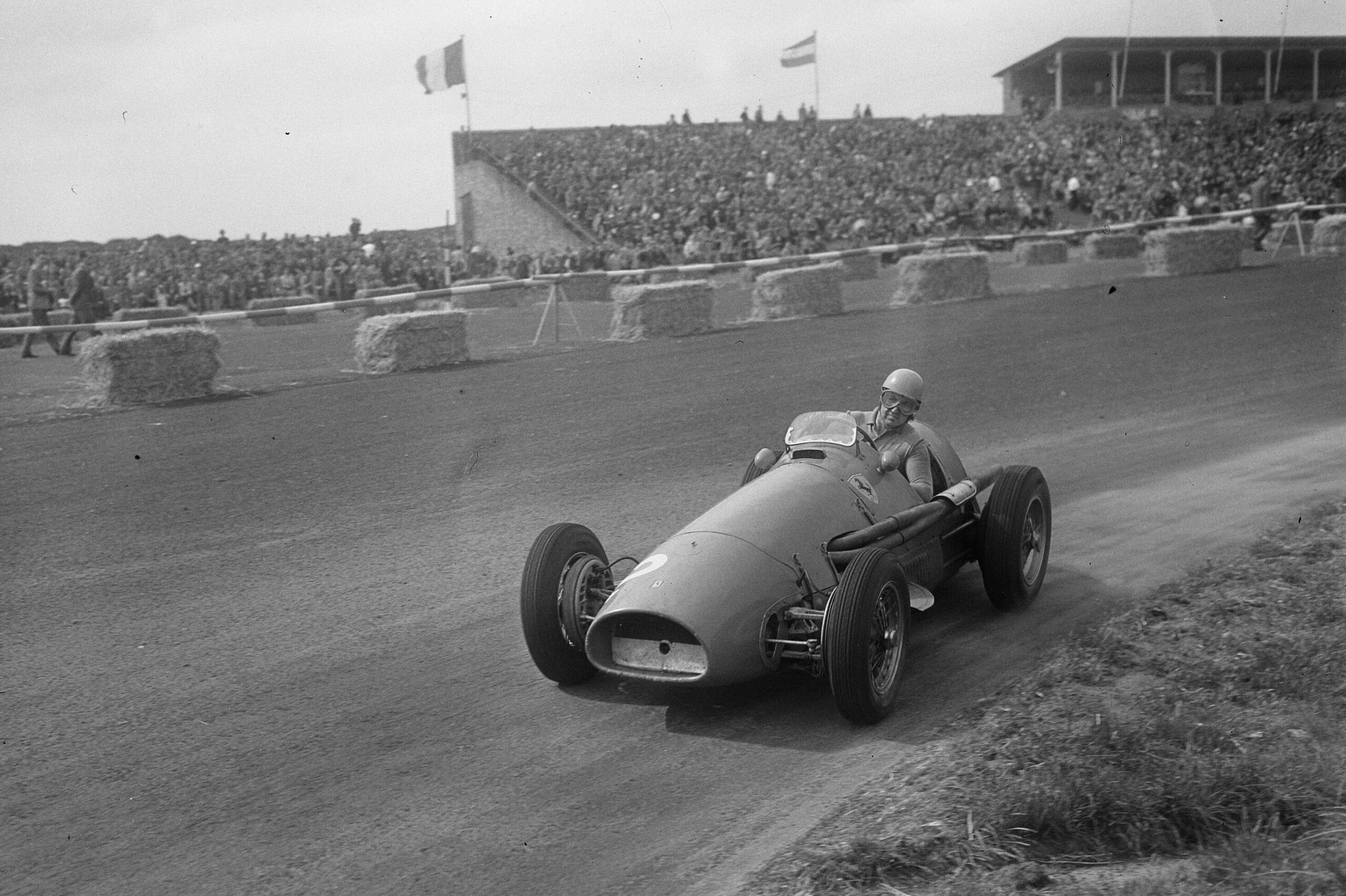
THE’last Italian to have won the Formula 1 World Championship was Alberto Ascarichampion in 1952 and in 1953 with the Ferrari 500. Since then 73 years have passed without an Italian driver managing to win the title. In 2026, however, there is a new name that brings Italy back to the top of Formula 1: Andrea Kimi Antonelli, born in Bologna in 2006, is currently first in the World Championship with 102 points ahead of George Russell. The championship is still open, but the historical comparison with Ascari is inevitable.
Ascari’s story is particular not only because he was the first driver to win two consecutive World Championships in F1. The Milanese driver was famous for his precise driving style, for a strong superstition and for a briefcase that he personally kept during the races. And just a few years after those two World Cups his death would come, in a accident a Monza in 1955at just 36 years old.
Alberto Ascari, the son of art who became a legend
Alberto Ascari was born in Milan on 13 July 1918 and he was the son of Antonio Ascarione of the most important Italian pilots of the 1920s. His father died in 1925 during the French Grand Prix in Montlhéry, when Alberto was just seven years old.
Despite this tragedy, Alberto entered the world of racing and in 1949 began his adventure with Scuderia Ferrari. His consecration came in 1952when the World Championship was contested with cars built according to Formula 2 regulations, with naturally aspirated engines of up to 2 litres. Ascari dominated the season at the wheel of the Ferrari 500winning six of the seven championship races in which he participated and winning his first world title.
In the 1953 came the encore. Ascari won five Grands Prix and became the first driver in the history of Formula 1 to win two consecutive World Championships. His driving was smooth and precise: he tended to leave a safety margin instead of continually pushing the car to the limit, an approach that helped make him one of the most effective drivers of his era.
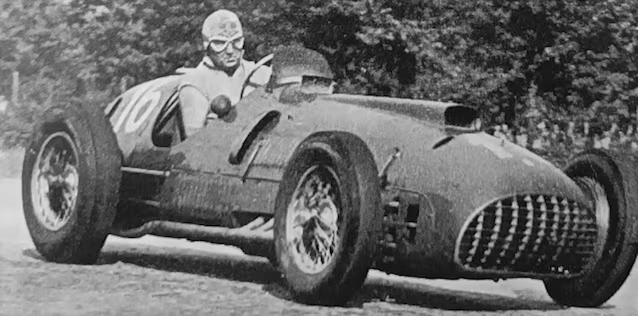
The 1953 Swiss GP: Ascari wins and wins his second World Championship
There Formula 1 from the 1950s we raced on very different circuits from the ones we know today. The single-seaters were open, the protections were minimal and many tracks crossed roads surrounded by trees, walls and other obstacles just a few meters from the track. One of the most characteristic examples was the Bremgarten circuitnear Bern, a road route of over 7 kilometers immersed in the woods. The dense vegetation close to the roadway created continuous contrasts of light and shadow; furthermore, in case of rain, the road surface struggled to dry, making the asphalt treacherous.
The August 23, 1953 this circuit hosted the eighth race of a season made up of nine events and Alberto Ascari arrived in Switzerland with a now a very significant advantage in the standings. Ascari started from second position, behind the Maserati of Juan Manuel Fangiobut the race soon turned into another demonstration of Ferrari’s strength. After 65 laps and over 473 kilometers of racing, Ascari crossed the finish line first ahead of teammates Nino Farina and Mike Hawthorn, completing a podium entirely Ferrari.
That victory, thelast of Ascari’s career in the F1 world championship, had a particular meaning. With the 9 points gained in Bremgarten, Ascari brought his world championship tally to 34.5 points, while Farina was second with 24 and Fangio third with 20.5. With only one race remaining, none of his rivals could catch him anymore: Alberto Ascari was world champion for the second time in a row.
The blue helmet and the briefcase that no one could touch
Ascari was also famous for his strong superstition. He avoided black cats, distrusted the numbers 13 and 17 and had a series of rituals related to racing. Among his lucky charms were a light blue shirt and a helmet of the same colortogether with the glasses and gloves he used during racing: everything was kept in one briefcase which Ascari did not allow anyone else to handle.
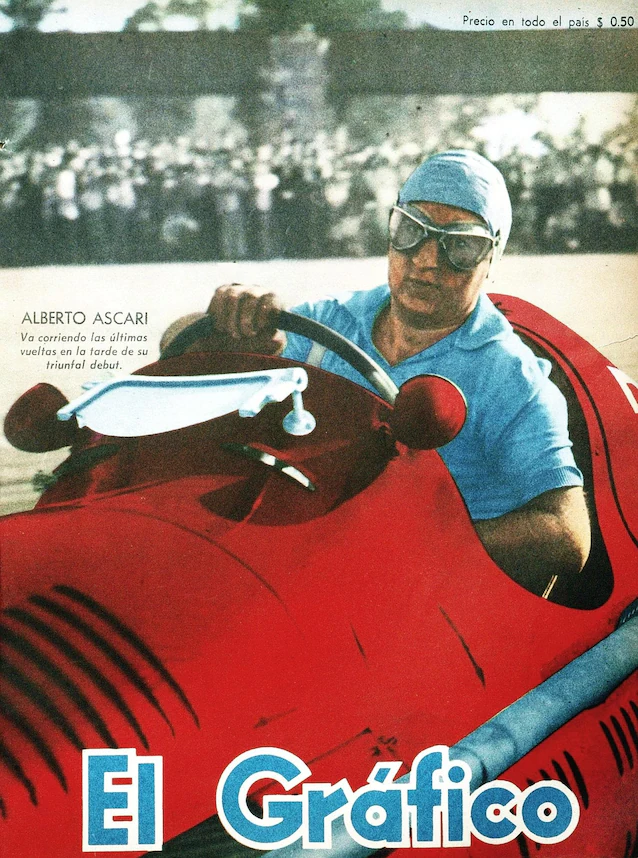
The superstition takes on a particular meaning in his last week of life. On May 22, 1955, during the Monaco Grand PrixAscari went off track with his Lancia D50 at the port chicane And ended up in the water. He survived the accident, suffering a fractured nasal septum and bruises, and was taken to hospital.
Only four days later he showed up at the Monza racetrack for attend the tests of a Ferrari Sport driven by Eugenio Castellotti, and suddenly decided to do a few laps. However, there was a difference compared to usual: that day he didn’t have his inseparable blue helmet with him. He then borrowed the white one from Castellotti. After just three laps Ascari went off the track and died in the accident. The precise cause of the loss of control has never been established with certainty.
The coincidences with the story of father Antonio are impressive. Antonio and Alberto both died on the 26th of the month, at the age of 36. The dynamics of the two accidents also present a disturbing parallel: both went off the track at the exit of a fast curve to the left. And they both left a wife and two children.
The Ascari Variation and the return of Italy with Kimi
The site of the accident in Monza still bears the name of the Milanese driver. There Ascari variant it was originally called Curva del Platano or del Vialone and was dedicated to Alberto Ascari in 1955. Over the years the stretch has been modified to reduce speeds, but the name has remained.
More than seven decades have passed since those two titles at Ferrari, with several Italians racing in Formula 1 and achieving victories and podiums, but no one has won the Drivers’ Championship again. In 2026, however, Kimi Antonelli has brought the tricolor back to the center of the championship fight: the Mercedes driver is at the top of the standings with 340 points, 102 more than teammate George Russell, stuck at 238, after 17 Grands Prix contested. The title is not yet assigned and the final result will be decided in the last races, but 73 years later Alberto Ascari, an Italian returns to actually compete for the Formula 1 World Championship.
