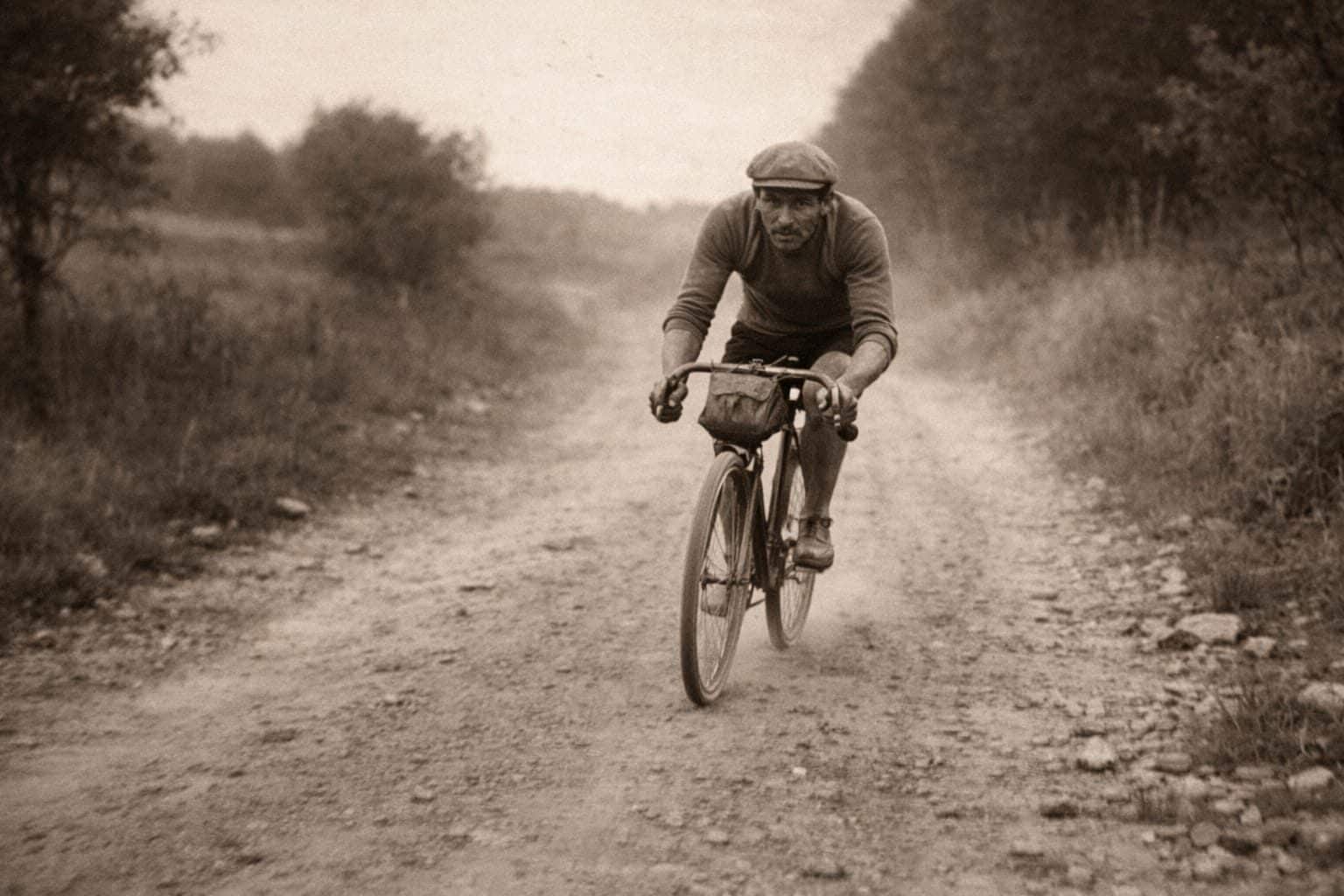
Today we look at the riders of the Tour de France or the Giro d’Italia as elite athletes, followed by flagships full of spare bikes, nutritionists, doctors and earphones always on. But if we went back a little more than a century, we would find a radically different world: dirt roads, 20 kilo bicycles without gearsno technical assistance and a diet that would horrify any sports nutritionist today. Why were the first cycling races so grueling? And because a runner from 1903 would have had good reason to scream”murderers!” against the organizers of the Tour de France?
400km stages and night starts: the numbers of the heroic era
The first edition of the Tour de France started on 1 July 1903 from Montgeron, near Paris, and consisted of six stages — on average over 400 km — for a total of approximately 2,400 kilometers. For comparison, the current Tour takes place over approximately 3,300km, but spread across twenty-one stages, with the average length per stage rarely exceeding 200km.
Not only that: the races of the time sometimes took place over distances exceeding 500 km and could last up to 20 hourswith departures at night. Stage races were run at a rate of once every two to three days, precisely to give the riders time to recover — which speaks volumes about how traumatic each individual effort was.
The first stage of the first edition of the Tour, from Paris to Lyon, was won by Maurice Garin in 17 hours and 45 minutes. Almost a whole day in the saddle, on roads that had nothing to do with the ones we know today. The first editions of the Tour fall within theheroic era of cyclingpopulated by runners who were athletes, mechanics and pioneers at the same time, forced to fend for themselves in every situation.
Bike without gears, dirt roads and punctures
The problem was not just the distance, but the means by which to deal with it. The first racing bikes were made of steel, they weighed approximately 18-20kg and they had to withstand the stresses of uneven terrain. They were not equipped with a gearbox and sometimes not even a freewheel: the riders pedaled with a fixed gear, and in the case of very steep slopes they had no choice but to get off and push the bike by hand. The scene has remained famous Octave Lapize that in 1910, during the first ascent of the Tourmalet, he shouted “Murderers!” to the organizers of the Tour while pushing the bike.
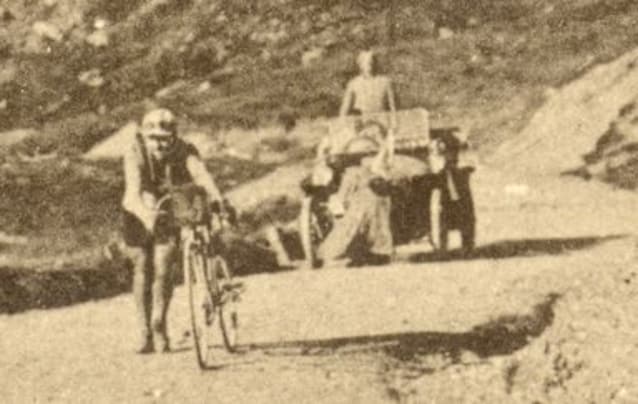
Anyone who wanted to change relationships was forced to stop, remove the rear wheel and reassemble it on the other side, where there was a second pinion with different teeth. An operation that could have cost precious minutes. Only in 1937 did the Tour organizers agree to the regulated use of the gearbox. For comparison, a modern carbon fiber racing bike must meet a UCI-set minimum weight of just 6.8kg — almost a third compared to the bikes of the heroic era.
If the bike was already a problem, the roads were even more so. The cyclists raced on mostly dirt roads full of potholes, without any technical assistance: if you got a puncture, you stopped and repaired it yourself. There were no flagships with spare bikes, nor mechanics ready to change a wheel in a few seconds. For this reason the runners wrapped three or four around each other spare shoulder tubes like ammunition belts.
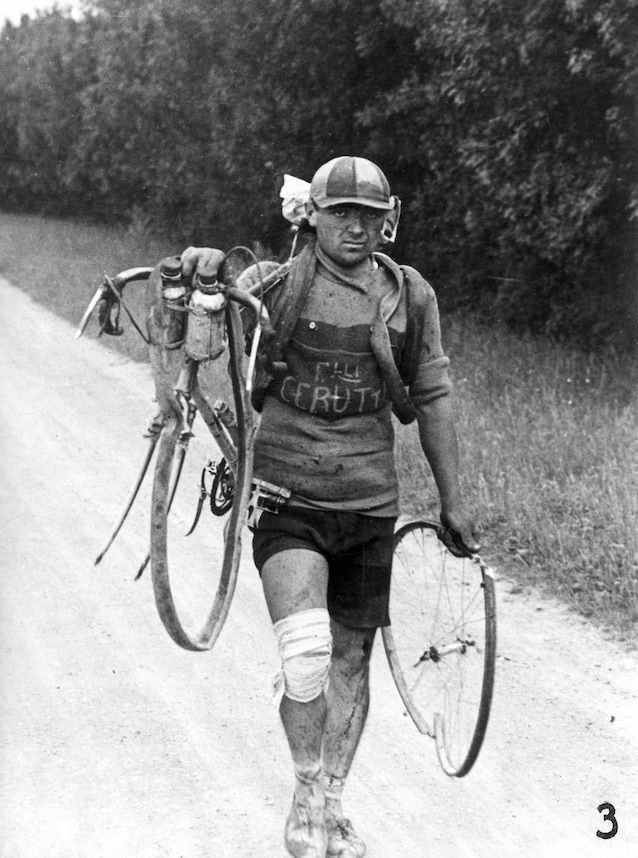
An episode that has become legend tells of Eugene Christophe who broke his fork in a stage of the Tour. Instead of retiring, he pushed the bike by hand for 14 kilometers to the nearest village, he found a blacksmith, borrowed the tools and repaired everything himself in four hours. In fact, the regulations did not allow external help, and required the runners to be completely self-sufficient.
What the runners ate (and drank).
In addition to technology, nutrition was also still underdeveloped and lacked a scientific basis. In the early days of cycling it was widely believed – however incorrect – thatalcohol improved resistance acting as a stimulant, so much so that drinks such as rum and sparkling wine were recommended to runners. In this context it is not surprising that the winner of the 1903 Tour, Maurice Garin, was known for consume wine and smoke during the race, while Henri Cornet, winner in 1904, followed a diet based on hot chocolate, tea, champagne and rice pudding.
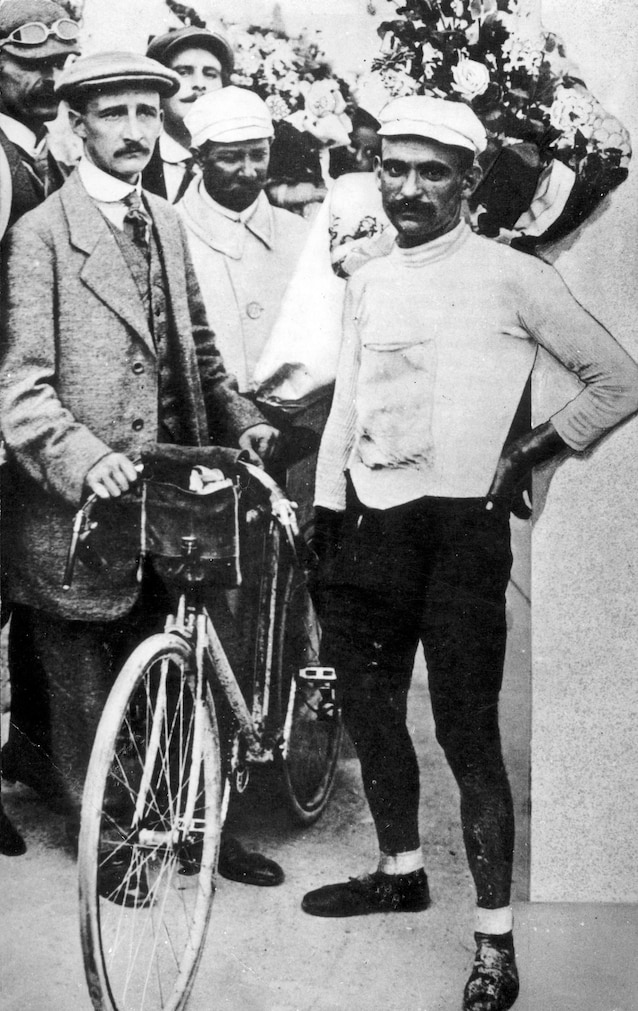
Things began to change with Fausto Coppi who, between the 1940s and 1950s, was among the first to follow a studied diet, marking a turning point in the approach to athletic training. Today, on the contrary, professional runners follow personalized nutritional plans per gram and can take even more 120 grams of carbohydrates per hourwith strategies defined in advance for each stage and integrated with gels, bars and salts dissolved in the water bottles.
This is accompanied by a completely different organization: each runner is supported by a staff made up of a sports director, mechanics, doctor, masseurs and dedicated chefs. During the race, radio contact with the team is continuous and assistance is immediate, with reserve bicycles and supplies always available from the following cars. Yet cycling remains one of the hardest sports ever: the distances have become shorter, the bikes have become lighter and the roads have become asphalted, but the mountains have remained the same, and so has the effort. Today it can be managed and optimized; then, simply, one suffered it.
