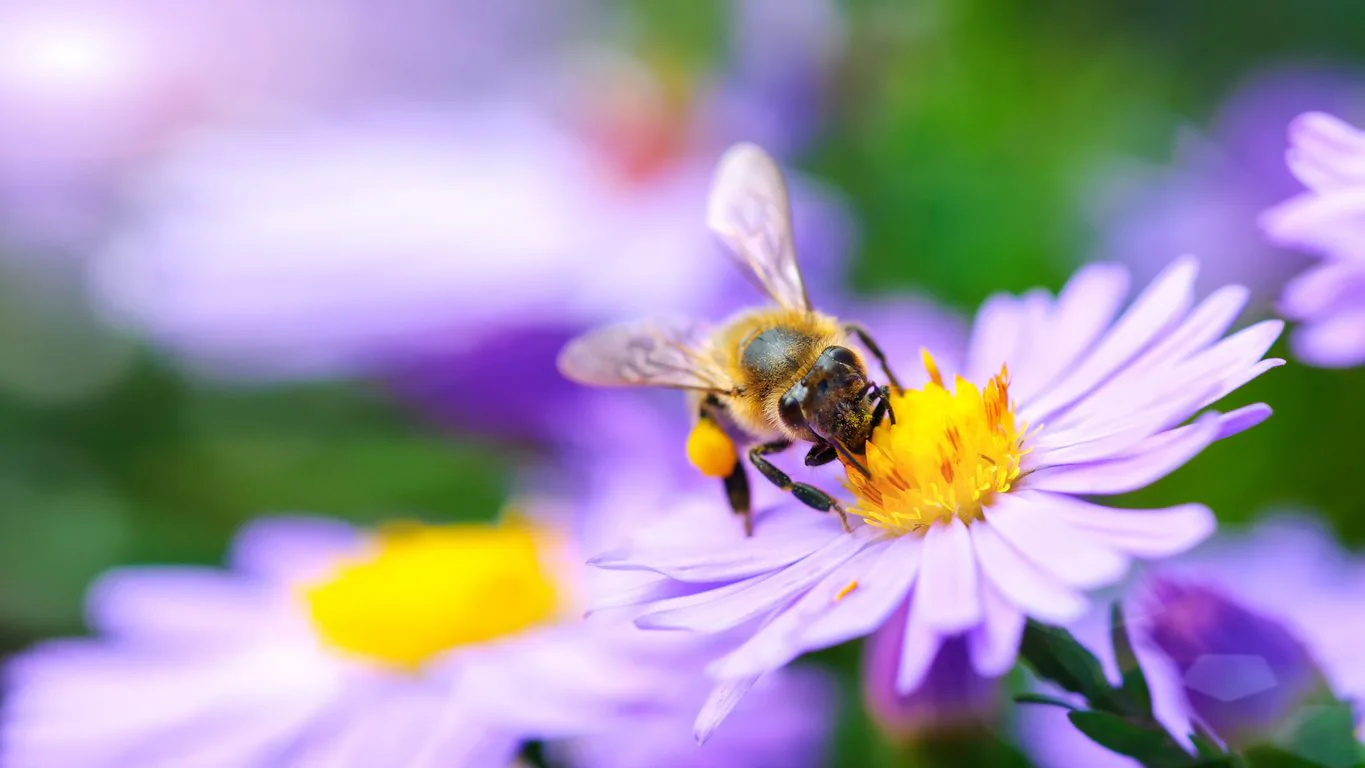
You know when we talk about the decline of bees and… need to protect them? In recent years these insects, essential for pollination, are facing ever greater pressuresfrom habitat loss to the use of pesticides to the effects of climate change. One of the moments when we could help them the mosthowever, it is precisely this: the end of summer. It might seem strange, because we are used to associating the beautiful season with sun and pollinating insects. Yet, between July and September, it can become particularly difficult for bees difficult to find enough nectar. This is shown by a recent study published in the scientific journal Functional Ecologyin which researchers tracked honey bees (Apis mellifera) in two British cities – Brighton and Edinburgh – during the entire season of activity, from April to October, directly measuring how much energy they gained from the nectar compared to that spent collecting it. The result? The worst time of the year turned out to be late summerwith a specific minimum ad August.
At the end of summer the flowers decrease, but the pollinators increase
But why is the end of summer a critical moment? The answer to this question is a 2018 article published by Balfour and colleagues, which highlights that the problem is linked above all to a combination of two factors: the number of flowers decreases available, While increases that of pollinators assets competing for the same resources. In other words, there is less nectar available when there are many insects looking for it. The situation is instead very different in springwhen the efficiency with which bees collect nectar reaches its highest values. In this period in fact, numerous trees pollinated by insects flourishsuch as horse chestnuts, willows and cherry trees, which provide large quantities of nectar.
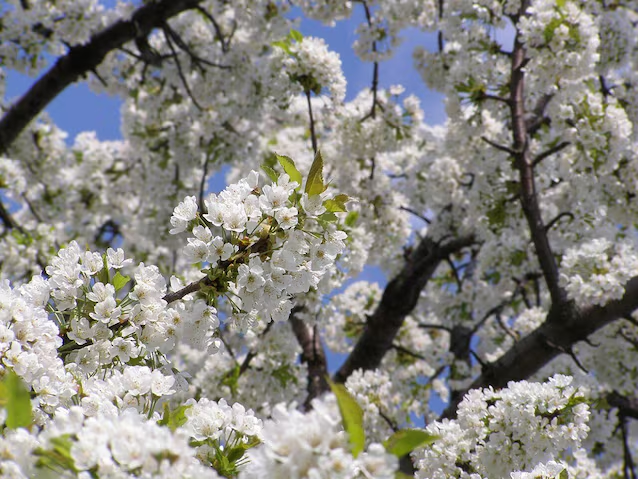
As summer progresses, many of these blooms end, while pollinator activity remains high: resources therefore decrease, but competition to grab them increases. In Great Britain, in fact, about 62% of pollinator species it reaches its peak of activity between July and August, the same period in which colonies of social bees, such as honeybees and bumblebees, also reach large sizes and must collect large quantities of resources both to feed the brood and to accumulate supplies.
The “energy performance” of bees reveals when they are finding less nectar
Understanding what time of year bees have the most difficulty finding food, however, is not as simple as it might seem. In the past, in fact, researchers have used various indirect indicators, including variations in weight of the hive: If a colony gains less weight, for example, it could mean less nectar is coming in. The problem is that this value can also be influenced by other factors, including weather conditions. Previous studies have in fact shown that temperature and humidity can significantly affect the weight variations of the hive, making it more difficult to distinguish the effect of the availability of flowers from that of the weather.
To get around this problem, in the recently published study, the team from the University of Sussex chose to directly follow individual bees as they collected nectarestimating how much energy they could obtain compared to what was needed to obtain it. In practice, they considered how much time the insects spent in flight or on the flowers, how many flowers they visited and how much energy was contained in the collected nectar. From this data they obtained a sort of “energy efficiency“of foraging: the more energetically rich nectar a bee can collect in a short time and with little effort, the more efficient the foraging is. On the contrary, if it has to fly longer or visit many flowers, it means that finding food is becoming more difficult. And it is precisely by observing this relationship over the course of the season which emerged that the efficiency was maximum in spring, while it progressively decreased until reaching the lowest values at the end of summer.
This is where a small, seemingly banal gesture comes into play that we can all do between July and September: let a few more weeds growcut lawns less often or favor plants that flower in late summer. For us it may seem like one minimal difference, but for these small and very important pollinating insects it can mean find nectar precisely at the time of the year when obtaining it becomes more difficult.
Sources
Balfour, N. J., Ollerton, J., Castellanos, M. C., & Ratnieks, F. L. (2018). British phenological records indicate high diversity and extinction rates among late-summer-flying pollinators. Biological Conservation, 222, 278-283. Czekońska, K., Łopuch, S., Miścicki, S., Bańkowski, J., & Szabla, K. (2023). Monitoring of hive weight changes in various landscapes: Czekońska et al. Apidologie, 54(3), 30. Garbuzov, M., Balfour, NJ, Shackleton, K., Al Toufailia, H., Scandian, L., & Ratnieks, FL (2020). Multiple methods of assessing nectar foraging conditions indicate peak foraging difficulty in late season. Insect Conservation and Diversity, 13(6), 532-542. Harris, C., Ratnieks, F. L., & Balfour, N. J. (2026). Foraging energies reveals late‐summer challenges for pollinators across two British cities. Functional Ecology.
