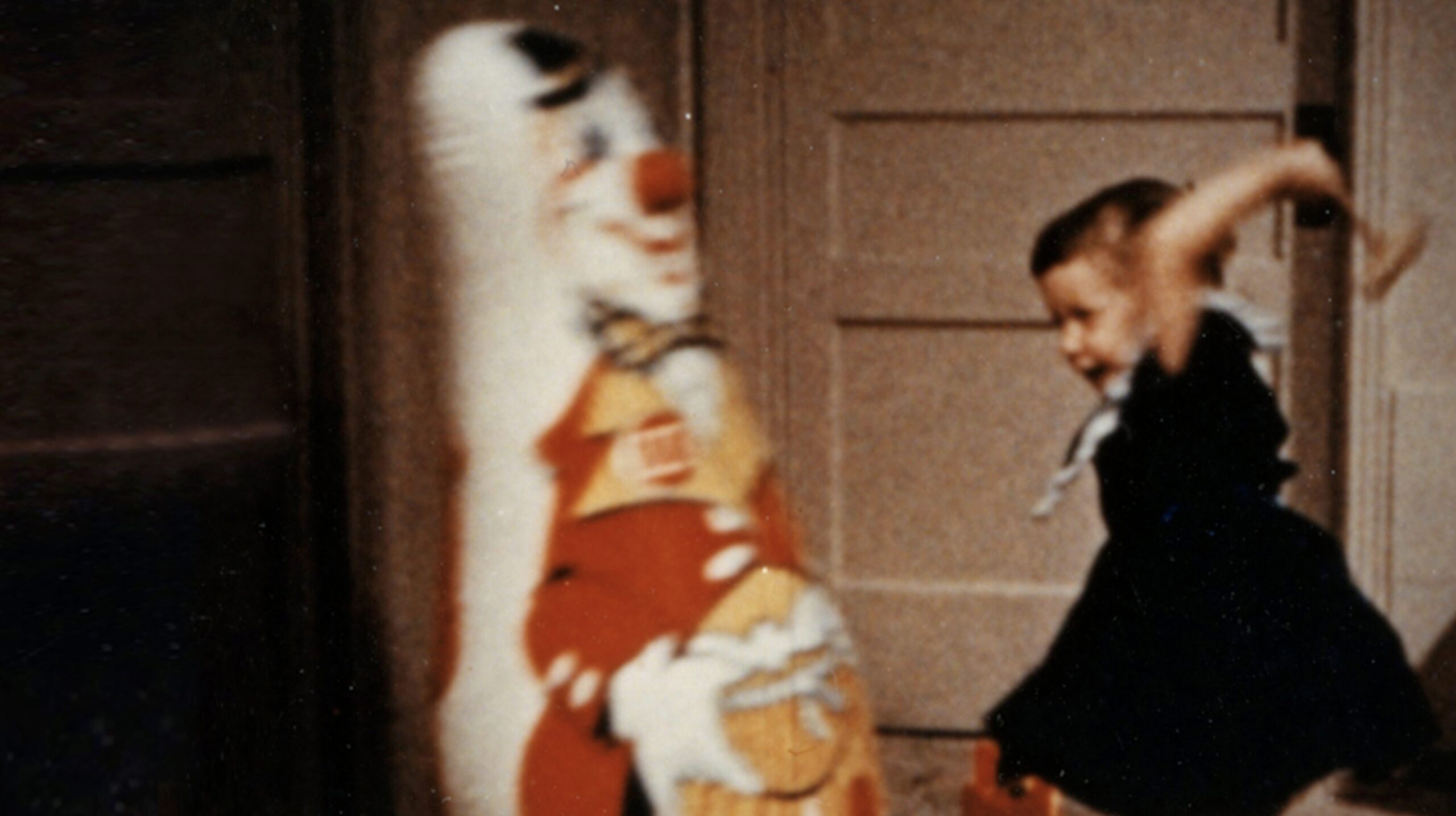
In the 1961 the Canadian psychologist Albert Bandura demonstrated, with an experiment that later became a cornerstone of social psychology, that children can learn complex behaviors, such asaggressioneven just through the simple observation of such behaviors in adults. This was not at all obvious in an era (the 1960s) that was dominated by behaviorist theories (behaviorism), according to which all human behavior was learned through rewards and punishments. Bandura, however, observed that children often they imitated gestures, attitudes or phrases of adults without any obvious positive reinforcement. This hypothesis led toBobo doll experimentfrom which emerged the form of learning that we call today social learning or social learning.
What Albert Bandura’s experiment proved
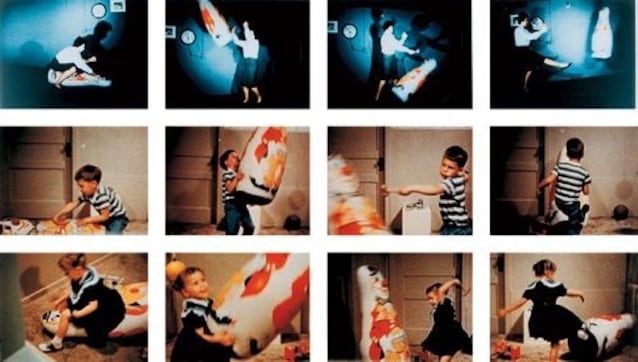
With the experiment of Bobo dollBandura wanted to rigorously test whether preschool children, after observing an adult playing aggressively with a toy object, would imitate that same behavior. In 1961 divided 72 children (36 boys and 36 girls) in preschool at Stanford University into 3 groups:
- Experimental group: the children were exposed to the observation of aggressive behaviors towards the inflatable Bobo doll by a collaborator, who acted as reference adult. In this case the adult hit the puppet with a toy hammer, kicked him, or threw him in the air, accompanying these gestures with phrases such as: “Hit Bobo on the nose!” and “Pum, pum!”
- Comparison group: the children observed the adult who he played peacefully with other play tools and who showed disinterest in Bobo.
- Control group: the children came immediately left free to play spontaneously with the objects made available and no preliminary phase of observation of an adult reference model was foreseen.
Subsequently, the children of the experimental group and the comparison group were led into a room with different toys, including Bobo. The researchers recorded their behaviors, observing how much they imitated the actions and words of the adult model. The results were very clear: the children who had witnessed the aggressive model tended to reproduce physical and verbal behaviors similar to those of the adult.
Even the choice of games was not random, since they tended to prefer toy guns, hammers and other objects that allowed them to simulate violent actions, leaving aside neutral games such as constructions, soft toys, balls and toy cars. The comparison group and the control group, who had not received aggressive stimulation, did not show this type of conduct but they played peacefully. The experiment clearly showed how the only one observation could be sufficient to teach and, consequently, internalize aggressive behaviors.
The imitation effect and the results
The Bobo doll experiment also had one observed gender difference: the children they tended to reproduce more aggressive physical behaviorsWhile the little girls showed greater verbal imitation. Furthermore, imitation was more evident when the young participant observed an adult same sexconfirming the importance ofidentification in the learning process: imitation. that is, it does not happen mechanically but is influenced by how much the subject recognizes or identifies himself in the model he observes. That is, we tend to imitate more those who we perceive as more similar to us, who we admire or who we consider authoritative and relevant.
Bandura continued over the years with a series of variations of the experimentintroducing new conditions. In some versions the adult role model was rewarded or punished for his aggressiveness; in others, children watched aggressive behavior only through a video. The results confirmed that children not only observe and imitate, but they also learn from the consequences of others’ actions: if the violent model was punished, imitation decreased, but if he was rewarded, they tended to repeat aggressive behavior more. This concept, known as vicarious reinforcement, showed how the consequences of actions can influence the learning of a certain behavior.
Do we also learn from TV and video games?
The implications of Bandura’s experiment went far beyond the laboratory. In the following years the psychologist himself underlined how the principles observed with the Bobo doll could also be extended to other contexts of indirect observation, such as television, cinema and, today, video games. If a child can learn aggressive behavior simply by watching an adult, what happens when the exposure involves television figures or virtual characters, often represented as successful or unpunished after violent actions?
Numerous subsequent studies have confirmed that repeated exposure Violent content in the media can increase children’s likelihood of engaging in aggressive behavior and considering violence as an acceptable means of resolving conflicts. Exposure to violence, therefore, remains an important risk factorFurthermore, it can predispose to a lack of empathy and helpful behavior towards others. However, as Bandura made clear several times, it is not an automatic or deterministic relationship: Not all children who observe violence become violent. In fact, the effect depends on many factors:
- from the degree of identification with the model (how much the child recognizes himself in the observed character);
- from the context family and school;
- by the presence or absence of educational discussions on the episodes observed;
- from the set of real experiences which contribute to forming the child’s moral vision.
Bandura himself invited the caution: His theory of social learning did not propose a dogma, but a trend. Observing aggressive behaviors, especially in the absence of discouraging consequences or associated with rewards, increases the likelihood that those behaviors will be imitated, but does not inevitably determine them. In this sense, it becomes of fundamental importance responsibility of adults in guiding the gaze of the little ones, helping them to understand and interpret what they see.
Exposure to violent media content
