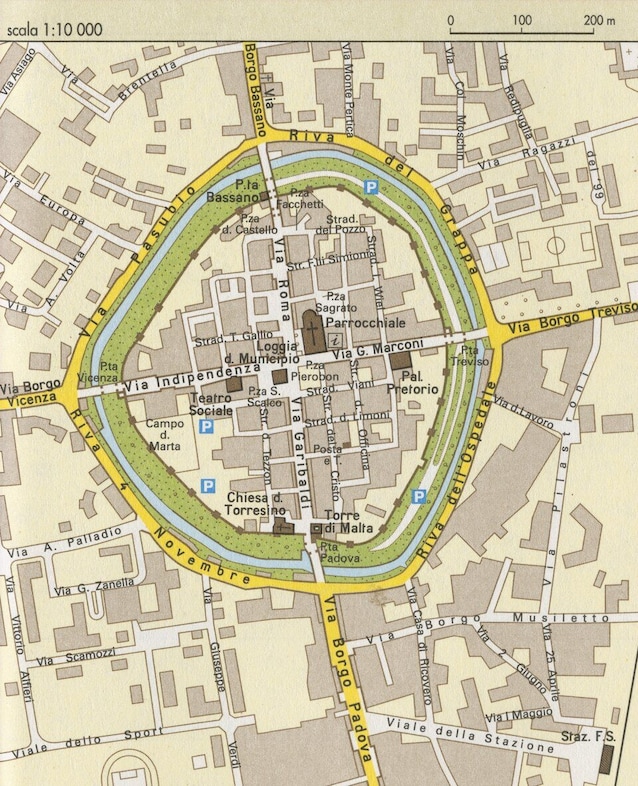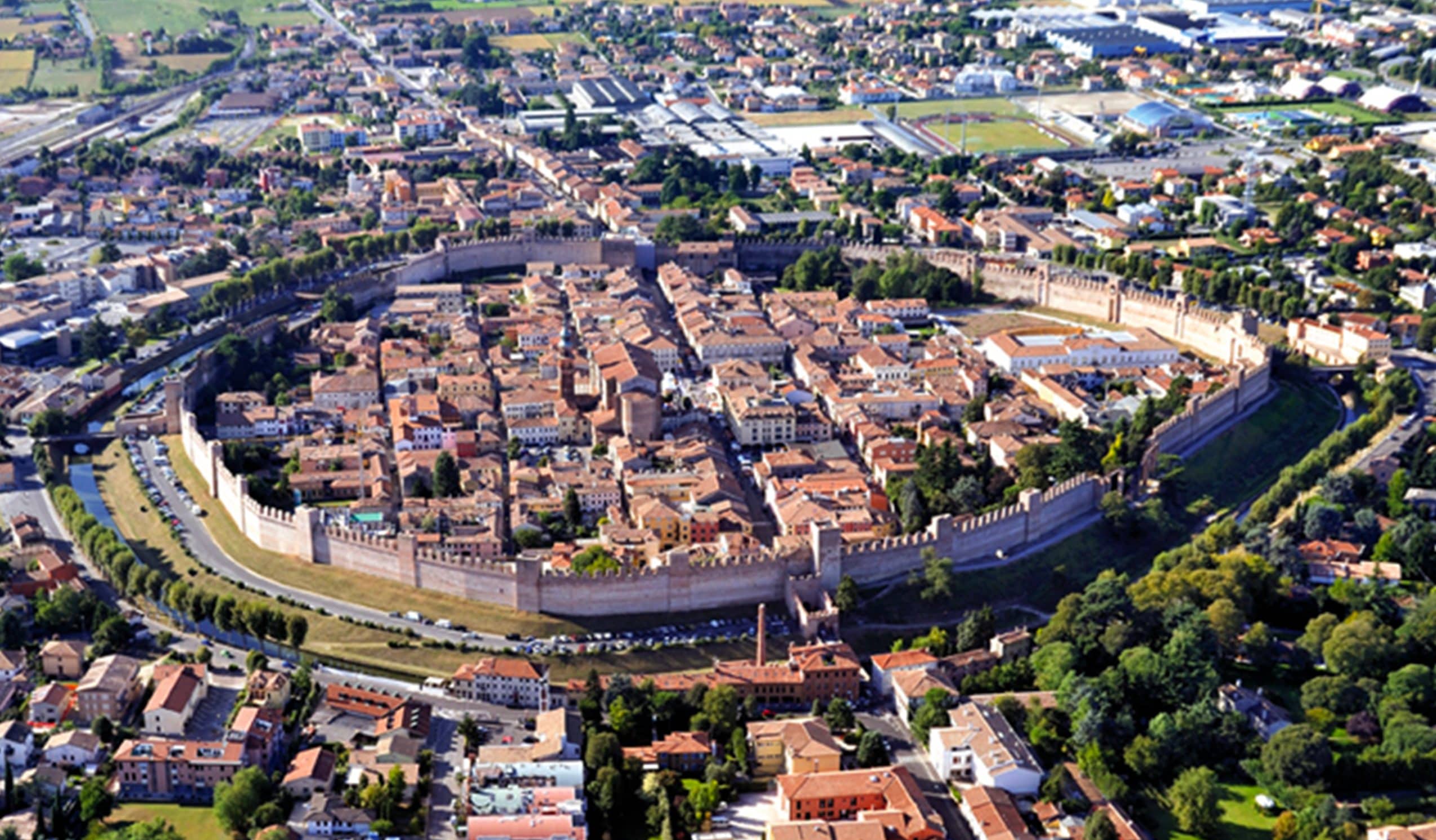
Citadel, a medieval village in the province of Padua (Veneto), is a real one masterpiece of military engineering of the 13th century, in which the particular elliptical geometry of the walls meets rigorous urban planning. With his patrol walkway entirely accessiblerepresents a testimony of how the defensive architecture of Padua was able to shape the landscape, thus achieving a profound balance between strategic function and visual harmony.
Talking about Cittadella is, without a doubt, a great opportunity to implement a multidisciplinary cognitive approach, in which engineering and architectural knowledge merge with historical and artistic knowledge. Certainly one of the primary elements to consider is the elliptical city wallwhich stands out for the preservation of the upper walkway, which is now entirely accessible to 15 meters high.
The walls (about 2.10 meters thick) are not made of solid stone, but were built using a technique that involves two external facings in bricks and river pebbles, filled inside with a cement mortar and aggregates. This structure made the walls elastic and resistant to the first artillery hits. Surprisingly, the walls rest on a shallow but very wide base, which unloads the weight evenly on the gravelly soil typical of the Venetian plain. The city walls, in all, measure 1461 metres: 12 main towers and 16 “torresini” they are willing to regular distance along the beltcrowned by a Guelph battlement.
All around the city there is, still today, a moat, used as a further protective and defensive system against attacks by enemies. Originally, the system was powered by the waters of the Brenta river. The moat was not just a physical obstacle, but a work of hydraulic engineering which regulated the drainage of the surrounding area.
Another interesting element from an architectural point of view certainly concerns the four doors which, not surprisingly, are facing the nerve centers of the entire area: Padua, Vicenza, Treviso, Bassano.
The Cardo and the Decumanus they are the two main roads that intersect in an arrangement that facilitated the rapid movement of troops from the interior to any point of the city walls.