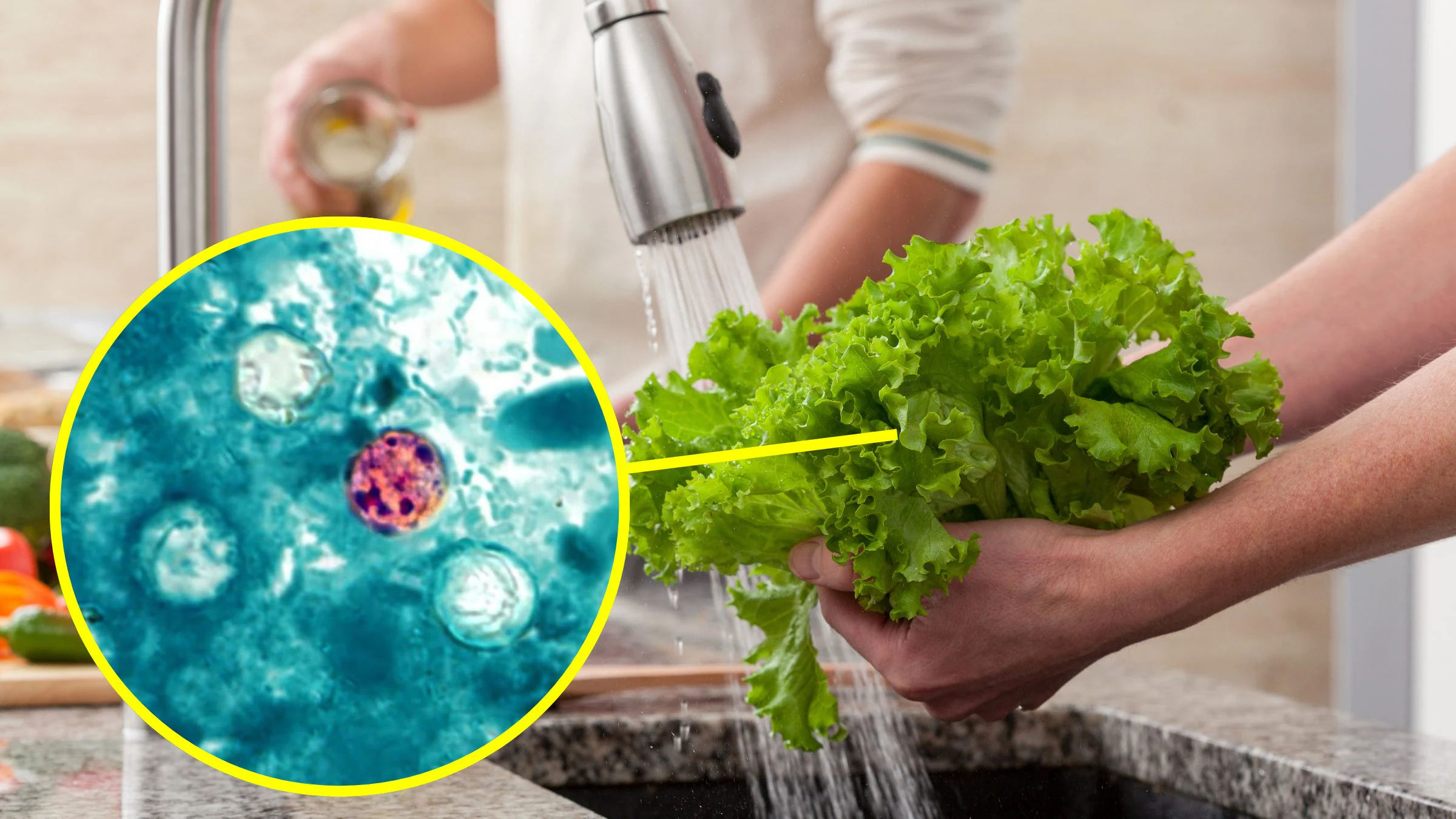
A microscopic parasite is the cause of a widespread outbreak of intestinal infections that is affecting thousands of people in the United States. Is called Cyclospora cayetanensis and is the body responsible for cyclosporiasisan infection that affects the intestines, triggering watery diarrhea, nausea, and abdominal cramps. According to an official document published on July 13, 2026 by Michigan Department of Health and Human Services (MDHHS), initial investigation results indicate the possible source of this massive outbreak linked to the consumption of lettuce and green leafy vegetables for salads. Only in Michigan did we go from a usual historical average of 40-50 infections per year to the record figure of 2,640 confirmed cases within a few weeks. At the moment there are no deaths linked to the epidemic.
The acute diarrhea epidemic in the USA and contagion data
According to official data from the CDC (Centers for Disease Control and Preventionthe American federal public health agency), have been confirmed since May 1, 2026 843 cases acquired on US soil in 32 stateswith another 1,500 cases still being analyzed to confirm whether it is indeed cyclosporiasis. The CDC itself specifies on its website that federal counts tend to be lower than those communicated day by day by individual state health departments (which also include probable cases), because each case must first be confirmed in the laboratory and then transmitted to higher levels. That’s why New York Times and other American newspapers, adding the data state by state, have calculated an overall figure of more than 4,000 diagnoses.
The epicenter of the epidemic is concentrated in Michigan. The Michigan Department of Health and Human Services (MDHHS) has in fact recorded 2,640 confirmed cases, with 44 hospitalizations. Considering that, in a “normal” year, the state usually has just between 40 and 50 infections in total, the current figure is more than fifty times higher than the historical average.
Why now? As the CDC reports, cyclosporiasis is one seasonal illness, which tends to appear in late spring and summer because the parasite “loves” the heat to complete its environmental cycle. Health authorities (both the CDC and the Food and Drug Administration, FDA) are still conducting the so-called tracebackthat is, the backward reconstruction of the food supply chain to identify contaminated food: a job complicated by the fact that there can be a delay between infection and the first symptoms even two weeksmaking it difficult for patients to remember precisely what they ate. In the past, outbreaks have been traced to imported raspberries, coriander, basil, snow peas, mixed salads and spring onions, but for the 2026 epidemic the source has not yet been identified with certainty.
What is Cyclospora cayetanensis: the identikit of the parasite
At the center of it all is a protozoanthat is, a unicellular organism (a single cell capable of living and reproducing autonomously), belonging to the group of coccidia, relatives of other intestinal parasites such as Cryptosporidium. As the WHO explains, its form of resistance, called oocysts (a sort of double-walled spherical “shell” that protects the parasite in the external environment), has a diameter of just 8-10 micrometers.
Unlike many bacteria responsible for food poisoning, which can spread within a few hours, the Cyclospora he needs to “mature”. According to the World Health Organization document, the oocysts expelled in the feces are not immediately infectious: they must first sporulate in the external environment, a process that generally takes at least a week, and is favored by warm temperatures between 23 and 32 °C (hence the summer seasonality). Only after sporulationwhich leads to the formation of two sporocysts each containing two sporozoites, the oocyst becomes capable of infect a new host.
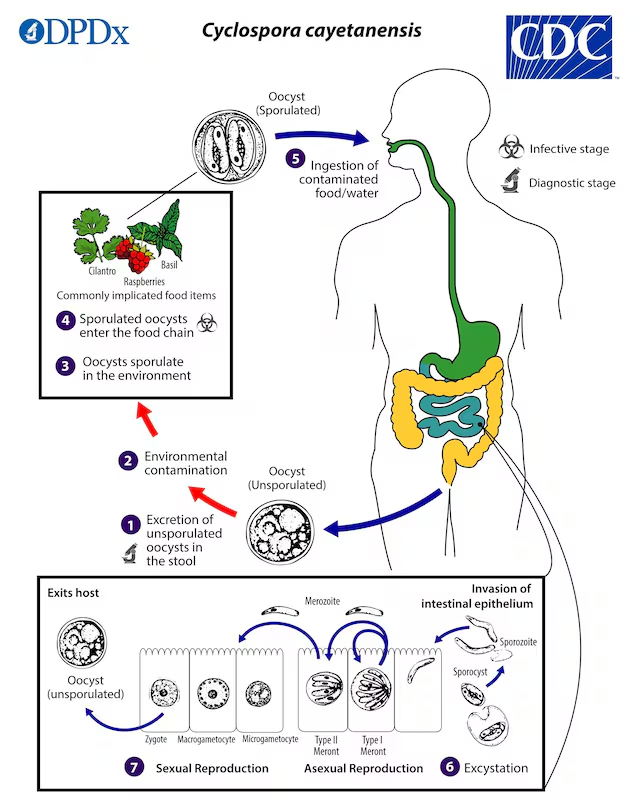
Humans are the only known host and, unlike many zoonoses (diseases that jump from animals to humans), there are no proven animal reservoirs here. However, this does not simplify the diagnosis: the techniques available (microscopy and molecular analyses) are complex and require specialized personnel and in any case they do not always allow us to distinguish between live and dead oocysts. Also for this reason, a swab or a “routine” stool analysis may not detect the parasite but specific research is needed, which the doctor must request in a targeted manner when the clinical suspicion justifies it.
How food and water contamination occurs: the causes
Cyclosporiasis It is transmitted via the fecal-oral routeor through the ingestion of traces of contaminated feces that ended up, mostly unintentionally, on food or water. The vehicle most frequently called into question is the sector fruit and vegetablesin particular products that are consumed raw and which are more difficult to wash thoroughly: raspberries, coriander, basil, bagged lettuce and mixed salads are among the recurring protagonists of past outbreaks, together with peas and spring onions. One of the possible channels, explains the WHO, is the contamination of irrigation water or by washing with human feces, which then deposits the oocysts on the surface of fruits and vegetables during cultivation or processing.
Even water itself, not just that used to irrigate fields, can be a vehicle: episodes linked to unfiltered drinking waterto well water and even ad river water mixed with that of the aqueduct. Oocysts, moreover, are rather resistant organisms and can survive for months in surface waters at low temperatures.
Precisely because newly expelled oocysts are not yet infectious, the CDC reports that the Direct person-to-person contagion is considered highly unlikely. It is not enough to be in contact with a sick person to become ill: the parasite must, in the meantime, have “matured” in the external environment for days or weeks, to then be ingested through contaminated food or water. It is a characteristic that clearly distinguishes cyclosporiasis from diseases such as viral intestinal flu, which are much more contagious from individual to individual.
Symptoms of intestinal infection and how to prevent it
The clinical picture described by the CDC is that of a gastroenteritis rather marked: watery diarrhea with frequent and intense discharge, accompanied by abdominal cramps, bloating, loss of appetite, weight loss, tiredness and muscle pain; more rarely, fever and vomiting appear. A distinctive element is thefluctuating trend: Symptoms may ease and then return in waves, and in untreated cases the infection can last for weeks, in some cases up to six weeks.
Standard therapy involves a specific antibiotic, the trimethoprim-sulfamethoxazole combination, to be taken for 7-10 days, together with adequate rehydration in the most severe cases. The CDC urges those with diarrhea that persists for more than a few days to contact a doctor and to explicitly report the suspicion of cyclosporiasis, especially if resident or passing through the areas affected by the ongoing outbreak.
Given that the main vehicle remains raw fruit and vegetables, the MDHHS has released some practical recommendations to reduce the risk, valid more generally for the entire cyclosporiasis season. The Michigan Health Department recommends that you prefer whole heads of lettuce instead of salads already washed and packaged in bags, remove the external leaves and wash the remaining ones carefully under running water, and whenever possible cook green leafy vegetables. Same treatment for basil and coriander, to be separated leaf by leaf and rinsed well (cooking remains the safest option here too); the spring onions must be trimmed, removed from the outer layer and washed carefully. The CDC adds general advice valid for any fresh product: eliminate bruised or damaged parts, refrigerate already cut fruit and vegetables and wash your hands thoroughly with soap and water before handling raw products.
