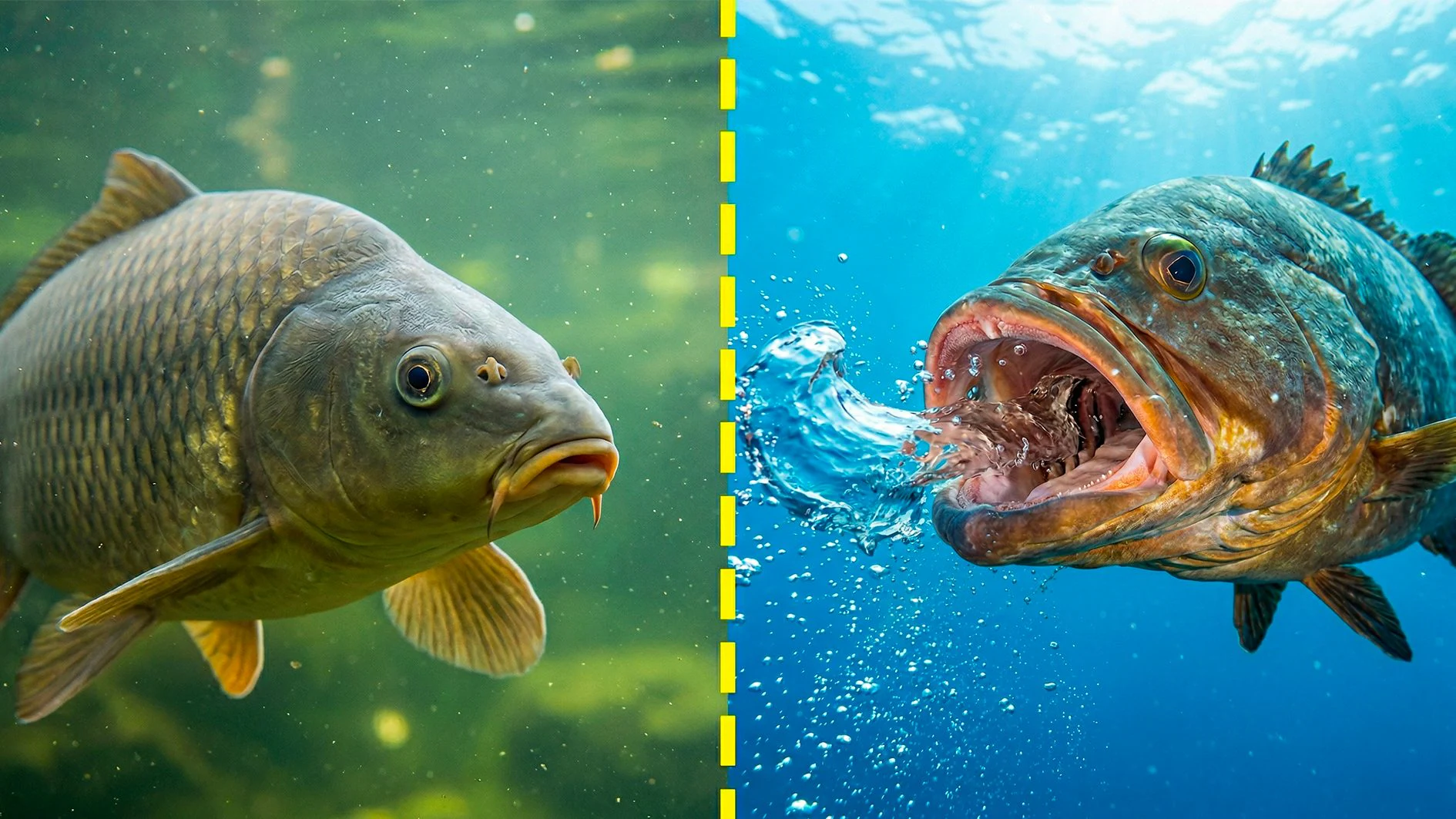
Yes, even fish drinksome more than others. Behind this seemingly banal question there is a physiological mechanism: the ability to maintain constant energy concentration of salts and water inside the body in relation to the external environment (osmoregulation). Understanding how fish manage water means understanding one of the challenges of aquatic life and discovering that a sea fish and a river fish, while appearing similar from the outside, actually live in almost opposite chemical conditions. At the basis of everything is theosmosis. When two solutions with different concentrations of salts are separated by one semipermeable membrane (like the wall of a cell) water tends to move spontaneously from the less concentrated solution towards the more concentrated one, in an attempt to equalize the differences. In freshwater fish, too much water enters through the gills and therefore they drink almost nothingwhile those of salt water risk the dehydration because it is water that comes out of their body: this is why they drink a lot, but they have had to develop strategies to eliminate excess sodium.
How sea fish drink: too much salt, too little water
In the case of marine fish, seawater has a much higher salt concentration of their body fluids and therefore bony fishes are hypoosmotic compared to the ocean that surrounds them. This means that water tends to leave their body by osmosisespecially through the gills. If there was no compensatory mechanism, they would become dehydrated.
So to survive, marine fish they continuously drink sea waterin large quantities. They produce though only very little urineas Evans’ 2008 review explains.
But drinking salt water leads to an excess of salts in the body that must be eliminated: how can they eliminate it if they produce little urine? When the fish drinks, its intestine absorbs much of the water, but along with the water it also absorbs monovalent ions such as sodium and chlorine. The heaviest and most divalent salts (such as soccer, magnesium And sulfates), on the other hand, tend not to be absorbed and are expelled directly from the anus. The residual excess sodium and chlorine is finally eliminated through specialized cells called gills chlorine cells (which the most recent research identifies as ionocytes or cells rich in mitochondria), capable of actively pumping ions outward against the concentration gradient.
Unlike bony fish, sharks, races and other cartilaginous fish do not have the osmoregulation problem. Their body fluids and seawater have the same osmotic pressure (isoosmotic) or only slightly hyperosmotic. The marine biologist Hammerschlag in his review on the osmoregulation of elasmobranchs (the subclass to which sharks and rays belong), explains that this osmotic pressure is maintained by accumulating large quantities of urea and other organic molecules, such as trimethylamine oxide (TMAO) which they replace salts to balance concentration. The result is that sharks neither have to drink nor produce large amounts of urine to manage water balance.
Freshwater fish: too much water, too few salts
Fish that live in rivers and lakes are hyperosmotic compared to the environment, that is, their body fluids contain a very high concentration of salts higher of the water that surrounds them. This means that water tends to continuously enter their body mainly through the gills by osmosis.
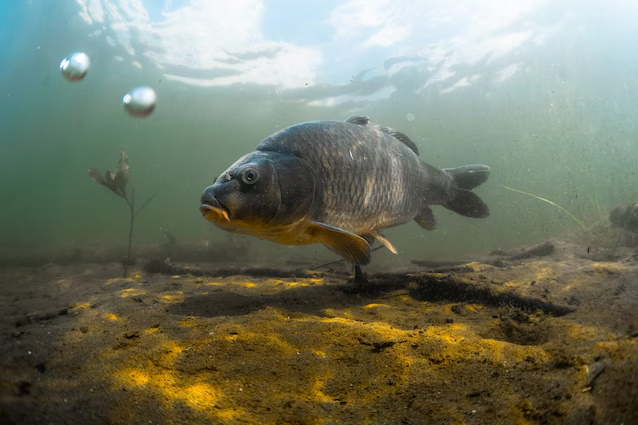
If it were not eliminated, this water would cause the cells to swell until they explode and it would greatly dilute body fluidsas reported by Whittamore in his 2011 study. To avoid this, freshwater fish produce large amount of very diluted urinedraining the excess liquid. The renal system is highly developed and works to retain precious salts (sodium, chlorine, soccer) which would otherwise be lost. The gills themselves play an active role, actively absorbing ions from the external environment even when the concentration in the water is very low. The result? Water is absorbed naturally by the body and therefore river and lake fish they don’t drink (or almost): at most, according to studies, they ingest small quantities of water when they eat.
Migratory fish and the change in hydration strategy
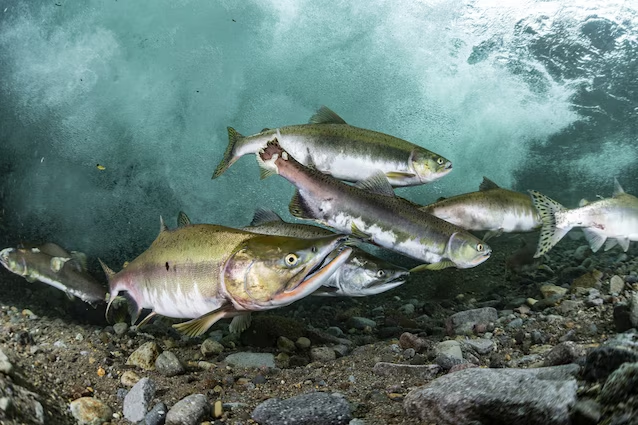
Some species, such as salmon and troutface both challenges throughout their lives given that they are born in fresh water, they migrate to the sea to growAnd they return to the rivers to reproduce. McCormick describes their situation well: these fish must completely change their osmotic strategy not once but several times, going from heavy urinators to heavy drinkers and vice versa. Change is gradualregulated by hormones, and requires a real reprogramming of the functioning of the kidneys and packs.