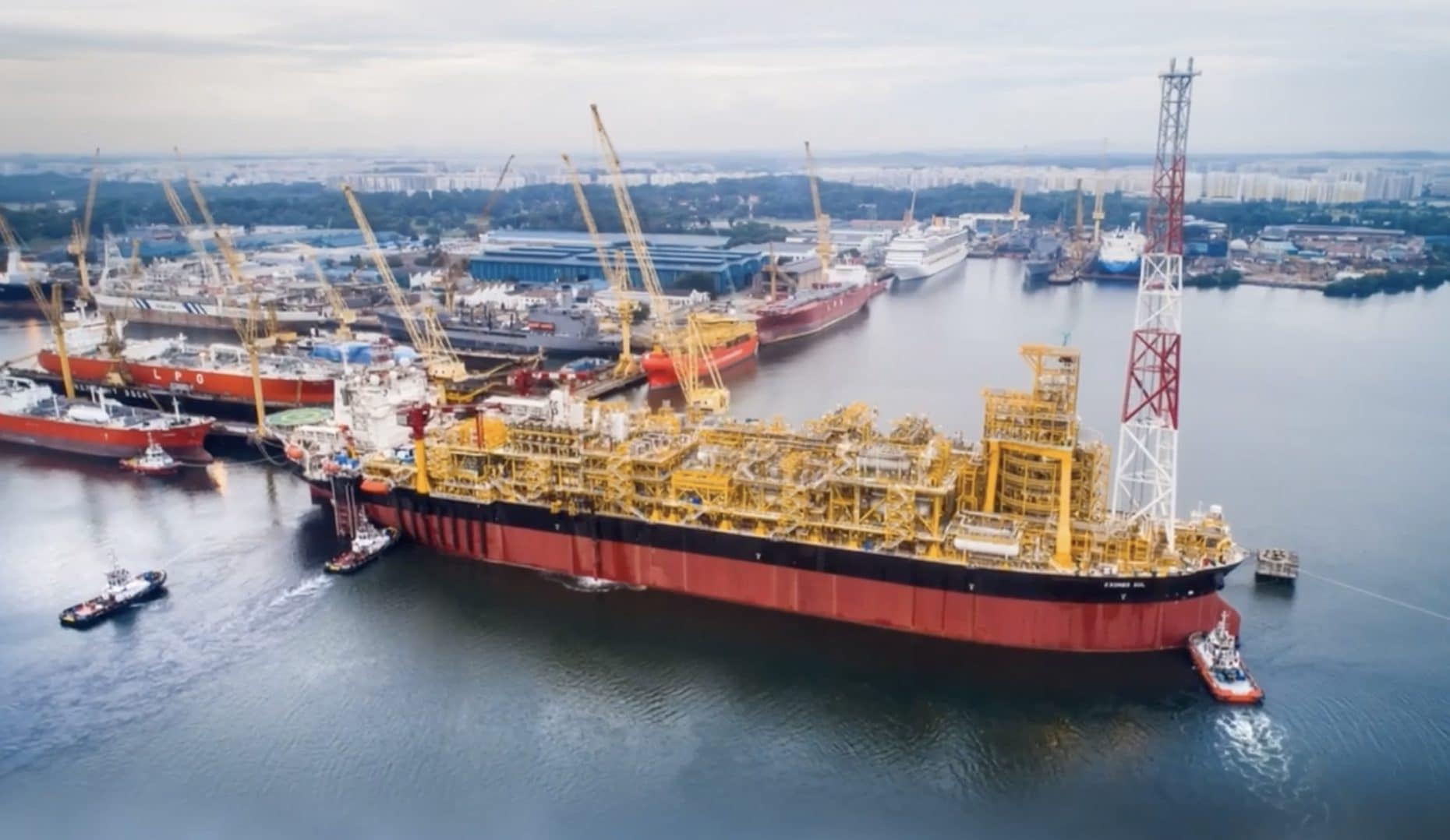
Extracting oil and gas is not easy: oil platforms exist to do this, but they generally only manage to reach a depth of 250 metres. Since the deposits closest to the surface are gradually being exhausted, it is necessary to go deeper. This is why they were born FPSO (Floating Production Storage and Offloading, in Italian Floating Production, Storage and Offloading Units), colossal floating units capable of producing and storing hydrocarbons.
At first glance an FPSO might seem like an ordinary ship, but in reality it is a autonomous and self-sufficient industrial plant from an energy point of view: a cross between a ship and an oil platform. In this video, we take you virtually on board one of these incredible structures, to show you how they work.
Before FPSOs
But first, let’s take a step back in history. Man has known oil since ancient times, but the rush for black gold really only began in 1859, with the first industrial well on land in the United States. Explorations of the seabed and offshore, however, arrived in the 1920s, with the first oil platforms a few meters from the coast.
Platforms which, however, had obvious technical limitations: they were in fact not very flexible (being anchored in a single fixed point) and capable of operating at a reduced maximum depth, of around 250 metres, because they were supported by rigid structures which would risk collapsing at greater depths. Furthermore, once the deposit was exhausted, the fixed structures cemented into the seabed remained there. Even if platforms of this type are still used, between the 80s and 90s an idea was born: to move everything onto a ship, the FPSO, which is anchored to the seabed at greater depths and which can be moved when the extraction operations come to an end.
Some numbers on FPSOs
At the beginning, old oil tankers were modified into FPSOs, but today this type of vessel is used built from scratch. Designing and building an FPSO, however, is not at all simple: consider that to build one you need approximately 2 million hours of design and about 25 million hours of work on construction sites and workshops.
We’re talking about a truly gigantic ship, over 350 meters longwhich can weigh around 100,000 tons. Inside, there are around 500 complex pieces of equipment, thousands of pipes and kilometers of cables: it is practically a small industrial city floating in the middle of the sea, where around a hundred people work.
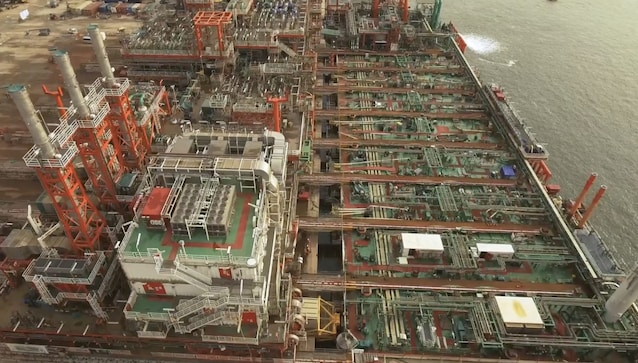
How an FPSO is made
What you see in the video is an FPSO model designed and built by the Italian company Saipemwhich deals with the construction of these giants.
Let’s start from a fundamental point: the well is there, but it is not on board. It is made by a drilling machine and then, thanks to modern technologies, the “well heads” directly onto the seabed. From here, the oil or gas rises through flexible pipes, i risersup to the ship. Then there are the people on board treatment plants which remove unwanted substances to make gas or oil pure.
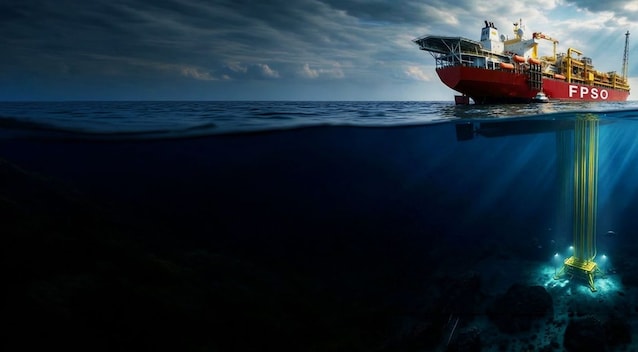
In fact, when the fluid comes out of the well it is not just oil, but a mixture of gas, water, crude oil and other substances. That’s why there are gods on board multiphase separators that divide the components based on density: the gas rises, the oil remains in the center and the water settles at the bottom. The oil is then stored and the contaminated water is reinjected into the well, while the gas is treated, compressed and used to produce energy or sent ashore for further treatment.
There are also on board cranewhich are used to move materials, machinery and other heavy components. But there is even thehelipad for the arrival of the helicopteras these ships are typically hundreds of kilometers away from the coast.
The secret to stability: anchoring
But in case of storm, when the sea is rough and the currents are strong, as these giants do to maintain its stability?
Dropping the anchor isn’t enough. In the video we analyze the two anchoring systems main ones: the first is lo spread mooringwhere the ship is tied by a series of anchors arranged radially on the seabed. The ship cannot rotate freely, but is oriented based on the prevailing direction of waves and currents. This is a system suitable for medium-low depths and takes about a month.
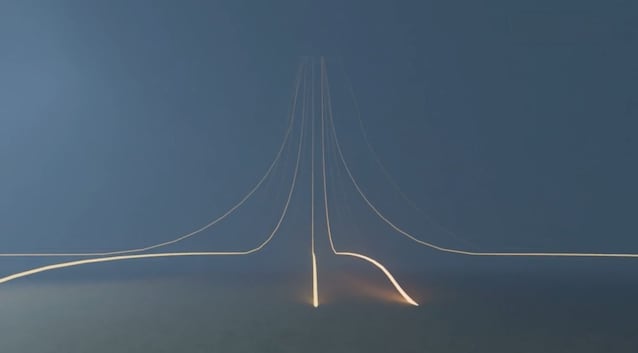
Then there is the system a turretwhich is more sophisticated and is a more secure system in variable or extreme weather conditions. The ship is connected to a turret anchored to the seabed, which works like a central pivot: so it can rotate on itself following the wind, waves and currents. The hoses that carry oil or gas, the risers, are connected to the turret, which remains stationary while the ship turns.
There is also an important critical issue to take into account, linked to stability. Think about it: when it is loaded, tons and tons of product come on board, and this changes the structure of the ship. To manage these variations there are: ballast tankstanks located in the hull: when the ship is unloaded, these tanks are filled with sea water. As the ship loads, they are progressively emptied to keep the ship stable and balanced.
Beyond extraction: the future of transition
Although the global goal has been the transition to renewables for more than twenty years, infrastructure such as these remains fundamental to ensure the necessary energy to industries and homes in this intermediate phase. Furthermore, their uses are varied: in fact, they can transform gas into liquid form, become warehouses for CO₂ and, perhaps one day, even become floating data centers.
