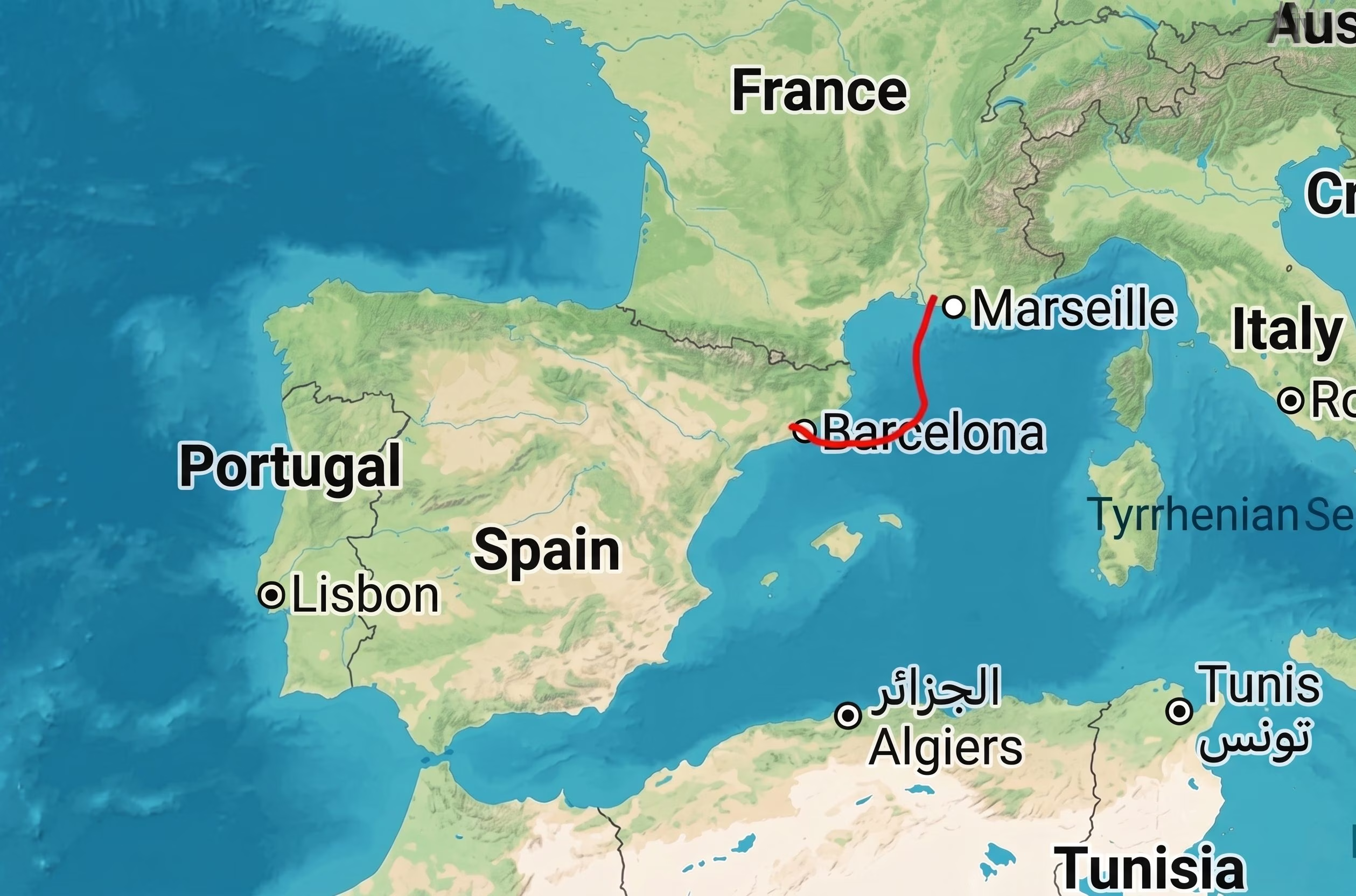
Named initially BarMar and inserted within the framework of the broader European project H2Medthe green hydrogen corridor Marseille-Barcelona consists of a underwater hydrogen pipeline conceived for the export of clean energy from the Iberian Peninsula to French and European territory. This is a strategic infrastructure destined to change the face of the continental energy market. We are talking about a transport conduit that will extend beyond that 400kmfacing notable engineering challenges and reaching impressive underwater depths in the Mediterranean.
The H2Med clean energy and subsea infrastructure project
THE’H2Med (formerly known as BarMar) is, to date, undoubtedly one of the most particular and ambitious energy infrastructure engineering projects in Europe, designed to transport green hydrogen gas from the Iberian peninsula to the heart of the continent. From an engineering and infrastructural point of view, the beating heart of the entire project is the offshore section that will connect Barcelona (Spain) to Marseille (France).
Regarding the size of the project, the numbers are truly enormous. The offshore pipeline, in fact, will cover a distance of approximately 450 kilometersreaching truly remarkable sea depths in the Mediterranean Sea basin that will exceed 2,000 meters in the Gulf of Lion trench.
From the point of view of materials used for the realization of the project, we can say that unlike conventional methane pipelines, hydrogen pipelines require special steels with a truly low carbon and microalloy cost (typically API 5L X65 or X70 grade) coupled with advanced polymeric internal coatings. This is essential to mitigate the phenomenon ofhydrogen embrittlement (hydrogen embrittlement), a chemical-physical process in which atomic hydrogen penetrates the crystalline lattice of steel, reducing its ductility and causing cracks with potentially catastrophic consequences.
The assumed nominal diameter of the pipeline has dimensions that vary between 28 and 36 inches (approximately 700-900 mm). In order to optimize the energy density of hydrogen (which has a very high specific energy per mass but a very low volumetric density), the gas will be compressed to operating pressures between 100 and 150 bars. The initial compressor station in Barcelona will require the installation of totally new generation centrifugal or reciprocating compressors, designed precisely for the thermodynamic properties of hydrogen (low molecular weight and high specific heat).
The economic impact of the green hydrogen corridor
The analysis of the costs and benefits of H2Med is based on its ability to redefine the European energy market, with an estimated investment for the BarMar route alone of approximately 2.5 billion euros. The infrastructure was designed to be able to transport up to 2 million tons of green hydrogen per yearwhich corresponds to approximately 10% of the total demand estimated for the European Union in 2030 within the REPowerEU plan.
From an economic-engineering point of view, the transport of energy via hydrogen pipelines over distances exceeding 400-500 km presents a series of economic advantages that are significantly superior to the transmission of the same amount of energy in the form of electricity via high voltage direct current (HVDC) submarine cables, followed by electrolysis at the destination.
The infrastructure will allow the Iberian peninsula (thanks to the high capacity factor of its photovoltaic and wind plants) to monetise the energy surplus, transforming itself from an “energy island” to an export hub towards the highly energy-intensive industrial districts of France, Germany and Northern Europe, stabilizing the prices of the energy carrier on the European spot market.
From Marseille to Barcelona: environmental impact and CO2
From a sustainability point of view, H2Med represents a real strategic pillar for achieving carbon neutrality. Thanks to the possibility of transporting hydrogen produced through water electrolysis powered by renewable sources, the project will allow us to avoid the emission of approximately 20 million tons of CO2 per yearwith the replacement of gray hydrogen (produced by steam reforming of methane) and fossil fuels in hard-to-abate industrial sectors (such as steelworks and petrochemicals).
