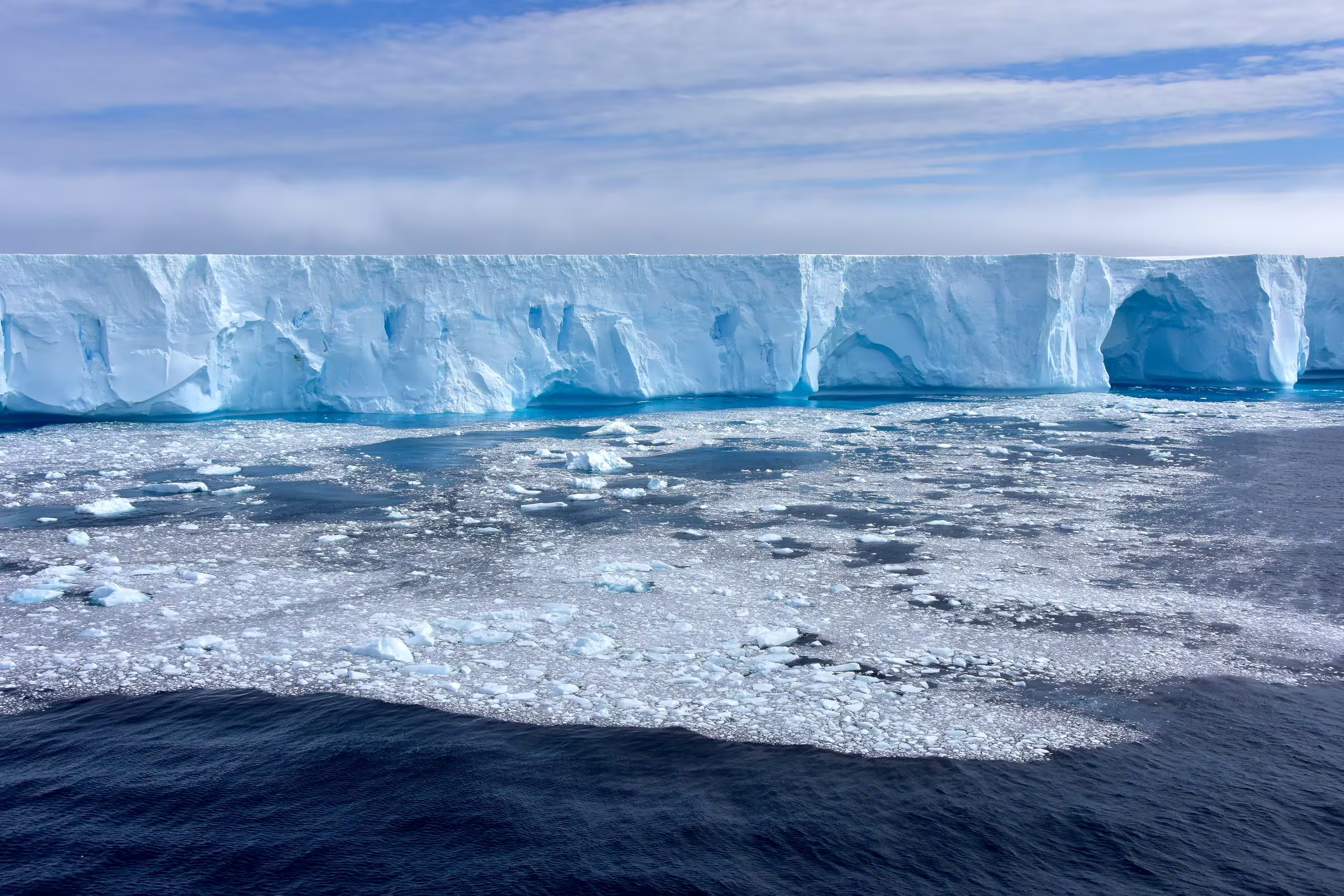
Between 1979 and 2023 the ice caps of Greenland and Antarctica they lost overall 11,309 billion tons of icecausing global sea levels to rise by 31.4 mm. Contributing to most of the rise was the Greenland Ice Sheet. A particularly interesting fact is that the loss of ice is not due so much to surface melting, but rather to increasingly rapid sliding of glaciers towards the ocean. These are the results of an international study, published in the journal Scientific Data Of Naturewhich was based on the analysis of satellite surveys made over time. The study is the result of an international collaboration involving Northumbria University, England, the National Institute of Geophysics and Volcanology (INGV), the European Space Agency (ESA) and NASA.
The study of satellite data of the ice sheets
To estimate the mass of ice lost from the ice caps in recent decades, researchers used data relating to 27 satellite missions carried out starting from the seventies. The analysis only took into account changes in the mass of the ice sheets and not those related to the ice shelves. In particular, INGV was involved in developing numerical models of the lifting that the Earth’s surface has undergone over time in response to the decrease in the weight of the ice (a phenomenon called “isostatic adjustment”).These assessments are important to develop a more precise estimate of the current situation melting rate of glaciers.
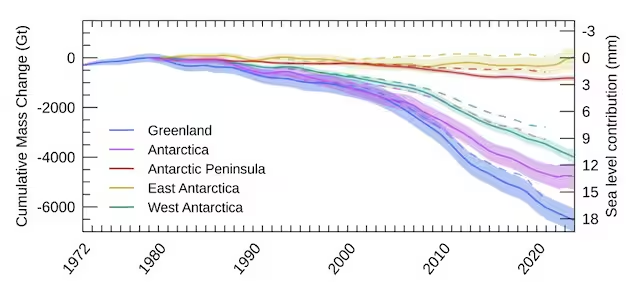
From the study on satellite images it emerged that between 1979 and 2023 the ice sheets of Greenland and Antarctica have lost overall 11,309 billion tons of ice, causing global sea levels to rise more than that 3 centimeters. The data reveals that the greatest ice loss occurred starting since the nineties. In the 1980s Greenland lost around 60 billion tonnes of ice per year, while in the first decade of the 2000s it lost 264 billion tonnes. As for Antarctica, between the 1980s and 2010s its loss went from around 48 billion tonnes to 202 billion tonnes. The largest contribution was from West Antarctica. Between 2020 and 2023 this process has undergone a slowdown both in Greenland, due to a mild summer, and in Antarctica, because very heavy snowfalls in eastern Antarctica partially compensated for the losses in other areas of the continent. However, this was a temporary phase in a picture of general acceleration of ice loss.
84% is caused by glaciers sliding towards the ocean
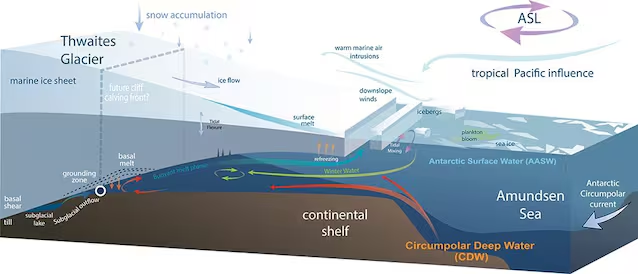
Unlike what you might think, only the 16% of ice loss from the ice caps was caused by their surface melting. Well the84% it was instead caused by increasingly rapid sliding of glaciers towards the ocean. At the basis of this phenomenon is the role of increasingly warm ocean waters due to the global warmingwhose currents erode the base of the ice shelves in Antarctica and the glacial tongues that extend into the fjords of Greenland. The result is that the platforms weaken, fracture and gradually lose their support function towards the ice found upstream on the mainland. As a result, this slides more quickly towards the sea, pouring into it and contributing to rising sea levels. One of the best known glaciers among those affected by the phenomenon is Thwaites, known asglacier of the Apocalypse”, in West Antarctica.
In the Arctic, ice loss occurs mainly in the form of calving huge icebergslike the one that recently capsized near the west coast of Greenland, coming from the large Sermeq Kujalleq glacier. The loss of ice from the polar caps contributes significantly to thesea level rise and studying their behavior in recent decades is essential to develop more accurate predictions for the future. Even a few centimeters of rise can cause a significant increase in coastal erosion, with the risk of many coastlines being submerged.
