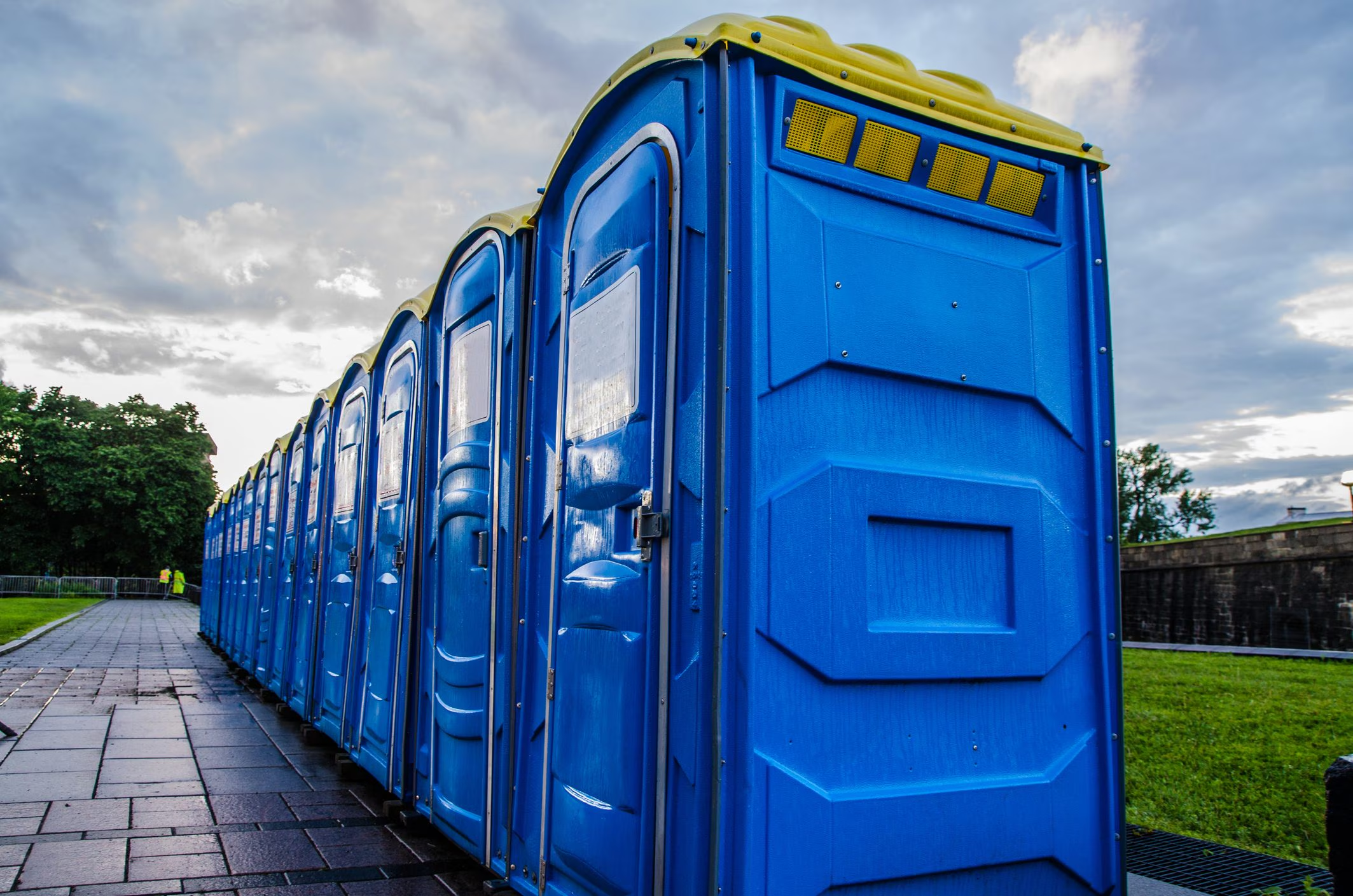
A concert, a party, a large outdoor event: these are all situations in which, at least once in our lives, we have found ourselves faced with a chemical bath. What looks like a simple container with a colored liquid is actually a small sanitization system designed to solve a very real problem: ensuring sanitation even in absence of a real sewage system. In fact, they allow organic waste to be collected and stored until it is transferred and emptied into suitable treatment systems. But how do they work? And above all, how do they manage not to immediately turn into a source of bad odors?
The answer lies in treatment liquid present in the lower tank. Contrary to a widespread belief, the blue liquid does not dissolve stool: his role is control biological processes that happen inside the container. This allows you to limit theto the formation of odors, allowing a temporary management of waste water.
As stated by a 2026 review by Maczukin, Yazıcıoğlu and Ciesielski published in Sustainabilitytraditional chemical toilet products use antimicrobial substances capable of reducing the activity of microorganisms responsible for degradation of matter organic, but which can often be dangerous for health: an example is formaldehyde which has been classified as carcinogenic for humans by the International Agency for Research on Cancer (IARC). More modern formulations are developing alternative, more environmentally sustainable, systems based on selected enzymes and microorganisms.
The blue liquid: how it works and why it reduces bad odors
The classic blue liquid that we see in chemical toiletsis not a simple perfume, but a weapon that stops bad odors in their tracks. Unlike the classic toilets we have at home, connected directly to the sewer system, i chemical toilets collect wastewater in a autonomous tank located under the cabin. This allows you to accumulate temporarily the material until empty e transfer towards structures dedicated to wastewater management.
If we “left” everything like this, our nostrils would ask for mercy after a while. Urine, feces or other organic waste undergoes microbiological transformations over time, decomposing and gradually releasing more and more smelly chemical compounds. To overcome this problem it was enough to intervene “chemically” using dei biocidal compoundscapable of reduce or inhibit the activity of microorganisms present in the wastewater, slowing down the processes responsible for the formation of bad odors.
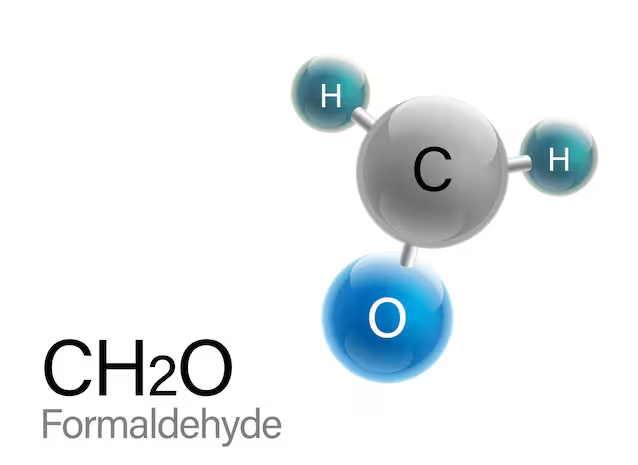
One of the most used traditionally has been the formaldehyde. In recent years, however, the use of this molecule and other traditional biocides has been subject of discussion due to the possible environmental and toxic consequences related to the management of treated wastewater. Formaldehyde itself, certainly among the substances most used for this purpose, is declared as carcinogenic to humans (Group 1) by the International Agency for Research on Cancer (IARC). Science is therefore moving towards solutions that allow effective odor control to be maintained, reducing the impact of the products used on the environment and health.
From biocides to organic products: how chemical toilets are changing
Today, the goal of a chemical toilet is no longer just to contain wastewater and block microbial activity, but to find more environmentally friendly systems and the people. Again according to the review published on Sustainabilitynew formulations are exploring the use of selected enzymes and microorganisms capable of promoting a controlled degradation of organic matter, without damaging humans and the environment. The main difference compared to traditional products is in the approach: while biocides mainly try to reduce the presence or activity of microorganisms as best as possible, Biological systems exploit physiological processes to improve the management of the tank contents without the possibility of releasing harmful substances into the environment. For example, specific bacterial chemical baths are added to the liquid they metabolize ammonia present in urine and sulphurous gases from feces, or completely block the formation of these compounds. Another alternative is to directly use “enzyme cocktails“rich in Cellulase, Amylase, Lipase and Protease, enzymes that break down the molecules of everything that reaches the tank, from the cellulose in toilet paper to the protein or fatty residues present in the faeces. Thus the processes of formation of bad odors are prevented upstream.
This evolution follows a more general and increasingly important principle of health management: it is not enough to collect wastewater, but we must ensure that it comes managed safely to avoid risks to public health. The World Health Organization (WHO) guidelines on sanitization underline the importance of systems capable of properly contain and treat human wasteespecially in contexts where no permanent infrastructure is availablejust as in the case of festivals and concerts that use chemical toilets.
Chemical toilets are therefore an excellent temporary solution whose functioning depends from the balance between wastewater collection, control of biological processes and subsequent management of the collected material.
