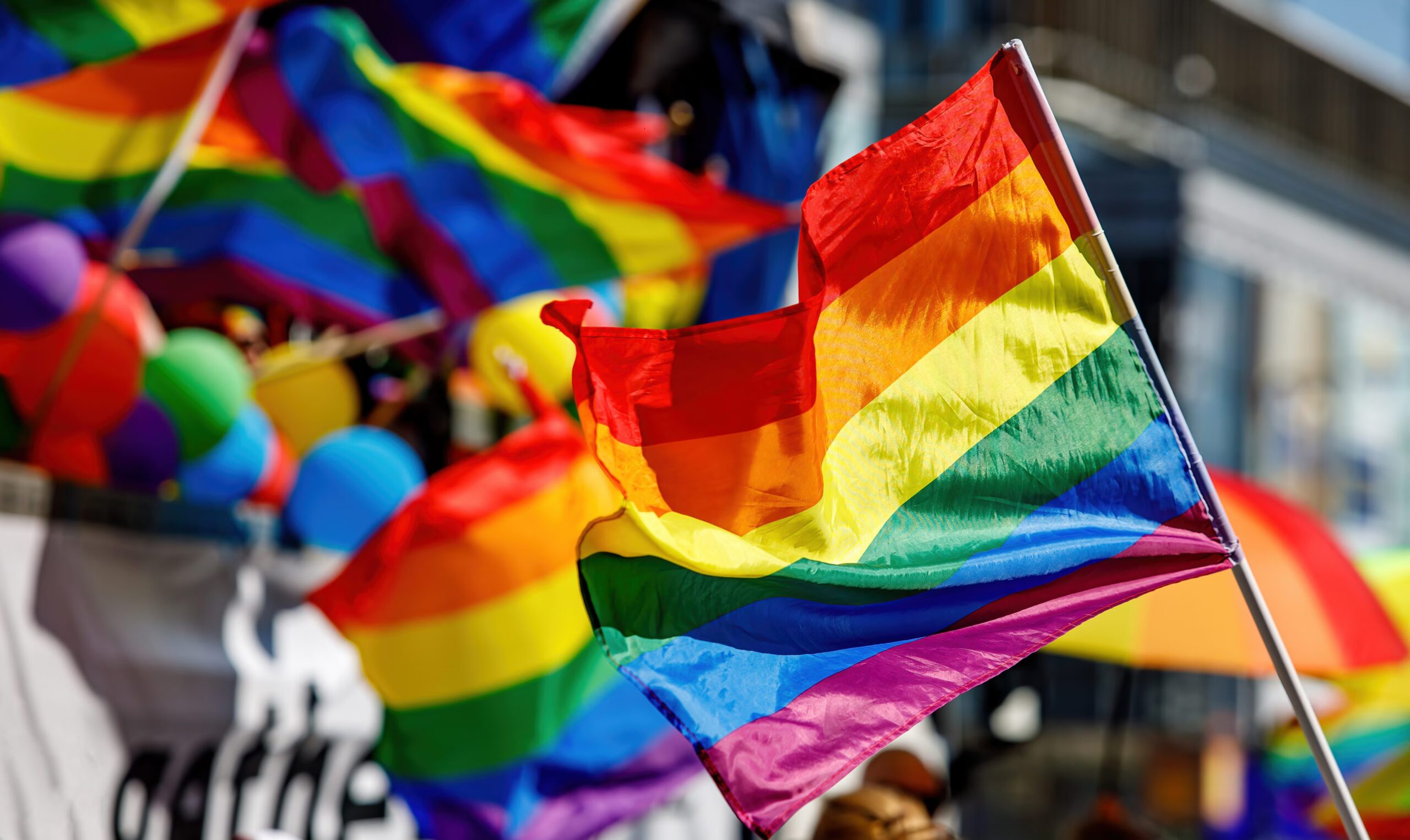
From the rainbow flag first flown in 1978 in San Francisco, designed by Gilbert Baker commissioned by the politician and activist Harvey Milk, until its most recent evolution, the inclusive intersex pride flagcreated by Valentino Vecchietti in 2021, the LGBTQAI+ flags they have evolved over time to embrace, include and respect all different identities, declinations and preferences in the sexual and romantic sphere.
To date, Vecchietti’s flag embraces all previous versions, including people with different sexual orientations, different gender identities and expressions and people with different sexual characteristics, as well as openly siding with discrimination of all kinds.
Rainbow flag designed by Gilbert Baker with 8 colors (1978)
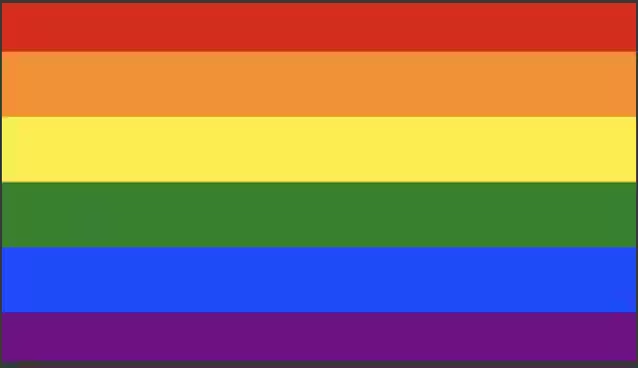
The first version of the rainbow flag was created by Gilbert BakerAmerican artist and activist, at the request of Harvey MilkSan Francisco politician, leader of the gay rights movement, for Gay Freedom Day: the idea was to create a banner that could represent all sexual and romantic declinations and preferences, without distinction, to be waved with pride.
The flag was originally an 8-striped rainbow, and then changed to one 6-striped flag – red, orange, yellow, green, blue and purple – for greater simplicity and production needs since 1979: it was in fact difficult to find pink fabric, and subsequently Baker, to ensure that the stripes were even, combined the purple and blue ones in a single blue colour.
Baker chose the rainbow as a symbol of variety and positivityprecisely to represent the different sexual and romantic orientations, in all their declinations.
The rainbow flag was first flown on November 25, 1978 in San Francisco: two days later, on November 27, Harvey Milk was murdered by a former colleague. The event greatly disturbed public opinion and, in the following months, many demonstrations were held in which Baker’s rainbow flag was waved, which became the first official symbol of the community.
Transgender pride flag designed by Monica Helms, (1999)
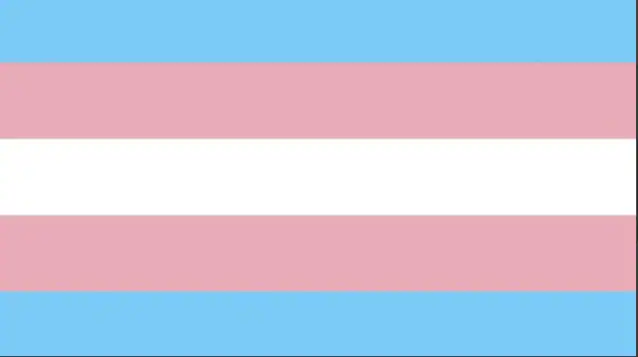
Monica Helmsan American transgender woman, created the transgender pride flag at the end of the 1990s, precisely to represent the natural diversity in gender identity and expression.
The five stripes are colored blue and pink – the classic colors relating to male and female – e white – for those who are in transition, or who have a neutral gender identity, or those who have an undefined gender identity. The pink and blue are then repeated, precisely to give the idea of a possible transition.
Intersex pride flag created by Morgan Carpenter (2013)
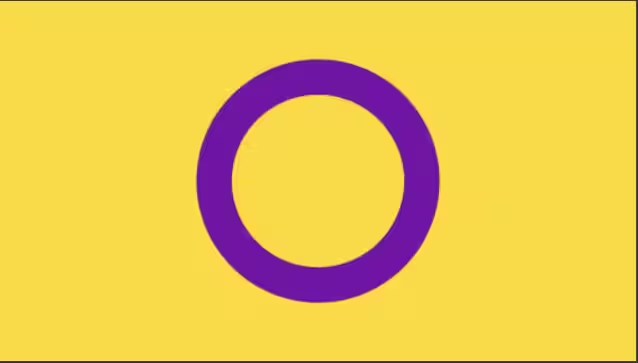
There intersex pride flag was created by Morgan Carpenterco-founder of Intersex Rights Australia, the main Australian support, education and protection organization for people with intersex variations.
The term intersexual highlights the natural diversity of our primary sexual characteristics, those we are born with, and secondary, those we develop
The colors chosen, yellow and purpleare deliberately an alternative to pink and blue: at the center of the yellow flag there is a unbroken purple circle which symbolizes the fact that intersex people are born complete and whole, with complete potential.
The Philly Pride flag presented by Amber Hikes (2017)
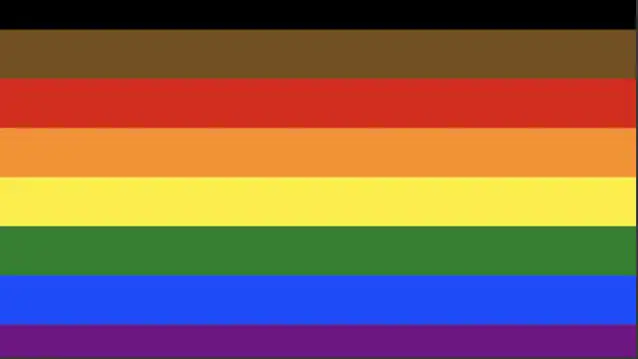
In 2017, on the occasion of Philadelphia Pride, the Philly Prideand within the project “More colour, more pride”a special flag is created, overseen by Amber Hikes of the Office of LGBTQAI+ Affairs in America.
Two stripes of color are added at the top black and brownto the Gilbert Baker flag for reasons of racial inclusion: the black and brown stripes represent people of color, people of Hispanic origin, and indigenous populations within the community.
It was asignificant evolutionbecause for the first time the classic Pride flag is modified: although there were several objections, this modification paved the way for subsequent evolutions.
Progress Pride flag designed by Daniel Quasar (2018)
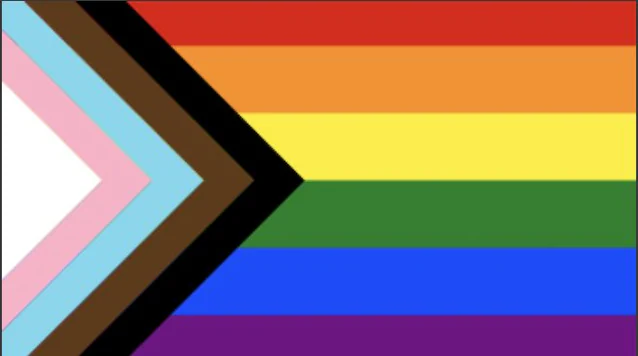
The non-binary American designer Daniel Quasar he created the flag Progress Pridewith the intention of incorporate into a single flag both that of Philly Pride and that of Monica Helms.
Furthermore, this flag is also promoted with the aim of recognizing the stigma that still hangs over people living with l‘HIV/AIDS and losses of loved ones due to HIV/AIDS.
The inclusive intersex pride flag, created by Valentino Vecchietti (2021)
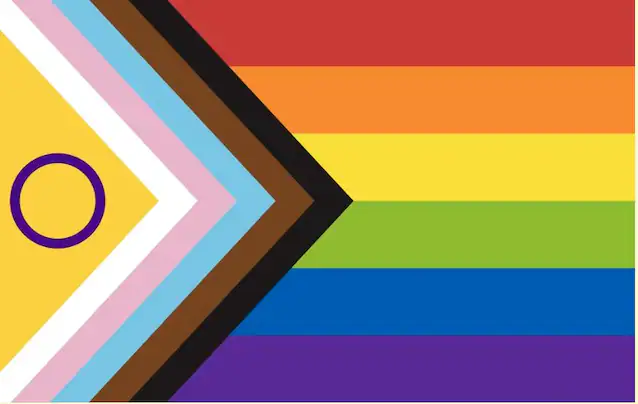
In 2021, Valentino Vecchietti (she/her) founder of Intersex Equality Rights, award-winning activist for intersex equality, writer, artist and consultant has created a new Pride flag that respects and includes all previous versionsplus a declared inclusion of asexuality and aromanticism and other variations and choices of preferences.
This version includes a purple circle on a yellow background inside the side triangle and openly symbolizes and promotes the princes of Yogyakartaupdated in 2017, to protect and enforce human rights law relating to sexual orientation and gender identity.
