Over 100 confirmed cases, 904 suspected, 101 confirmed cases, 119 suspected deaths and 10 confirmed deaths (data updated to May 24, CDC) in less than a week from the official declaration. Huge numbers for aEbola epidemicwhich normally has dozens of cases and already reports a few positive cases. To complicate everything, a little-known species of virus (Bundibugyo), and a context, like that of the Ituri region, of armed conflict and a population that often doesn’t even trust health institutions.
We interviewed Chiara Montaldoinfectious disease specialist and Medical Director of Doctors Without Borders, who worked in several Ebola epidemics in Guinea (2014) and in the Democratic Republic of Congo (2018-19 in North Kivu and last year in Kasai), to understand how these outbreaks are actually contained on the field.
Let’s start with the numbers, 900 suspects in a week. What do these figures tell us?
Those are very, very worrying numbers for an Ebola epidemic. Apart from the two large epidemics of 2014-16 (West Africa) and 2018-19 in the Democratic Republic of Congo, which were exceptional events, Ebola epidemics normally have dozens of cases, sometimes hundreds. Already talking about over 900 suspects means that this epidemic is at very high risk of entering top three of Ebola epidemics ever.
The point is also another, an Ebola epidemic is usually also declared with only one positive caseat most a few units. Here, however, the declaration arrived with many cases already in circulation, over 200. There was a delay, and this has enormous weight. Because epidemic management is largely based on contact surveillance: if you have few cases, it is easy to trace and follow them. When you have hundreds of them, it becomes very difficult.
And are the data we have reliable or are they underestimated?
Almost always, in these situations, they are underestimated. Diagnostics are not easy in a context like the east of the Democratic Republic of Congo, and moreover this time we are dealing with a kind of Ebola virus that we know little about. It is only the third epidemic in which we know that the virus in question is Bundibugyo and the previous two were in 2007 in Uganda, with around 130 cases, and in 2012 in Congo, with less than 40. Therefore the diagnostic tools are not standardized as they are for the Zaire species (the most common and most studied, ed.). But even if these were the numbers, and not underestimates, they remain very large.
How is an Ebola epidemic actually contained? What are the first moves?
Coordination is by the country’s Ministry of Health. In the Democratic Republic of Congo there is a specific unit, the COUSP (Centre des Opérations d’Urgence de Santé Publique), which deals with epidemic emergencies and which has become much stronger over the years, also because unfortunately epidemics are frequent there. Then there are the various actors, we at MSF have been in the Democratic Republic of Congo since 1977, there are the UN agencies, the international and local NGOs.
The answer is based on several pillars, which must all be carried forward together. The most important for containment is the surveillancewhich includes contact management and sits alongside the case management pillar.
Contact management includes contact tracing and contact follow-up, which we learned about with COVID. How does it work with Ebola?
This is how it works: when a person is a suspected case, and even more so if confirmed with a diagnostic test, they are asked who they have had contact with in the last three weeks. You build a list – family members, close people – and imagine the numbers, because in twenty days there can be a lot of contacts. It is explained to these contacts that, if they appear suspicious symptoms such as fever and gastrointestinal symptomsthey should immediately contact a treatment center. We provide thermometers to monitor your temperature daily. The goal is to isolate those who develop the disease as soon as possible, both for their individual prognosis – an early diagnosis improves the chances of survival – and to prevent them from infecting others.
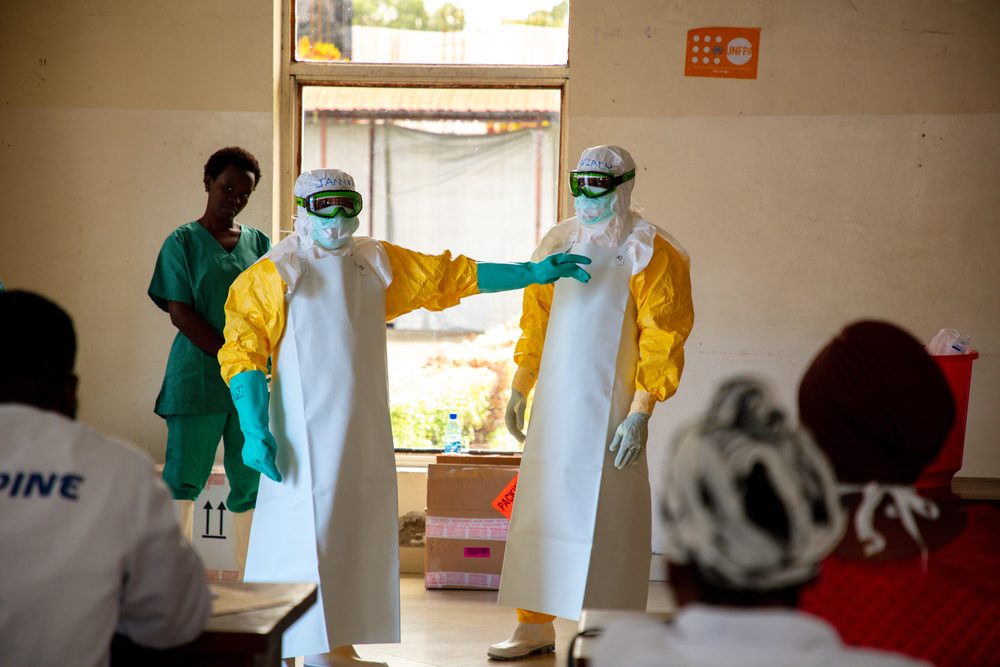
This is why as MSF the first concrete action we took was to send 3,000 individual protection kits with masks, gloves, boots, overalls (disposable material) and reusable material to be decontaminated. The level of protection varies based on risk with full protection for those entering Ebola treatment centers or those managing burials and graduated protections for other activities, including some community work.
The contact management activity is the most importantbut also the most difficult. Think about COVID here: even with dedicated apps and many resources, tracking was a failure. Imagine what it means to do so in a context with few resources and an ongoing armed conflict.
Speaking of conflict: how much does it influence the response?
It weighs enormously. The north-east of the Democratic Republic of Congo is a very rich region in terms of subsoil, and this is the cause of a conflict that has been going on for over twenty years. There are people forced to flee, displaced people, a context of fear and distrust towards institutions, including healthcare ones.
When I worked in North Kivu I remember that people were not afraid of Ebola but they were afraid of being killed with machetes. For them Ebola does not have the same significance as it does for us. A study at the time said that one in four Congolese did not even believe in the existence of the virus, or thought it was a weapon by one armed group against another. In a context like this, even alone informing correctly becomes a challenge.
How do you overcome this mistrust?
Involving communities right away. We cannot present ourselves as those who come from outside to resolve the situation. We work with local leaders (religious, village leaders) we explain to them the characteristics of the disease and ask them to act as an intermediary. It works much better than if we did it directly: they know which words to use, they know how to relate to the population.
We also did it in villages controlled by armed groups. We spoke to the leaders of these groups, saying: we can help you, build a health center, bring material, but we want guarantees about the safety of our team. It’s in MSF’s DNA, if there is a sick person, we are there. Because even if we had the miracle drug, if people don’t trust and don’t come to the center, the epidemic won’t stop.
Let’s talk about an aspect that greatly affects those outside this world: safe burials. Why are they so delicate?
Because the Ebola virus remains alive for several hours after the patient’s death, then a dead body is still highly contagious indeed, it is often even more so, because the virus is present in large quantities. And in some cultures the preparation of the body involves direct contact through washing the corpse and manipulation. It’s one of the main risk factors.
When we interview suspected cases, one of the first questions is: have you attended a funeral recently?
The ideal burial involves decontamination of the body with a chlorinated solutioninsertion into a specific mortuary bag, burial at a depth of at least 4 metres. When people die at home or in villages and we cannot intervene directly, we explain how to reduce the risk (gloves, masks, avoid contact with body fluids) and provide the materials. It is a dramatic moment and the cultural aspects must be respected, but it is also a potentially very dangerous moment.
For COVID there were swabs. How is Ebola diagnosed?
For the Zaire species, since 2018 we have available in large quantities a tool called GeneXpert which was a revolution and allows you to make a correct diagnosis in a few hours, even in remote centers, without the need for highly specialized personnel with a simple blood sample.
The problem is that the GeneXpert cartridges are made for Zaire, not Bundibugyo. For this species, a more structured laboratory and the sending of samples are needed, therefore longer times and more complex procedures. It was probably one of the reasons for the delay in declaring the epidemic, the first tests were done for Zaire and were negative. And you can see it even now in the numbers, there is a huge discrepancy between the over 900 suspects and the confirmed ones, precisely because the diagnostics cannot keep up.
What about vaccines and drugs?
Same story. The vaccines and two drugs validated for Ebola are made for the Zaire species and probably don’t work for Bundibugyo, so we can’t use them. The WHO talks about a timeframe of at least six months to have vaccines available for this species. For now we only have supportive therapies such as hydration, transfusions where possible and antibiotics for co-infections. They are not targeted therapies against the virus, but sometimes they really make a difference.
A lot of news arrives in Italy and it is often alarmist. What is the real risk for those living outside Africa?
In these cases it is always very difficult to find the right balance between ignoring a problem and excessive panic. The risk of a pandemic is really low. It is a large epidemic with regional interest and countries such as Uganda, Rwanda, Burundi and South Sudan must strengthen surveillance as much as possible. But global export risk is low.
To clarify, in 2014-16, in West Africa, there was the largest Ebola epidemic ever, with thousands of cases in Liberia, Guinea and Sierra Leone. There were very few cases exported – even to Italy –– but they ended up there. Surveillance systems work. And then Ebola, unlike COVID, is not transmitted through the respiratory route but through direct contact with infected people or with their biological fluids: this is a factor that works in our favor. The alert remains high for the region. For us, the pandemic risk is really low.
