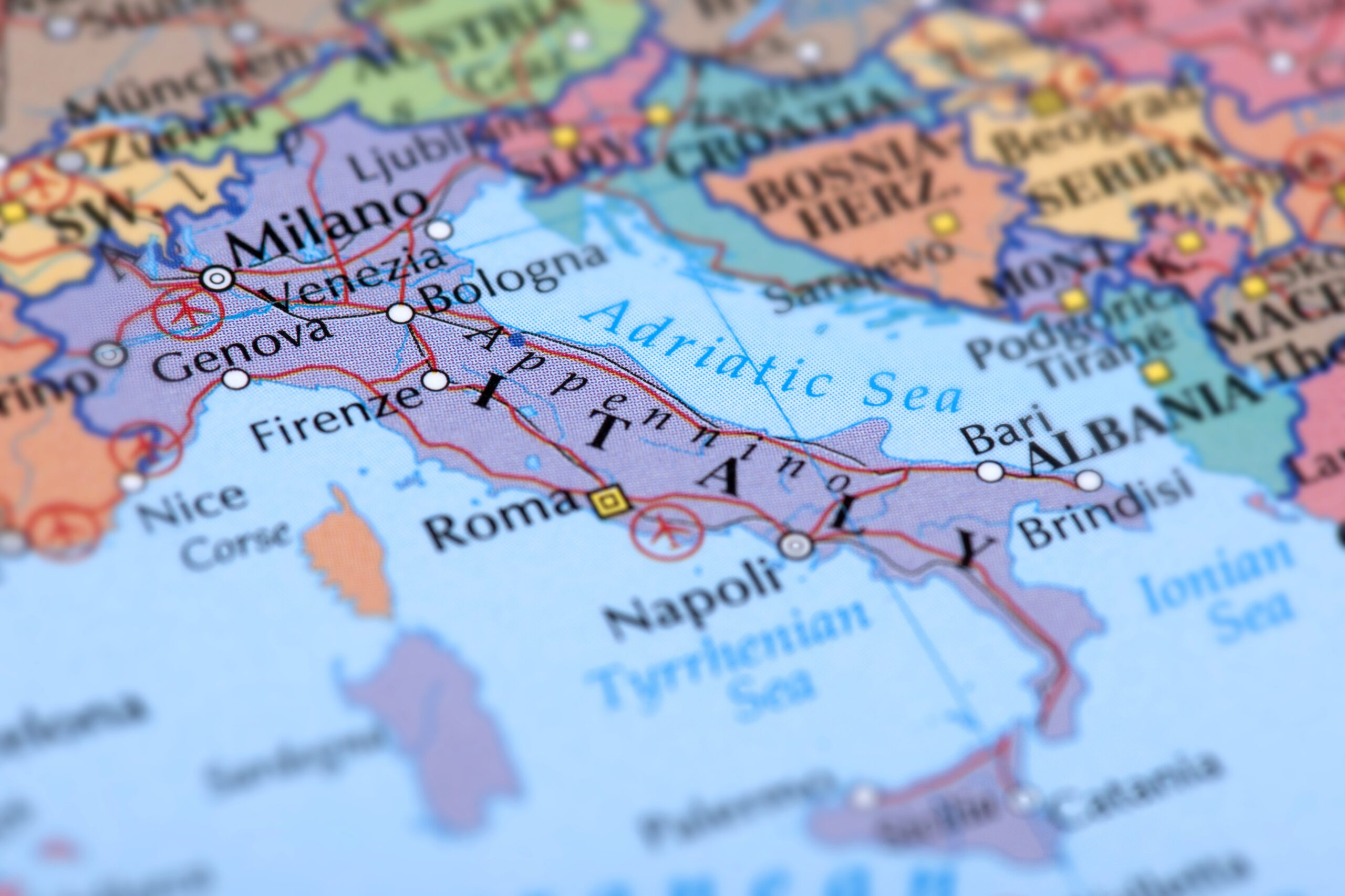
According to the latest Istat update, there are in Italy 3 new cities: Vigevano, Tivoli and Guidonia Montecelio. The latter has also become one of the 9 new territorial areas classified as Extended Cities, together with Milan and Naples. These variations do not concern their administrative status, but the European statistical classification which defines what a city really is from an urban point of view.
The report Functional geographies for territorial analysiscreated by Istat on the basis of data from the 2021 Census and the definitions adopted by the European Union, tells us that population movements that have occurred in Italy in the last decade have been so intense that they have led to the reclassification of some Italian municipalities.
One of the most curious results of this update was a increase in the number of Italian citieswhich will become 89 in 2021.
There region with the May number of Cities it is Puglia (13), followed by Emilia-Romagna (11) and Lombardy and Sicily (9).
But what what is meant by City? According to the European definition, a Municipality can be classified as a “City” only if it meets two requirements:
- Have at least 50 thousand inhabitants
- Have the majority of the population residing in ad areas high population densitythat is, with more than 1500 inhabitants per square kilometre.
The European classification therefore does not only depend on the number of residents, but above all on how the population is distributed on the territory. For this reason a Municipality can become a City even without changing borders or growing enormously: it is enough that the surrounding urban area becomes more continuous and densely inhabited. And this is exactly what also happened to the three Municipalities which, based on the 2021 Census, Istat promoted to City:
- Guidonia Montecelio
- Tivoli
- They lived
The first two are now increasingly integrated into the urban expansion that is taking place in the province of Rome, while Vigevano is affected by the housing growth in the province of Milan.
On the contrary, the Municipalities of Rovigo And Massthey have instead lost its City status because in the respective urban centers the population density has dropped under the required parameters.
Among the most interesting news there is also the growth in the number of the so-called Extended cities: urban ensembles composed of several contiguous municipalities in which the majority of the population falls in the same area with high population density but the population resident in the main municipality represents less than 75% of the overall population of the agglomeration.
In 2011, there were only 2 large cities in Italy:
- Milan, made up of 96 contiguous municipalities
- Naples, with 78 municipalities
Today the cities are extended they became 11. In fact, over the space of a decade, 9 more have been added to the historic two:
- Catania (7 municipalities affected)
- Pescara (3)
- Caserta (10)
- Cagliari (2)
- Cosenza (2)
- Acireale (3)
- Anzio (2)
- Bergamo (15)
- Guidonia Montecelio (2).
The Istat update also highlights another phenomenon: several Italian cities are starting to function as integrated urban systemsconnected by daily flows of commuters. This means that more and more people live in one municipality, work in another and use services spread over a much larger urban area than traditional city boundaries.
This is happening in particular among:
- Rome, Anzio, Guidonia Montecelio and Tivoli
- Palermo and Bagheria
- Bari and Bitonto
- Catania and Acireale.
Overall, all this data tells us that in Italy many urban areas are increasingly becoming a network of widespread metropolitan areas.
