The European Union’s cohesion policy changes course midway through the 2021-2027 cycle and adapts to a context marked by geopolitical crises, price pressure and new industrial needs.
Member States have successfully reprogrammed €34.6 billion of the funds towards the EU’s most urgent strategic priorities. The mid-term review allowed governments to reprogram part of the funds towards five strategic priorities: competitiveness, defense and civil preparedness, housing, water and energy. An operation worth a total of 34.6 billion euros and which involves 25 countries and 186 programs already operational, equal to approximately 10 percent of the overall budget.
Italy at the forefront of reprogramming
Italy has moved decisively, reallocating over 7 billion euros, one of the highest figures in the Union. The main share was allocated to competitiveness, with almost 4.7 billion for technologies, innovation and industry. This is followed by investments in housing (around 1.1 billion), in water management (629 million), in the energy transition (396 million) and, to a more limited extent, in defense (248 million).
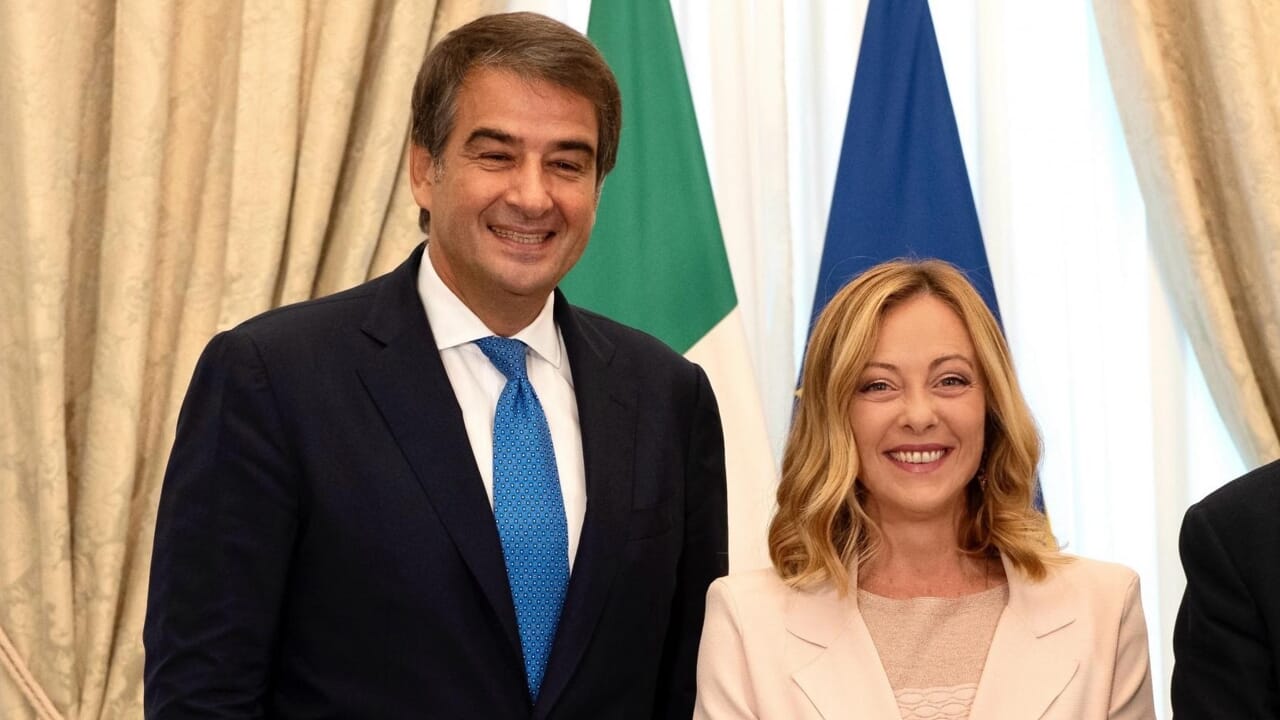
The Vice President of the European Commission, Raffaele Fitto, spoke of “real and concrete” resources immediately available, underlining the ability of cohesion policy to “adapt quickly to new challenges”. The Minister for European Affairs, Tommaso Foti, also claimed Italy’s active role, first in Europe in terms of number of revised programmes. “Italy has taken up the challenge posed by the European Cohesion reform with determination, interpreting it with ambition”, he claimed.
Overall, the country has modified 35 out of 48 programs, including 28 regional and 7 national, out of a total budget of over 42 billion. A figure that highlights strong administrative capacity but also the need to quickly realign investments to new political and economic priorities.
“Italy has always supported the need for greater flexibility and simplification to guarantee a more effective and concrete use of European resources. An objective carried forward by the reform of cohesion policies promoted by Vice President Fitto”, said Prime Minister Giorgia Meloni.
The new priorities: from cohesion to economic security
While remaining anchored to territorial development, the European strategy now incorporates broader objectives related to economic security and resilience.
At EU level, the largest share of reprogrammed resources, around 15.2 billion, is intended for competitiveness, with a focus on critical technologies and skills. This is followed by 11.9 billion for defense and civil preparedness, including military mobility and cybersecurity. More limited but politically relevant are the allocations for accessible housing (3.3 billion), water resilience (3.1 billion) and energy security (1.2 billion). This is a paradigm shift: cohesion is no longer just a tool for territorial rebalancing, but also becomes a lever for strengthening European strategic autonomy.
Defense and dual use
Among the most discussed elements of the review is the opening to the use of funds for dual-use, civil and military infrastructure. In Italy, only six regions have chosen to exploit this possibility: Abruzzo, Calabria, Lombardy, Molise, Sicily and Basilicata.
The topic has raised a political debate, because it marks a further evolution of cohesion towards traditionally extraneous areas, such as defence. However, the Commission insists on the need to integrate security and development, especially in an unstable international context.
From planning to implementation
With the approval of the changes to the programs, the political phase of the review can be considered concluded. Now the focus shifts to the concrete implementation of investments. The Commission will work with national and regional authorities to ensure that the new priorities are translated into operational projects.
Alarm on the regions
The president of the Committee of the Regions, the Hungarian socialist Kata Tüttő, commented on the mid-term review of the cohesion policy, defending the role of the territories. “With the mid-term review and flexibility with regional ownership, investments are directed towards housing, water supply, emergency preparedness and competitiveness”, he explained. But he warned that in the post-2027 budget, without regional governance, “Cohesion policy disappears”.
Let’s see the other news from the last two weeks on EU cohesion and regional policy
Funds to be confirmed
In Brussels, on Tuesday 24th, the Minister for European Affairs Tommaso Foti asked to maintain cohesion funds in the next EU budget 2028-2034 at levels similar to the current ones. “The Cohesion funds should remain of a similar financial size to the previous year and an objective model could be introduced”, he explained, recalling the Pnrr and Next Generation Eu. The minister also reiterated the “completely important and decisive” role of regions and territories.
Cohesion to be reformed
The vice-president of the Fitto Commission relaunched the need to update cohesion policy. “There is a need to modernize cohesion policy, which is strategic, fundamental and present in the treaties, with the aim of reducing disparities”, he said, speaking in Naples, Thursday 19th, at the Euro-Mediterranean Economics Festival, warning that without territories included “there is no prospect that strengthens competitiveness”. Fitto then added that “to think that it doesn’t have to adapt to new challenges would be a paradox and a mistake”.
Balance is needed
In the debate on the 2028-2034 EU budget, in Brussels on Tuesday 24th, Confcooperative asked to balance competitiveness and cohesion policy. President Maurizio Gardini explained that the funds are “necessary and indispensable to support, above all, the development of territories that are slow to advance or are economically behind”. The organization announced proposals on the social economy, CAP and procurement, meeting among others the vice-president of the Fitto Commission.
Defense and territories
In Brussels, on Monday 23rd, the Committee of the Regions’ defense working group reiterated the key role of cities and regions in European security and in the use of EU funds to strengthen industry and cross-border cooperation. Spanish MP Fernando López Miras warned: “The European Union must act decisively to strengthen defense policy and its autonomy.” The President of the Murcia Region added that self-sufficiency depends on “a strong and competitive European defense industry” and that the participation of the territories is “crucial” to support SMEs and balanced development.
Europe on the territory
In Salento, on Wednesday 26th, a new Europe Direct center was inaugurated, the EU Commission’s network to inform citizens and strengthen dialogue with the territories. The desk will offer information services and local activities, with public meetings and initiatives in schools. The centers are defined by the Commission as “departments of democratic participation” and aim to connect European policies and daily life, with a role also in the dissemination of opportunities linked to cohesion funds and policies.
Flying with cohesion
Green light from the Sicilian council for new incentives for the Trapani Birgi routes, with 21 million between 2026 and 2028 to attract flights and strengthen the local economy. In Palermo, on Wednesday 18th, president Renato Schifani explained: “With this investment we demonstrate the concrete desire to strengthen the competitive positioning of the airport”. The intervention is linked to cohesion policies, with FSC funds already allocated to Comiso for infrastructure and cargo, focusing on tourism, employment and territorial development.
Internal areas
Priority 5 of the ESF+ Sicily 2021-2027 program started from Palermo on Thursday 26th, with 48 million allocated to combat depopulation and marginalization in internal areas. The initiative focuses on social inclusion and employment, involving 155 municipalities in shared projects. President Renato Schifani spoke of an “initiative of great strategic importance for the development and cohesion of our Region”, underlining that the internal areas are “a decisive challenge” and that effective governance will be needed to implement the interventions.
