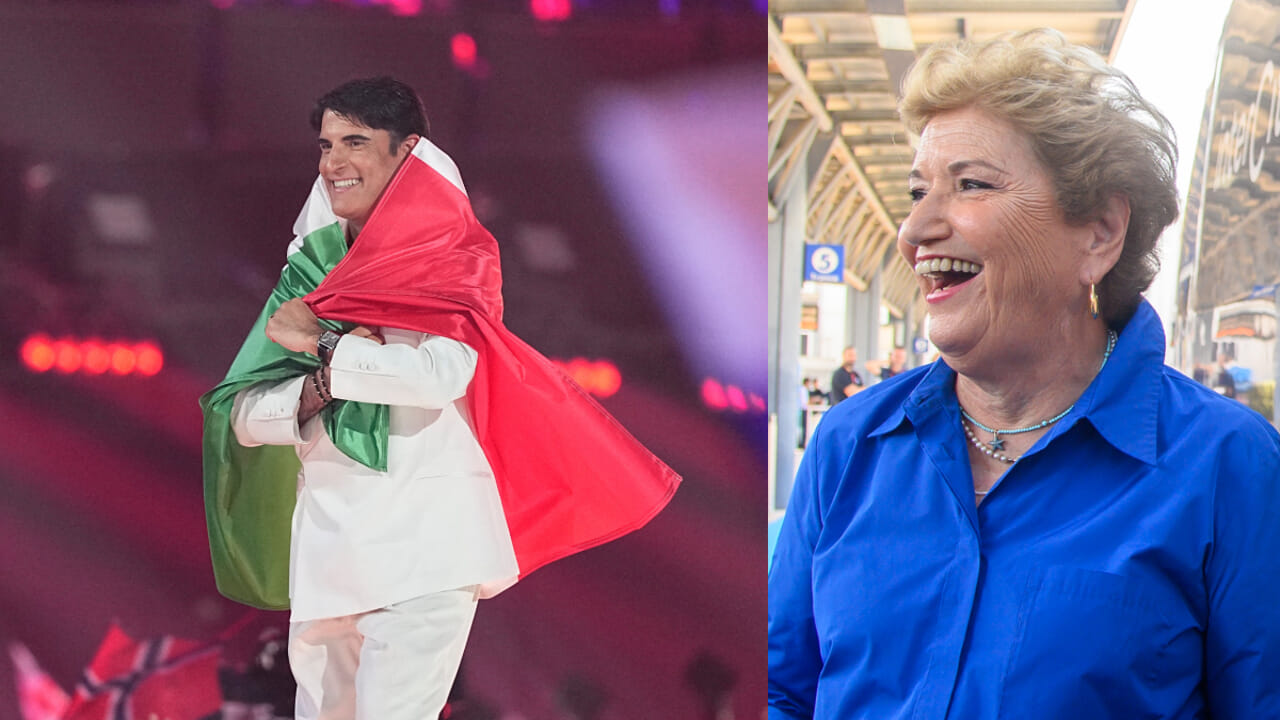
Mara Maionchi, Sal Da Vinci and the “vice” of considering tradition a fault
The recent statements that Mara Maionchi made to the De Core Podcast about Sal Da Vinci and his Forever Yes. On the other hand, it couldn’t have gone any other way: what counts is the way – all too frank and without filters – in which they were expressed. What matters above all is who said them. Mara Maionchi is someone who definitely knows a lot about music, a figure who has had an influence on the market for decades. We are not talking about a TikToker who pretends to be an expert in music, but about a big shot in the industry.
No, ‘Forever Yes’ is not “two assholes”
Wanting to summarize: Maionchi, 85 years old, considers Forever Yes (winner at Sanremo 2026) a very traditional song, far from his personal tastes oriented towards something more modern and particular. Traditional and, therefore, ancient and boring (“Two cog**oni”, lit.). A clear, respectable opinion, but one with which we disagree.
If it is true that this year the level of the songs that participated in the Festival was medium-low, it is equally true that the event rewards Italian songs. AND Forever Yes it’s a beautiful Italian song. Traditional, sure, but certainly not “two balls”. In fact, the opposite: it makes adults and children go wild. It climbed the charts and, even today, is in the top 10 best-selling songs. The artist is also very popular overseas (yesterday he was in Canada) with his tour; the summer one will start from July 15th. Then a break and from October 7th back around Italy.
Maionchi’s judgment is ungenerous to say the least and also a bit paraculonic. If on the one hand he dismisses it with a colorful joke, on the other he sweetens the pill with a fake caress: “Sal Da Vinci is a decent person”. From the series: I respect you as a person, but the song is half rubbish.
And if we talk about history, it must be said that Sal’s is very respectable. The Neapolitan artist (actually born in New York in 1969) worked his way up. The real one. Starting with his dad to sing and act. Then many doors in the face, some success, Sanremo (he had already participated in 2009 with I can’t make you fall in lovethird place) and a period of ups and downs. So the rebirth with Lipstick and Coffee and consecration with Forever Yes (and his new album will also be released soon). In short: if Mara Maionchi is not the first to go into the recording industry, the same can be said for Salvatore Michael Sorrentino – this is the singer’s real name – in the artistic field.
For goodness sake, Maionchi did not question it, but it is worth underlining it. Just as it is natural to highlight that the Sanremo song was totally in line with the type of music that Sal Da Vinci has been making consistently for decades now. The Neapolitan song, yes. So what? “In Naples they make wonderful things”Maionchi added. Here too, another caress. But the afterthought always seems the same: wonderful stuff, but old.
The (true) story of Sal Da Vinci: his debut at the theater at age 7, his past as an actor, then the success of “Lipstick and Coffee”
The numbers are on Sal Da Vinci’s side
Yet the streams – if we really want to be honest – say otherwise. Without broadening the discussion too much to the music of Neapolitan performers more generally (Geolier to name one), Sal Da Vinci also does his numbers. And they aren’t small numbers. Over 3.4 million monthly listeners on Spotify. Forever Yes travels towards 32 million streams, while Lipstick and Coffee exceeded 82 million. But we can go even further back: I can’t make you fall in love (10.8 million), It’s not true that I’m fine (4.7 million).
So old, therefore, that it produces numbers that many young people dream of. Dismissing it as a boring Italian song is a cultural shortsightedness that is not expected from Mara Maionchi, a figure who made the history of Italian discography (it was she who launched, among others, Tiziano Ferro, Umberto Tozzi, Gianna Nannini), collaborating with the giants of music, from Mogol and Lucio Battisti to Fabrizio De André, Mia Martini and Mango.
The point is not her, in fact. Rather, his authoritative voice still gives rise to a deep-rooted and widespread vice according to which tradition is a fault. In music, however, there is room for everyone. Imagine for Sal Da Vinci.
Mara Maionchi without filters: “Forever yes by Sal Da Vinci? Two bastards”. Then he talks about Nannini, Ferro and Mango
