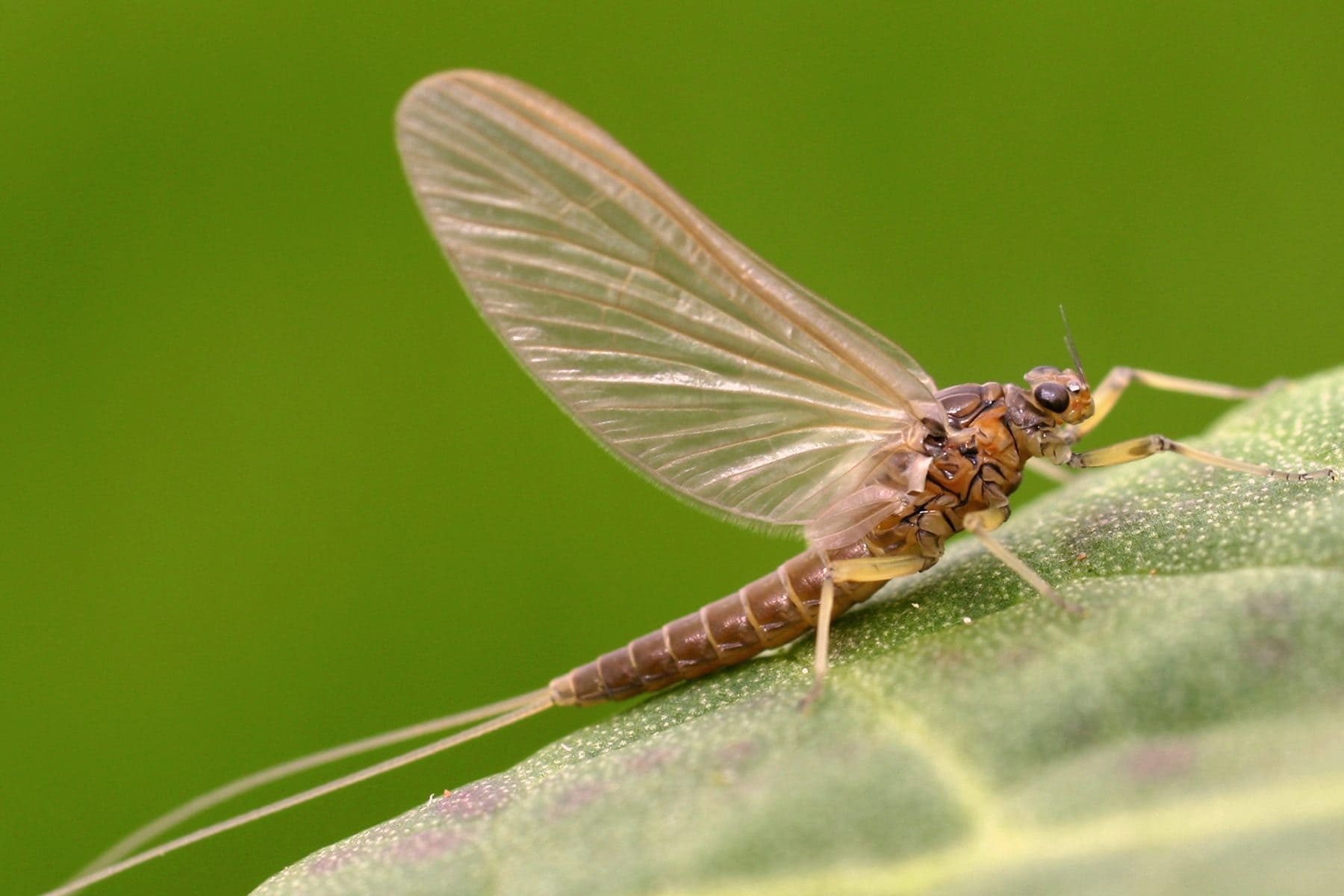
In English they are called mayflies, “May flies“: these are the ephemeralor ephemeroptera, an order of insects that swarm near freshwater streams, usually during the spring period. With a vaguely similar appearance to dragonflies, they are distinguished from the latter by their thicker and shorter abdomen, with two filaments similar to antennas in the tail, and by their much less developed eyes. Their name comes from Greek ephemeros – “for a day” – and is a reference to the fact that they “live” for a very short time: depending on the species, it adult stage of these insects can in fact last from a few days up to even a few minutes. In this short period, the mayfly adults do not feed and are concentrated entirely in the reproductiondying once this was completed. In contrast to the fleeting adult stage, the juvenile stageentirely aquatic, can also last a few years.
The life cycle of mayflies: an exception in the world of insects
Most insects encounter metamorphosis during its life, passing through different stages of maturation. From each egg emerges one larvawhich molts several times and gradually grows in size. When the insect is ready it undergoes a final metamorphosis and reaches the adult form (called imago), characterized by both sexual maturity that from presence of wingsabsent in the previous phases. Once this stage is reached, the insect no longer metamorphoses until it dies.
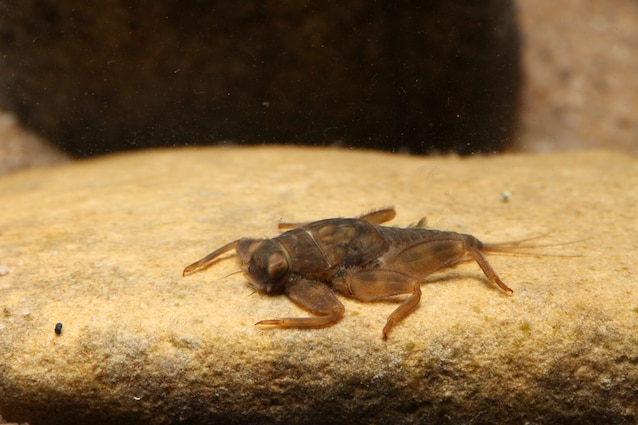
Mayflies represent an exception for two reasons: their larval stage, called nymph, it is much more prolonged than that of most other insects, in some cases reaching up to a few years. The nymph feeds mainly on algae, which it grazes on the shallow bottoms of rivers, ponds and streams. Mayflies prefer slightly polluted waters, and their presence is also to be considered a ecological indicator the state of environmental health. In these years the nymph also molts many more times than other insects always remaining under water.
With the arrival of the breeding season – in spring for the majority of ephemeropterans – the nymph goes into metamorphosis and emerges on the surface of the water in the form of a subimago, a incomplete adult stage. This stage represents the second exception of the mayflies, the only insects in the world to have the subimago: even if there are wings and genitals, these are barely visible and non-functional. From this phase, which lasts a maximum of a few hours or days depending on the species, the animal will complete alast metamorphosis to reach the full adult stage.
The reproduction of mayflies
Despite having wings, mayflies are not good fliers unlike dragonflies, which have excellent flight control that they use to catch their prey with precision. This is because adults are mayflies they don’t feed at all: all the animal’s energies are concentrated in the obsessive search for a partner with whom to reproduce. The digestive system of adult mayflies is full of air and their mouth parts do not function (in some species they are completely absent) and they therefore rely on the energy reserves accumulated in the body for survival. Also for this reason, their adult life is very short, typically one or two days, or even a few minutes after the subimago stage in the case of the species Dolania Americanas reported in the “Book of Insect Records” compiled by the University of Florida. During this very short period, the insects look for a partner and mate: the males die immediately afterwards due to physical effort, the females survive a little longer, in time to lay their eggs. Mating, preceded by a sort of courtship dance, takes place in flight: males have caudal appendages capable of firmly clinging to the female, allowing the insertion of the male genitals into the female vestibulum and the transfer of sperm.
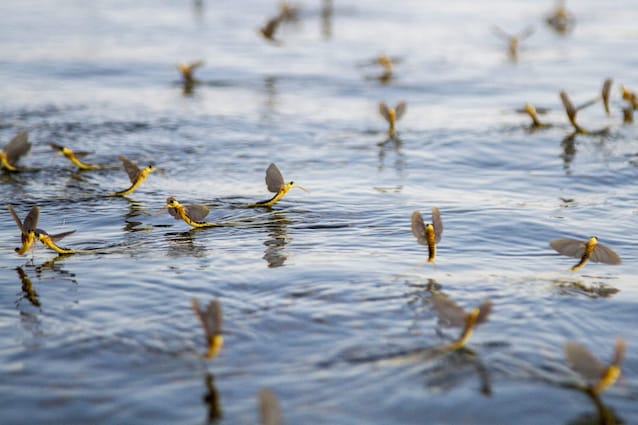
The reproduction of mayflies is a mass event: adults emerge from the water in a synchronized manner, and so it’s easy to see swarms of insects crowd around ponds and streams during breeding days. This evolutionary adaptation allows mayflies to conserve their energy as much as possible during the juvenile life stages and then spend it all together and maximize the chances of reproduction. Observing a swarm of mayflies can be a spectacular moment but, as their name suggests, it is also very fleeting.
