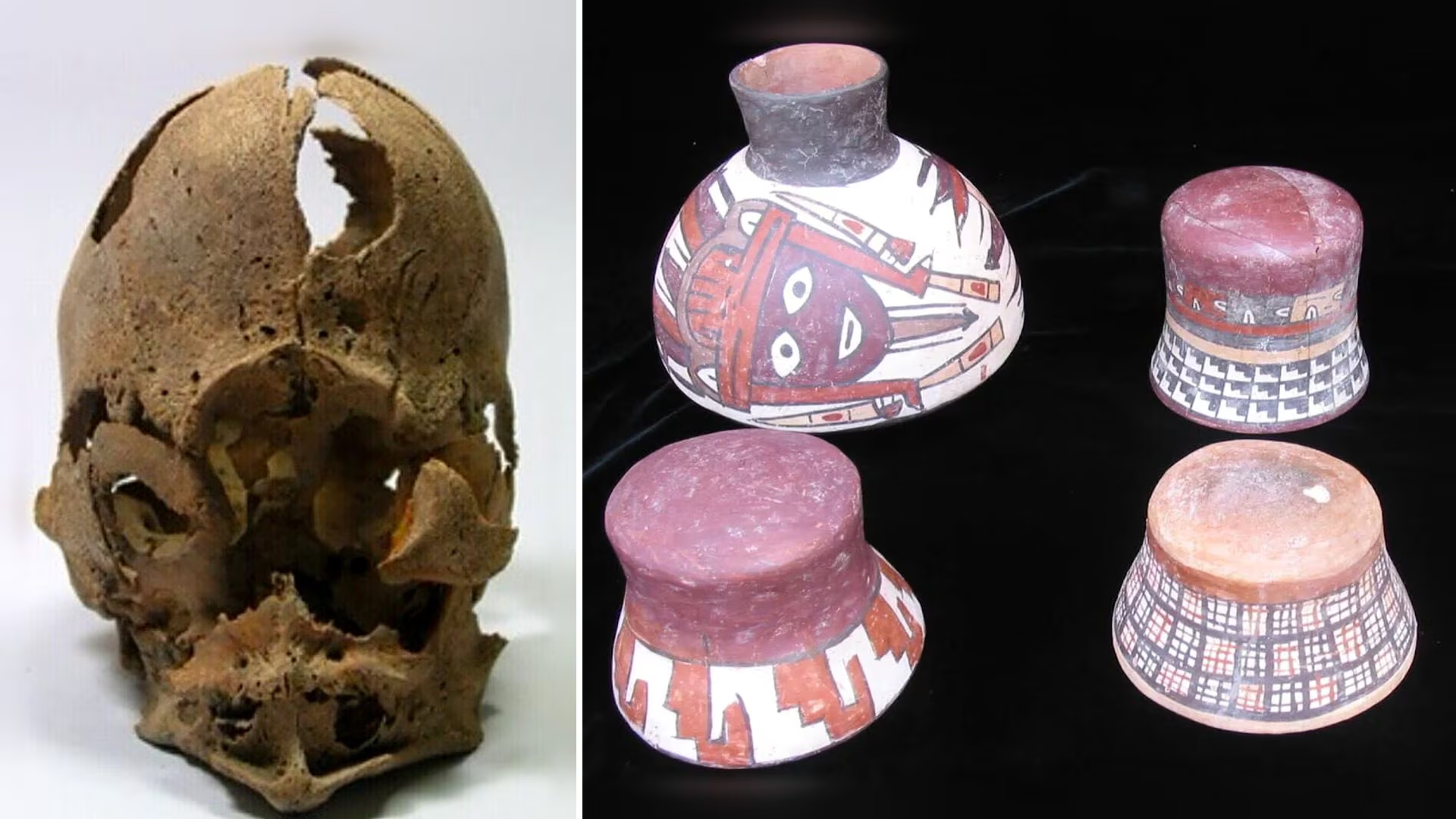
The analysis of the remains of two newborn girls buried together in a funerary urn in Jauranga, Peru, has identified a rare case of cyclopia associated with trisomy 13. The Nazca burial, now 1600 years old, also documents the funerary treatment reserved for a little girl affected by this malformation.
The analysis of the remains of two newborn girls buried together 1600 years ago in the same one funerary urn allowed us to identify a rare case of cyclopia in a community of Nazca cultureIn the Southern Peru. This rare congenital malformation — in which there is only one eye socket in the center of the skull — may be an expression of Trisomy 13also known as Patau syndrome. The study, which has as its leader Elsa Tomasto-Cagigao of the Pontifical University of Peru, was published in the journal Proceedings of the National Academy of Sciences (PNAS), and combined theexamination of skeletal remains with the analyses Ancient DNA.
The burial in question, the number 25is located in the archaeological site of Jaurangain the south of Peruand dates back to Middle Nazca period, between the 5th and 6th centuries. A.D
Inside a ceramic container (very common funerary practice for Nazca infant burials) archaeologists have identified the (excellently preserved) remains of two individuals in perinatal ageidentified in the study as JA13A And JA13B. The examinations on the skeletons revealed that in the first individual, in addition to the obvious single eye socket, there were a series of congenital anomalieswhile the second individual did not present similar skeletal alterations.
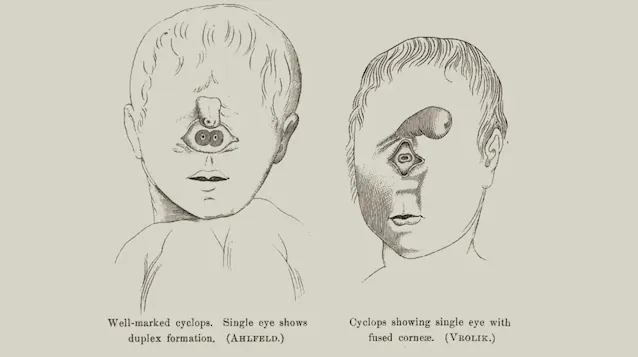
The condition has been identified as cyclopiaone extremely rare congenital malformationcaused by one serious alteration of the initial development of the brain and facial structures. This can happen when, during the period of embryonic development, the anterior portion of the brain fails to separate properly in the two hemispheres, with consequences also on the formation of the eyes and the facial region.
Credits: Wikimedia Commons
This is a general condition incompatible with long-term survivalwhich is often the case lethal before birth or shortly after, exactly as in the case of the two individuals from burial 25, both died before or shortly after birth. JA13A’s gestational age settled between 36 and 40 weekswhile that of JA13B, the individual who demonstrated no apparent malformations, settled between 32 and 36 weeks.
To investigate the origin of this serious malformation, the research team analyzed the Ancient DNA recovered from the remains. First of all, genetic analysis has excluding a family relationship through the mother between the two newborns: among the Nazca, in fact, it was common practice to bury children together even regardless of family ties. Secondly, the analysis demonstrated how the two individuals were both female.
More in-depth genetic analyzes have shed light on the causes of the conspicuous malformation, and the results highlighted JA13A in the girl an additional copy of chromosome 13. This serious genetic anomaly, known as Trisomy 13 or Patau syndromewas therefore identified by scholars as the probable cause of cyclopia.
Taking into account the burial methods, i.e. the fact that the two girls were placed in the same ceramic container, it emerges as the dysmorphic individual was treated no differently from others. The integration of archaeological and genetic data thus allows us to examine not only a rare congenital condition in the past, but also the funeral treatment reserved for an individual who was affected.
