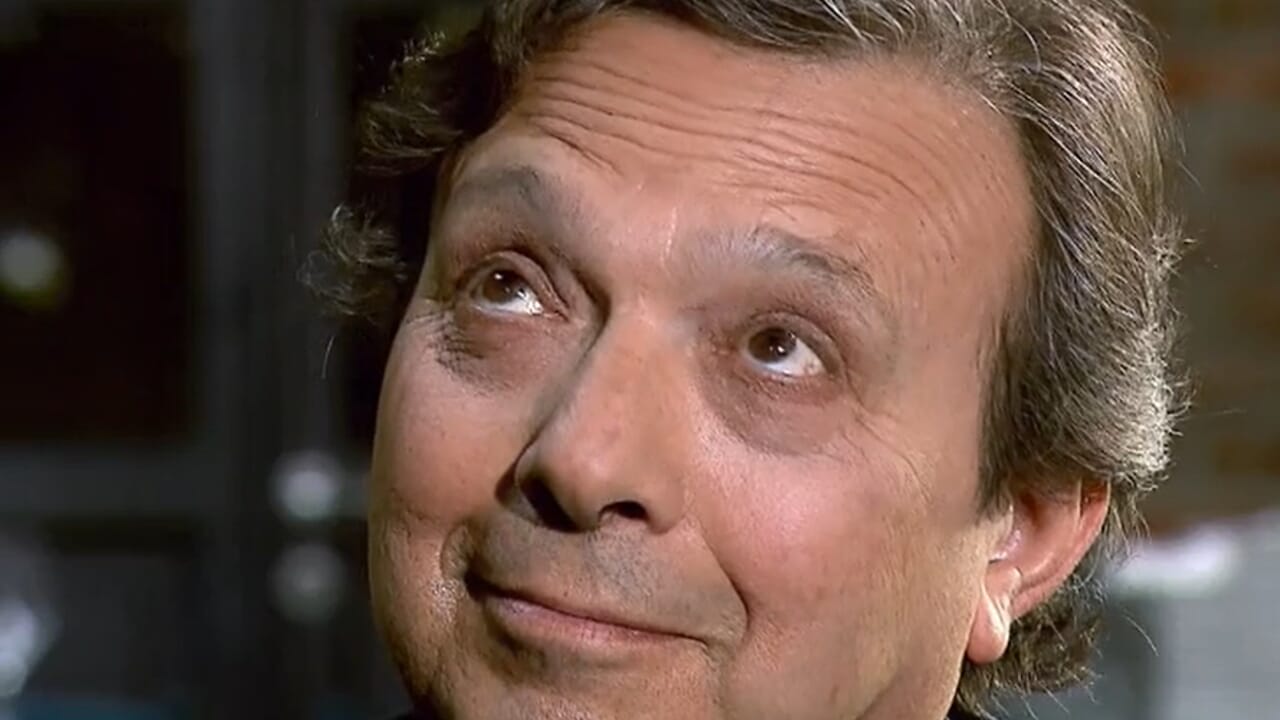
Piero Chiambretti’s seventieth birthday. The only talent suitable for all seven generalist networks
A career in three phases. First in eternal movement and outdoors, then closed in the television studios and, finally, again outside the walls, even on board a boat sailing the Tiber. Piero Chiambretti seems to have opted for closing the circle, that is, returning to where it all began, in the belief – or illusion – that we can remain eternally young.
Chiambretti, however, makes seventy. Even though he doesn’t show them, even though the spirit is that of the beginning, despite a way of speaking that leaves no room for pauses and uncertainties. Pierino forever, in short.
What does my friend Arturo have to do with it
Born in Aosta, but raised in Turin, he took his first steps in radio and as a tourist entertainer. The first to believe in his television potential was his friend Arturo: “He had a passion for my talent and learned from his father that Rai were looking for new faces for a competition. I didn’t want to go, he was the one who wrote the letter. When we went to post it and he tried to put it in the box, a gust of wind made it fly and fall on a giant piece of shit. Arturo picked it up and posted it anyway”.
Fate would have it that that letter was successful, however a lot of time passed before the ‘call’. While waiting, Chiambretti took refuge at Rete Manila 1, a private broadcaster that broadcast from the Turin neighborhood of Barriera di Milano. “I had a very poor studio, so I brought the only camera and the only cable we had out there. We realized a very rich world.”
The beginnings of Chiambretti ‘on the road’
Thus was born Chiambretti ‘on the road’ who – after his apprenticeship in children’s programs such as “La banda dello Zecchino” and “Magic” – took concrete form in “Va’ pensiero” and, above all, “Congratulations for the broadcast”.
“It was the first Rai program against a Rai news program. After having randomly identified some people at the market, I went to visit them in the evening”. Pure improvisation, which only fueled the purity of the show. “I arrived with some pastries, which I used as a catchphrase. I bought them in the worst pastry shops in Colombia. We asked questions and gave away a table clock and 100 thousand lire, which would have doubled if during the episode the member had managed to finish some games that were a simple pretext”.
Due to a sort of ‘Arborian’ complex, Chiambretti did not go beyond the forty-second episode: “If at the beginning it was difficult to identify the families, after a while thousands of them were waiting for us. The naturalness of that somewhat naïve program had been lost and without that underlying transparency I considered that anthropological journey concluded. Someone else in my place would have created another twenty series”.
The abstinence did not last long, because the following season was immediately the turn of “Technical transmission tests”. We moved from north to south and Piero was accompanied by Nanni Loy, Sandro Paternostro and Helenio Herrera. “We broadcast from a circus tent located near a stadium where a Serie A match was being played. At the end of the match, in a tuxedo, I entered the now empty stadium and took the place of the slow motion video, imitating the goals that had been scored. By repeating it every week, the tam tam ensured that the fans present in the corner remained there even after the match. It had become a propitiatory rite.”
In 1991 Chiambretti broke off his association with ordinary people and aimed high. “I took a gamble with the desire to hang out with politicians and important personalities”. “Il Portalettere” was then born, with the conductor who, dressed as a postman, went to deliver Andrea Barbato’s postcards. It was the period of Cossiga’s ‘pickaxes’ and that edition ended with an unforgettable meeting with the Head of State.
The ‘itinerant’ line continued with “Il Laureato” and “Fenomeni”, which closed its first phase of the journey almost entirely outdoors. “I brought to television what wasn’t there. But if you go out, then everyone goes out. And when TV came out I locked myself in the studio.”
If Guglielmi’s Rai 3 was the network of formation and assignment of a clear identity, Freccero’s Rai 2 further modeled it with “Chiambretti c’è” which, among other things, launched Alfonso Signorini into the television panorama.
The arrival at La7 after leaving Rai (“I never understood why”)
Dumped by Rai (“I never understood how and why”), in 2004 he made the first big leap of his career, landing on La7. Not today’s La7. The first approach – still on the street – was with “Pronto Chiambretti”, set up around a real telephone booth in Piazza Cordusio in Milan, to subsequently launch “Markette”, a niche jewel that turned on the lights well in advance of a trend that on TV would have turned into a strict rule: “Everyone goes on television to do hustlers, self-promotions – he explained – anyone finds the opportunity to promote his latest book, his album, his show, his invention. Himself. Constant TV promotions. Well: we brought all this out into the open and called things by their name.”
Here he gave ample space to Gianfranco Funari, with the merit of having been the best manager of the last phase of his life. “I was very fond of him, despite the stormy beginnings. Little by little, a friendship developed which turned into a collaboration.”
Chiambretti’s Sanremo
During his stay at La7, Chiambretti obtained the pass to lead a DopoFestival (in 2007) and the 2008 Sanremo, alongside Pippo Baudo. A responsibility shared equally, for what – right from the start – appeared to be a very unfortunate edition. “The tragedy of Gravina’s little brothers affected us a lot. Furthermore, it was the last year with a ferocious counter-programming. Despite everything I continue to defend that Sanremo, it is nice to share the successes and failures, especially if you have an artist like Baudo at your side. Despite the bitterness we continued on our path, aware that once you start badly it can only end worse. You cannot reverse the course. In my career I have participated in one of the least seen Festivals and one of the most seen. It is a privilege, not a curse.”
The positive reference is to 1997, with Mike Bongiorno and Valeria Marini on stage and Chiambretti hanging in the air in the guise of an angel: “In reality I should have done that Festival with Raffaella Carrà, but in the previous months she had a disappointment in love and said she no longer felt like it. I therefore thought that alone it wouldn’t have been a good thing. We were coming from the Baudo epic, we needed the Raiuno audience as well as me to have some reassurance, an aspirin for all diseases. I suggested Mike and he immediately said yes.”
In any case, Raffaella met her at the Ariston in 2001. “She had chosen Papi, Ceccherini and Megan Gale as her partners. I was in crisis after the flop of my film and had moved to Mexico. They contacted me to participate as a judge on a phantom quality jury. Without Carrà’s knowledge and in partial agreement with Japino, I organized my own independent space which was very welcome. I was consecrated by those interventions.”
The landing at Mediaset (unimaginable)
In 2009 the unimaginable happened: the marriage with Mediaset. The presentation of the “Chiambretti Night” was held, provocatively, in the Arci club on Via Bellezza in Milan, with the agreement that was defined as a “historic compromise”.
Aesthetics and attention to the glance – characteristics inherited from the beloved Gianni Boncompagni – became at this point distinctive features of his style: “I believe that the form is the content and that the content is the form. I strongly believe in this vision. Just as an Armani suit is distinguishable after fifty years, the same can be true for me. The Chiambretti Night was the photograph of the place that I always wanted to frequent as a customer”.
Having archived “Night” after three seasons, Chiambretti alternated different titles that shared a substantial underlying similarity. An accusation to which he has always responded decisively: “I have my own brand, some confuse this concept by thinking that I always do the same show, but I can assure you that I am the same, that I have continuity in my style. I design tailor-made clothes that must necessarily have an element that is repeated.”
In 2018 he arrived on Rete 4 with “La Repubblica delle Donne”, setting the coverage record of all generalist channels, from one to seven. The show, suitable for a second evening but placed in prime time and spread over three hours, raised the white flag in March 2020 due to the outbreak of the pandemic, which profoundly affected Chiambretti.
Covid and the death of mother Felicita
The coronavirus, at the height of its aggression, struck him together with his mother Felicita, who died a few meters away: “We were in the same room. The Covid that we caught was the very first, nothing was known, it felt like we were at war. She had other pathologies and in five days the virus completely ate her lungs”.
On a professional level, the opportunity arose again with “Tiki Taka” and “La tv dei 100 e uno”, the latter broadcast led by one hundred children which did not achieve the hoped-for success.
The return to Rai 3
A disappointment that two years ago convinced him to embrace Rai 3 again, at a time when the channel was suffering a profound crisis of recognisability, due to the farewells of Fabio Fazio, Bianca Berlinguer and Lucia Annunziata.
“Women on the verge of a nervous breakdown” and “As long as the boat goes” are the latest efforts of an undisputed talent haunted by the reproach of being the bearer of a television that is always the same: the interviewee sitting and him, standing, ready for the interrogation. But if you look around, it doesn’t take too long to notice that De Filippi, Scotti, Carlucci and Bonolis have also been carrying out identical schemes for at least a quarter of a century.
Chiambretti, at least, is committed to changing the ‘background’.
