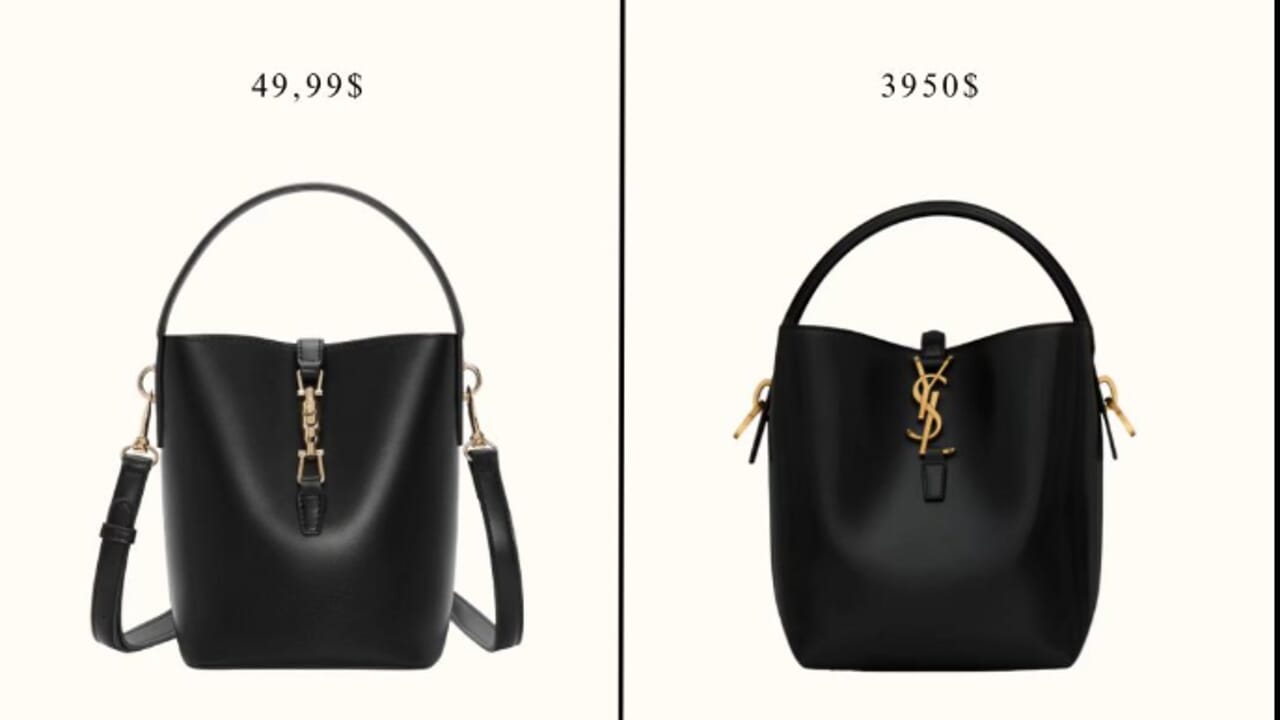
Praise for “dupes”, fake (but legal) products bought while luxury collapses
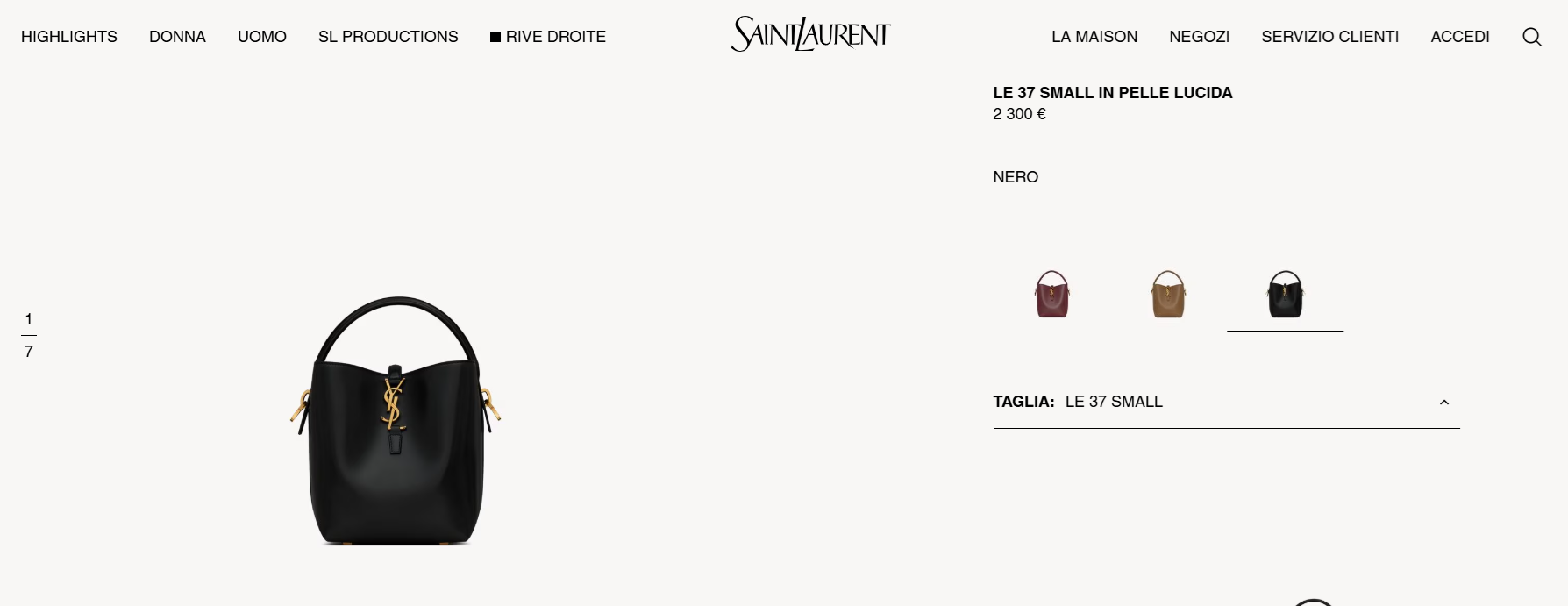
Anyone who wants to carry the YSL bucket bag with hook closure must spend 2,300 euros; 42.50 is enough for him if, however, he is satisfied with one that only reminds him in shape and details without references to the well-known brand. Same thing for a Chanel model: 6,700 euros is the cost of the original, 92 euros for the one “inspired” by the example of the maison with the crossed Cs.
The figures compared next to each other in the virtual shop windows of the internet catch the eye, the price difference between the compared products is too striking: on the one hand the originals of the luxury companies that first created the proposed samples, on the other the copies that are offered as their remarkably economical alternatives.
“There have always been imitations”, someone will think. And that, in fact, is what we’re talking about, imitations of big names. But if we talk about it now it is because in recent months the situation has drastically changed compared to a time not even too long ago. Bags, belts and shoes from luxury brands are always imitated, of course. But perfumes, cosmetics and body care products also now crowd the market as valid options to those of the famous companies that launched them. And the attitude of consumers is also different: in the past they may have hoped that other people’s gaze would not pay attention to the “deception” of showing off a non-original object; now, on the contrary, he is proud to flaunt it as a stinging reaction to the excessive increase in prices.
The trend that offers the comparison between copies and originals travels on social media with the hashtag “dupe”, short for the English term “duplicate”. A “duplicate” that has become a true generational pride in a period which, among the many geopolitical events, also records a historic luxury crisis. And, therefore, the change in approach of the so-called “aspirational” customer, now well capable of understanding more and more how status can be bought even with a bit of cunning, as well as with a credit card with a certain credit limit.
Luxury is in crisis, who are the rich customers (who however no longer buy): “They allow themselves a 3 thousand euro bag every now and then. Now, however, they avoid it”
The difference between dupe and fake
When we talk about dupes the reference is to products that have nothing illegal about them: they have their own brand and packaging, no one is trying to deceive anyone or violate copyright. Just to propose something aesthetically similar, but more economically convenient, than the reference model. For this reason they must be kept clearly distinct from fakes, from counterfeits that pass themselves off as originals by presenting themselves with the same logo and packaging as a brand, now generally perceived with suspicion, both for ethical and material safety issues.
Why people buy “dupes” (while luxury is in crisis)
Today, buying dupes has become so common that it has motivated the concept of “imitation culture.” Especially among young people who, according to research reported by The Guardian, have made it a permanent part of their purchasing habits thanks to the various YouTube and Instagram which recommend lists of alternative objects to the originals drawn up by influencers. And thanks to Tiktok, if you consider that by 2024 there have been almost 6 billion views for videos with the hashtag #dupe.
Today, however, compared to two years ago, there is also another element to take into consideration: the crisis in the luxury sector which the financial reports for the first quarter of 2026 have clearly outlined.
The Kering group – owner of brands such as Gucci, Saint Laurent, Bottega Veneta, to name just a few – reported a 6% drop in revenues. And even for LVMH – with its Louis Vuitton, Dior, Fendi, among many others – the situation is not the best.
However, in the face of this drastic reduction, the so-called “accessible luxury” made up of perfumes, glasses and jewelery that the customer continues to buy as small vices that cannot be given up holds up. That sector is holding up and the dupe market is also growing, a manifestation of how a more democratic availability is now preferred to exclusivity. Because in recent years, in order to offer themselves to an even wealthier clientele, brands have increased prices and people who previously only aspired to be part of them – not surprisingly called “aspirational customers” – now seem projected towards alternatives that only evoke, without necessarily being.
Brands’ response to dupes (one is brilliant)
Considering the size of the phenomenon, today brands are refining every possible strategy to counteract imitations of their products, focusing on technology, craftsmanship and marketing psychology. Hence, techniques are refined for irreproducible leather weaves, very rare yarns are used, procedures are thought to require hours and hours of manual work and costs are too high to be “duplicable”.
And then there are also those like Lululemon, among the most popular sports brands in America and Canada, who understood that they had to wink at customers who, instead of buying their original leggings, had preferred their imitations. As? He invited people to a special event to leave the dupe pants and take the original ones in exchange. The collected pants were recycled through a textile reuse company, while the Lululemon items were distributed “while supplies last” for two consecutive days. “Similar products will exist, so let’s not fight them, let’s not fight, but let’s understand our consumers,” Nikki Neuburger, Lululemon brand manager, told Fast Company. A revolutionary approach, probably destined to remain an exception in the galaxy full of originals and imitations.
