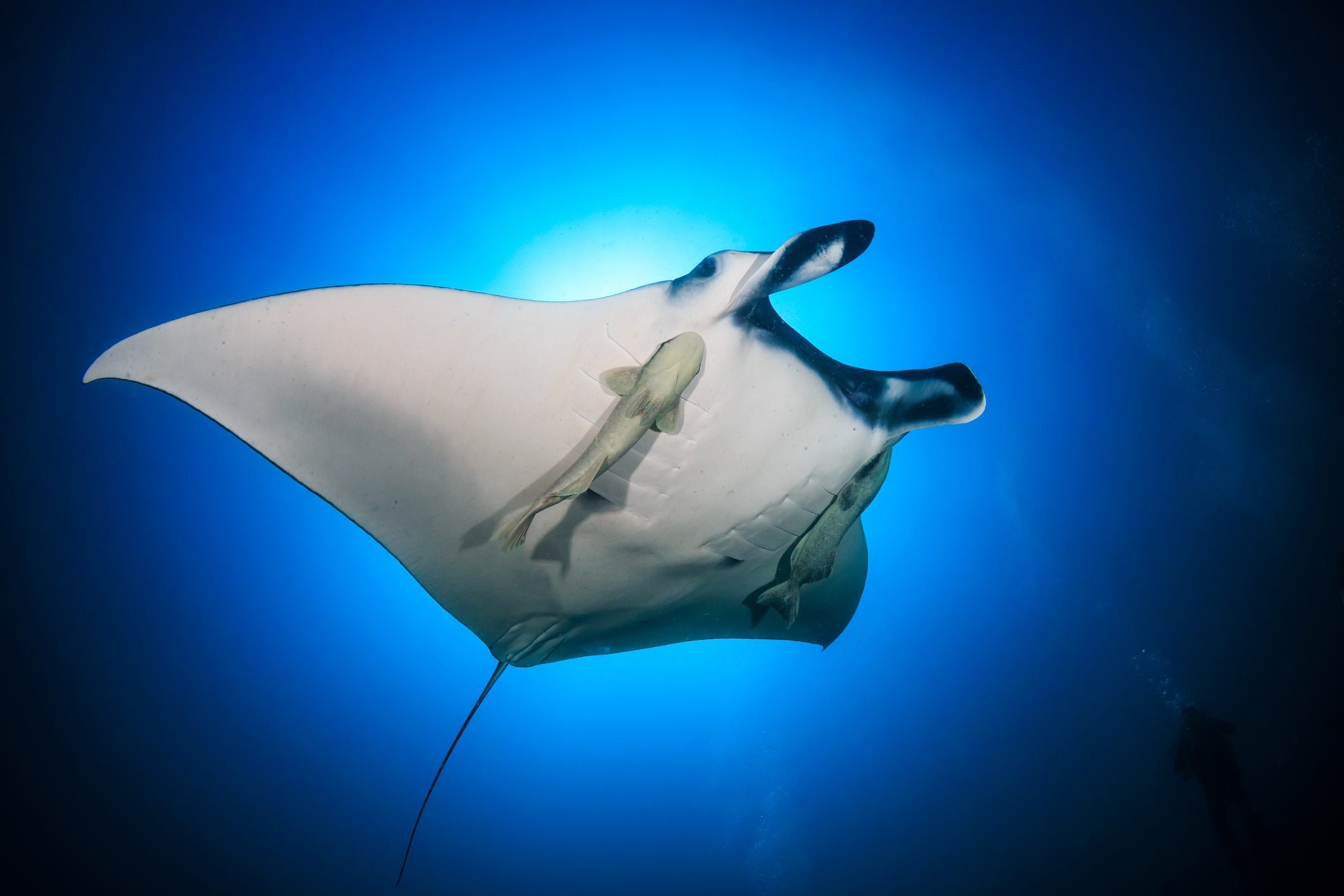
The hesitations they are those fish that cling to other larger animals such as manta rays, sharks and turtles thanks to a kind of suction cup on their heads to be transported for free across the ocean. A study published in April 2026 in the journal Ecology and Evolution has documented behavior never before recorded in oceanic manta rays: the hesitations slip into the cloaca of the host animals, a single opening located in the rear part of the body where the digestive, excretory and reproductive systems converge. This unprecedented “cloacal immersion” therefore opens up new questions about a complex symbiotic relationship that is still largely to be deciphered.
But the curiosities about the real remora”hitchhiker of the seas“, do not only concern biology but also history and linguistics. In Roman times the habit of these animals of attach to the keel of the boats generated the legend that they were capable of stop or slow down ships in the middle of the sea. A popular belief that has left a legacy of the expression “have no qualms“, still used today in common language to indicate theact without hesitation or obstacles.
What are remoras and what do they do
The family Echeneidae comprehends 8 species of bony fishes distributed throughout the tropical and subtropical waters of the planet. They all have an averagely thin and elongated body, with a sharp snout, pointed pectoral fins, a dorsal fin perfectly symmetrical to the anal fin and moved far back and, above all, that characteristic oval structure on the back of the head which distinguishes them from any other fish.
That structure is one modified dorsal fin which in the course of evolution has flattened and transformed into a oval adhesive disccovered by a series of transverse slats similar to the slats of a Venetian blind. Through precise muscle contractions, the lamellae rise, creating a reduction in pressure that allows the remora to attach to any surface with considerable force.
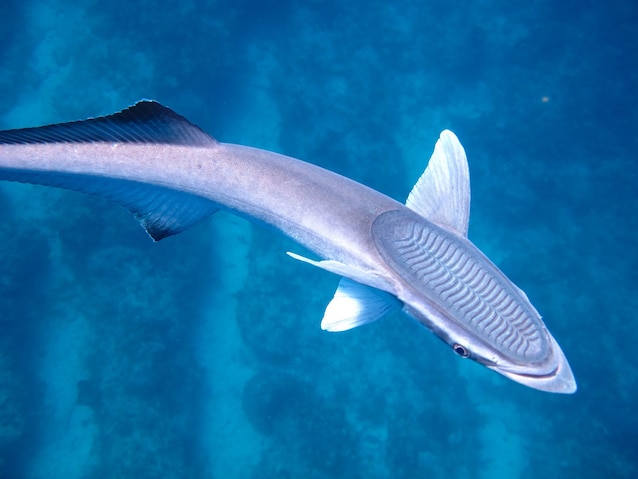
Behavior develops around six months to live of the animal, when the disc reaches functional maturity. The remoras inhabit waters from 0 to 50-80 meters deep in the more coastal species, but thanks to the mobility of their hosts (sharks, manta rays, turtles, cetaceans, marlin) they can be transported up to 250 meters of depth or across entire oceanic migratory routes. Remora remorathe most studied species, reaches a maximum length of approximately 86 cm and a weight around 1kgwith a uniform dark color. The diet is mainly composed of small fish and invertebrates, fragments of prey from large hosts and, in some species, skin parasites.
A symbiosis still little understood
The relationship between remoras and their hosts is traditionally classified as commensalisma relationship in which one species benefits and the other is neither harmed nor helped, or in some cases as mutualismwhen the remora actively feeds on the host’s skin parasites, carrying out a cleaning service. Benefits for the remora could include energy savings on travel or protection from predators. The remoras also attach themselves to green turtles, with which they do not share any eating habits, which excludes the possibility that food is always the main reason.
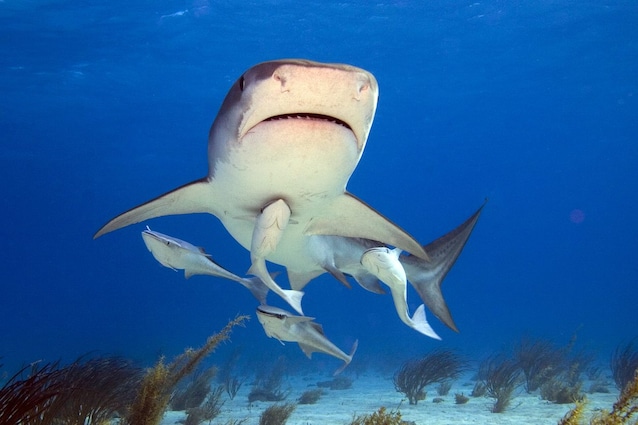
According to a 2019 study published in Integrative Organismal Biologythe Echeneidae family is divided into two large ecological groups: the specialist pelagic specieshow Remora remora (the common remora), which prefer specific hosts such as sharks and manta rays and can be associated with around thirty different species; and the generalist reef specieswith less pronounced guest preferences. There morphology of the adhesive disc varies significantly between species and is correlated to the characteristics of the skin surface of the preferred host (smooth, wrinkled, scaled skin) demonstrating a co-adaptive evolution between parasite and host.
The 2026 study: remoras enter the cloaca of manta rays
The new study published on Ecology and Evolution documents seven observations of remoras dipping into the cloaca of oceanic manta rays, i.e. the multipurpose opening that in cartilaginous fish serves both for excretion and reproduction, and a single observation of attack on gills. The observations cover all three known manta ray species: Mobula yarae (the Atlantic manta ray), Mobula birostris (the giant oceanic manta ray) e Mobula alfredi (the manta ray of coral reefs), and come from different ocean basins. As the authors comment, these observations add important documentation to the growing knowledge base on associations between Echeneidae and hosts, and offer insights into the ecological dynamics underlying this cryptic symbiotic relationship.
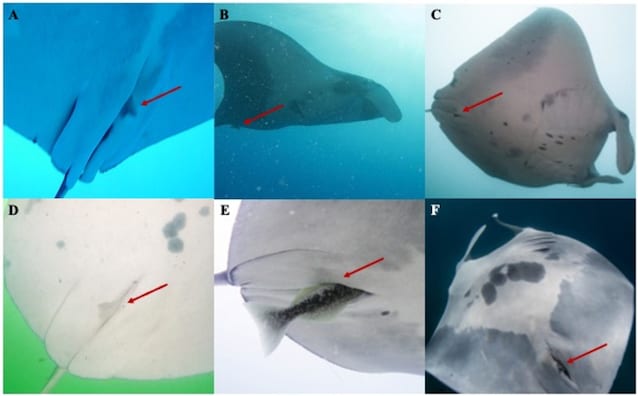
“Cloacal diving” behavior has previously been recorded in whale sharks, but has never been documented in manta rays. In one video, a manta ray has he started and shook himself briefly after a remora had entered his cloaca. In some observations, manta rays flapped their pectoral fins, which scientists interpret as possible attempt to remove the obstacles. The manta rays’ reactions suggest that the behavior is not welcomewhich further complicates the classification of this relationship as simple commensalism.
Why do qualms do this? The authors don’t know for sure. Hypotheses include the seeking refugetheaccess to internal nutritional materialor motivations related to reproduction but the exact mechanisms driving cloacal diving and gill-attacking behavior remain unclear.
Sources
“Hiding in Plain Sight: Evidence of Echeneidae Cloacal and Gill Diving Behavior in Manta Ray Hosts,” by Emily A. Yeager et al., in Ecology and Evolution, Vol. 16, No. 5; May 2026 Scientific American CP Kenaley, A Stote, WB Ludt, P Chakrabarty, Comparative Functional and Phylogenomic Analyzes of Host Association in the Remoras (Echeneidae), a Family of Hitchhiking Fishes, Integrative Organismal Biology, Volume 1
