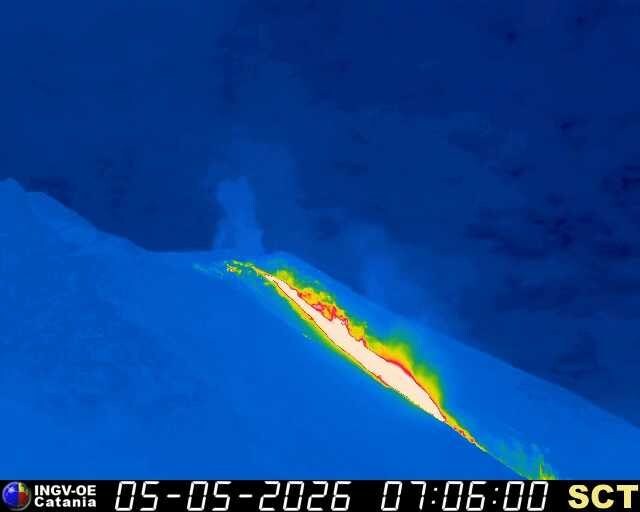
Stromboli recorded a significant intensification of its volcanic activity between 4 and 5 May 2026, with a lava flow started from the North crater area during the night reached the coastline walking through the Sciara del Fuoco. Monitoring the evolution in real time is theNational Institute of Geophysics and Volcanology (INGV)Etna Observatory, which periodically updates the Civil Protection through official press releases.
It all started on the afternoon of May 4th, when the INGV video surveillance cameras detected intense fire activity. spattering (emission of shreds of lava from the mouth of the volcano) from the northern crater area, feeding a lava flow with variable intensity to overflow. In this type of phenomenon the lava does not come out of a lateral opening, but overflows from the edge of the crater. The flow traveled the Sciara del Fuoco – the steep gully on the north-western side of the volcano which historically conveys the eruptive materials towards the sea – and, as communicated by the INGV at 6.29am on 5 May, reached the coast line around 1:00coming into contact with the water of the Tyrrhenian Sea. In the previous press release, dated 4 May, the flow front was still in the medium-upper part of the Sciara del Fuoco.
In parallel, ordinary Strombolian activity (rhythmic explosions of incandescent material) continues in both crater areas, both North and Central-South.
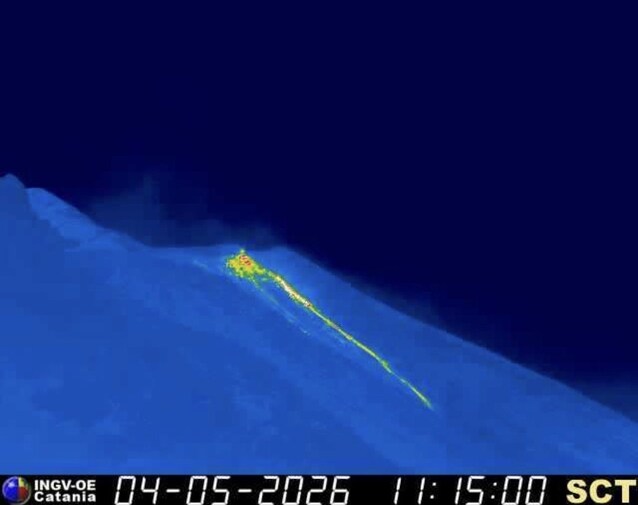
On the seismic front, the picture changed in the hours between the two releases. On May 4th the volcanic tremor reached its peak in the high rangea sign of more intense activity than normal. In the statement of May 5, the tremor subsided in the range of average valueswith a slight increase in the rate of occurrence and magnitude of explosion quakesthe tremors associated with individual explosions. The network High frequency GNSS records no significant changes in ground deformation in either update.
INGV continues to monitor the evolution and periodically updates the Civil Protection on the activity of one of the most active volcanoes in the world.
