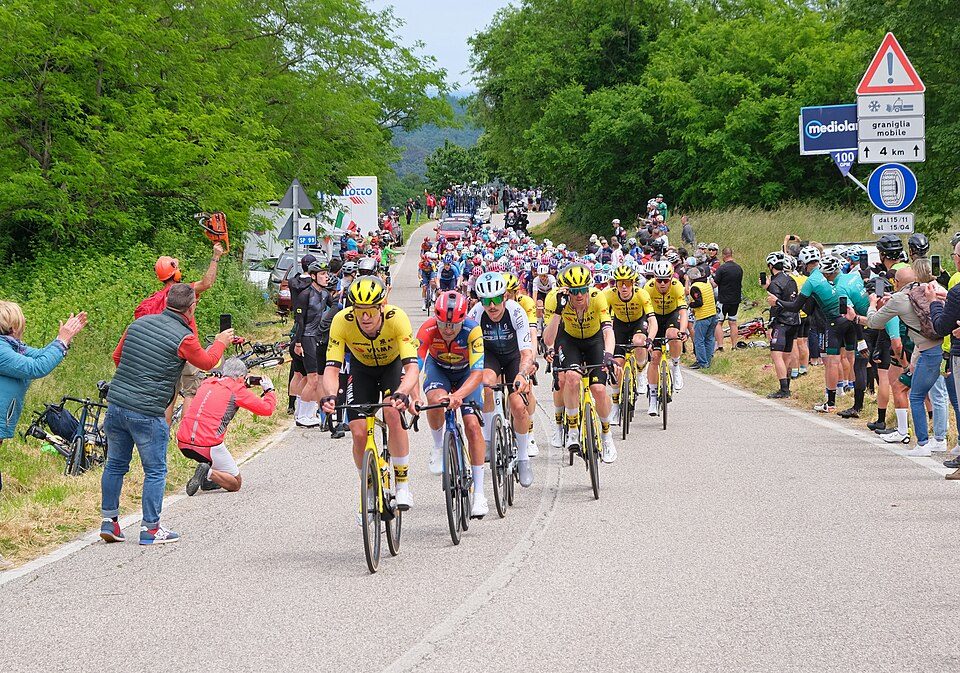
Friday 8 May 2026 will depart from Nessebar, IN Bulgariathe 109th edition of the Giro d’Italia: 21 stages, 3,468 km and almost 50,000 meters of altitude to cover until May 31st, when the pink caravan will parade through the streets of Rome. The route includes 7 uphill finishes, a single individual time trial of 42 km and the “queen stage” which can be decided on the ramps of the Giau Pass, the highest point of this Giro at 2,233 meters above sea level. The big favorite is Danish Jonas Vingegaardalready winner of two Tours de France and the Vuelta 2025. Among the contenders for the podium are also the Italian Giulio Pellizzari (6th last year, recent winner of the Tour of the Alps), Jai Hindley (winner of the 2022 Giro) and Egan Bernal (winner in 2021).
Why does the Giro d’Italia start from Bulgaria?
It’s not the first time that Pink Race crosses the Italian borders: this year’s departure is in fact 16th abroad absolutely. The reason is more economic and geographical: the Giro d’Italia is a highly coveted media event and bringing the “Grande Partenza” abroad means exporting tourist visibility and international prestige. In return, Bulgaria shows itself to the world against the backdrop of one of the most followed sporting events in Europe.
How many calories do runners burn?
A three-week race like the Giro d’Italia is one notable physiological challenge. In a mountain stage, a professional runner can burn between 6,000 and 7,000 kcalalmost triple what an average adult consumes in a day. Multiplying the data by 21 stages, we arrive at over 100,000 kilocalories burned, more or less what an average person burns in a month and a half. This is why the runners feed themselves continuously: abundant breakfast before the start, energy bars, gels, isotonic drinks, supplements during the stage. All planned to the gram by nutritionists and team doctors, because eating too little can cost the race as much as a fall.
The pink shirt is pink because of the “fault” of a newspaper
The most iconic symbol of the Giro, the Pink shirt worn by the leader of the general classification, it is not pink due to an aesthetic choice or some ancient tradition. It is pink because the Giro d’Italia was invented in 1909 by the Gazzetta dello Sport, organized as a tool for promoting and disseminating the newspaper itself. Since 1931 the leader of the race has worn an immediately recognizable colored shirt: pink, obviously, like the pages of the sports newspaper.
Disqualified for taking the train
In the very first edition of the Giro, that of 1909, four cyclists were disqualified for having traveled by train the stretch between Bologna and Chieti. A great saving of effort, if they hadn’t been noticed by anyone. That edition was won by Luigi Gannaa bricklayer from Varese, who also became famous for his first statement to journalists after the victory: «I brüsa tanto el cü». On the other hand, the saddles of the time were not exactly ergonomic.
A cyclist paid not to participate
In the second half of the 1920s there was an Italian cyclist who dominated the discipline: Alfredo Binda he won 3 world titles and 5 editions of the Giro between 1925 and 1933, his record of 41 stage victories in the Corsa Rosa was only beaten in 2003 by Mario Cipollini. After having dominated three consecutive editions of the Giro, the organizers paid him 22,500 lire, around 15 thousand euros today, not to take part in the 1930 edition, for fear that the race would become too boring with such an overwhelming dominance of the Varese rider.
