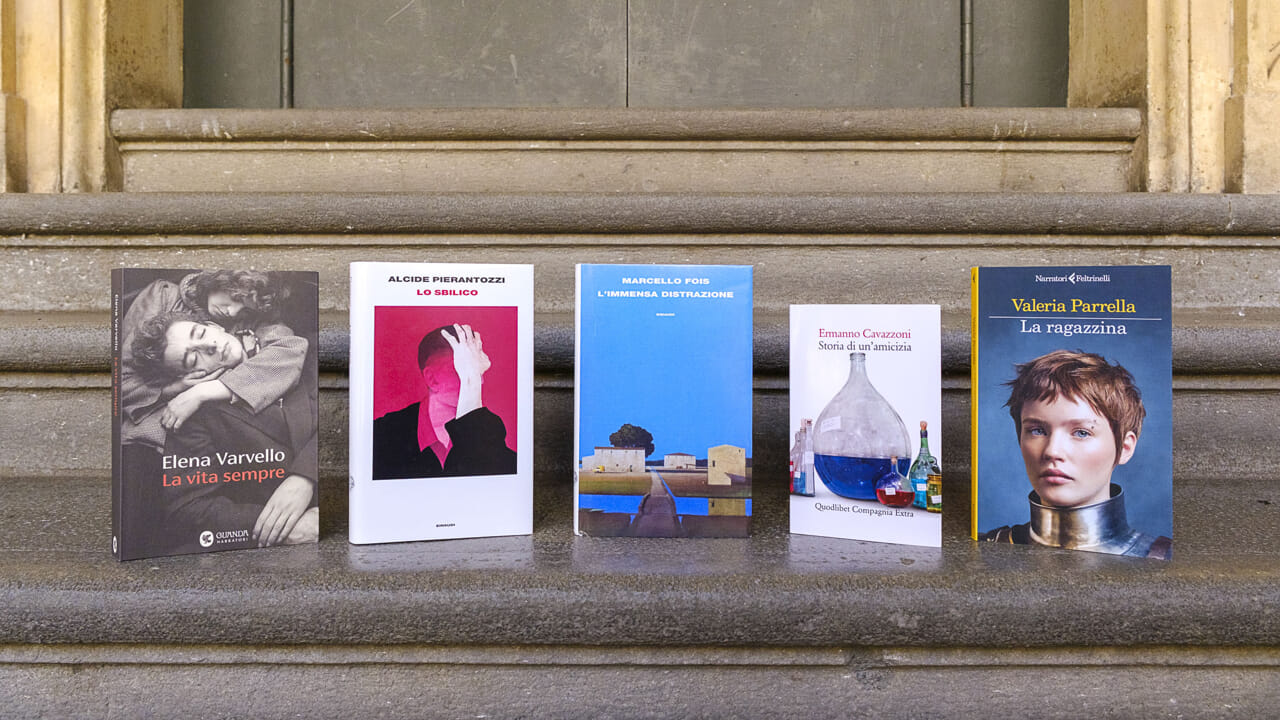
The Campiello Prize comes to life: the literary jury, chaired this year for the first time by Roberto Cicutto, chose this morning in Padua – as per tradition in the Aula Magna of Palazzo Bo – the five finalist novels. The authors who will compete for the ‘well shot’ on October 3rd at the Palazzo del Cinema on the Lido of Venice are:
- Marcello Fois with The immense distraction (Einaudi)
- Ermanno Cavazzoni with Story of a friendship (Quodlibet)
- Elena Varvello with Life always (Ugo Guanga Publisher)
- Valeria Parrella with The little girl (Feltrinelli)
- Alcide Pierantozzi with I twist it (Einaudi)
It was a quick selection – like that of the previous edition – concluded with five rounds of the table. In the first round of voting, four novels were shortlisted; three more rounds followed, characterized by a substantial head-to-head between The last worker. Final song of the great factory by Niccolò Zancan e I twist it by Pierantozzi (both published by Einaudi), with the latter occupying the last available slot of the five on the ballot.
As usual, the announcement of the “First Feature” award preceded the jurors’ verdict. The Best Debut Novel award was given to Uyangoda Nadeesha for the novel Dirty waterpublished by Einaudi, as it “gives voice with narrative intensity and stylistic clarity to the fractures and multiple belongings of the contemporary world, transforming a family and migratory story into a polyphonic narrative on identity, memory and affective inheritance”.
Italian fiction today
The definition of the five was also an opportunity to take stock of the “state of health” of contemporary Italian fiction. This year the task fell to Rita Librandi, university professor emeritus in Naples and vice-president of the Accademia della Crusca, who emphasized a partial reversal of trend compared to the past, but only “for a handful of writers”.
Highlighted, first of all, is the growth of a narrative linked to plural identities, “especially to the events of migration, writings no longer perceived as a lateral phenomenon”, underlined the academic. Positive is the return to inventiveness, “to more constructive narrative. It seems – he continued – a pleasure in narrative architecture is returning. And we are starting to move away from linguistic homogeneity, interest in the more expressive language is growing”. Finally, the return to the “well-documented” historical novel, based on important historiographical readings, which are reinterpreted.
They counterbalance the sore notes. Librandi highlighted the disproportion between the ever-increasing number of publications by small and large publishers, and the small amount of readers. “There is also a strong repetitiveness of the themes – observed the teacher – and a widespread average style in terms of language”. If the standard is on average correct, “we witness the extermination of subordinates”, influenced by a tendency to favor a massive use of cinematographic dialogues.
