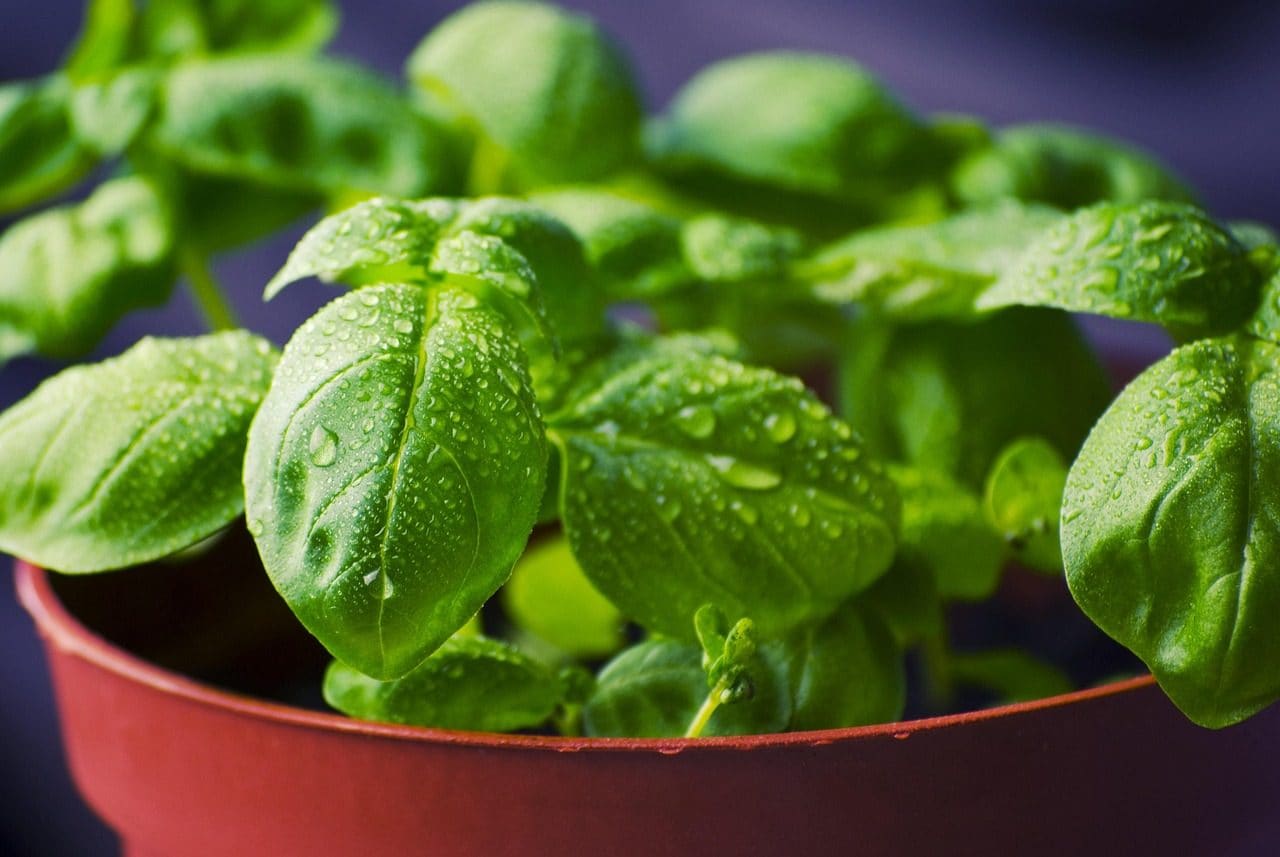
Everyone knows that the main ingredient of Genoese pesto is basilbut is the one in Genoa really so “special”? Or is it just the result of popular rumors? First of all, Genoese Basil is a product DOP and in the specifications we read precisely how this plant was historically cultivated on the Tyrrhenian side of Liguria, where a set of unique environmental factors contributes to its aromaticity. The mild climate, the sunlight, the soil compositionthe altitude and the salty coastal air stimulate the secondary metabolism of the plant: this leads to the synthesis of essential oils and other aromatic molecules that give Genoese basil its distinctive aroma and flavor. The linaloolin particular, in Basilico Genovese DOP it is present in higher concentrations compared to other varieties.
The characteristics of Genoese PDO basil and the differences with other types
Reading the production regulations of the Genoese basil DOP, we discover that the basil (Ocimum basilicum) was historically cultivated on the Ligurian Tyrrhenian side. In this portion of land, a unique combination of geographic and environmental factors directly impact internal chemical composition of the plantgiving rise to that characteristic aroma that differentiates it from all other types of basil, often characterized by a more minty note. To be honest, in the specifications for Basilico Genovese PDO it is specified that the mint aroma must be completely absent!
To fall within the canons explained by the Consortium for the protection of Genoese Basil DOP, the plant must develop with amedium-tall height and present medium-small leaves (oval) of a uniform light green color. The most common varieties of basil, however, are recognized by their large leaves, of a dark green shade and often furrowed by very pronounced veins.
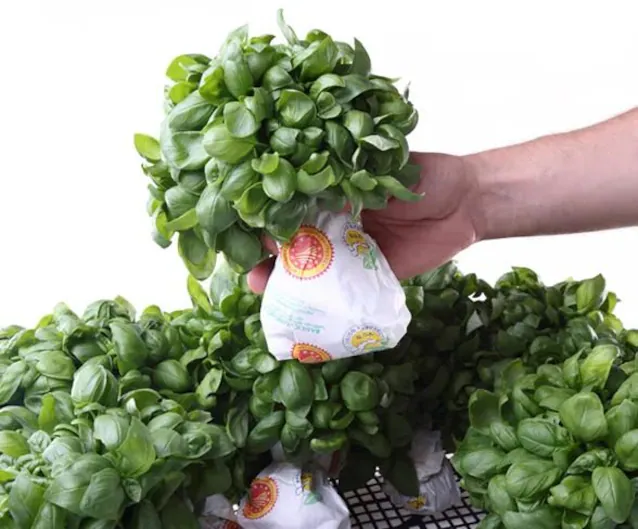
To have the absolute certainty of purchasing the authentic fresh product, essential for preparing the real thing Genoese pestoit must be remembered that it is never sold in cut twigs in plastic bags, but is found exclusively in bunches or bouquet whole equipped with roots and natural earth still attached. Finally, the tag or packaging must include the exact wording of the denomination in full, accompanied by the round red and yellow European PDO stamp and the official seal of the Protection Consortium, essential visual guarantees that we advise you to always look for on the labels and among the ingredients of the jars of ready-made pesto.
The secret of Genoese basil: the Ligurian territory
In a study published in Journal of International Nutrition and Dietetics Clinics some of the main environmental factors that influence the synthesis of bioactive compounds in aromatic plants, such as basil, are described. Among these, the temperaturethe sunlightThe type of soilthealtitude and the water availability. Each of these elements acts directly on the secondary metabolism of the plant, that is, that complex system of biochemical reactions that leads to the production of organic compounds that are not essential for the survival of the plant, but which perform numerous other functions such as attracting pollinators or warding off possible dangers. These secondary metabolites are essential oils and other compounds responsible for the scent and flavor of basil.
The secret of Genoese basil is therefore climate of the Ligurian region (especially that of the Genoese area), its geographical position and, probably, also its proximity to the sea: academic studies, in particular a recent study published in Plants in 2023, state that salinity conditions – such as those that can occur in coastal environments – act as physiological stimulus on basiltriggering the production of aromatic secondary metabolites that modify the taste of the plant. The so-called salty air (i.e. sea air) could therefore play a key role in making Genoese basil one of a kind.
The molecules of Ocimum basilicum
Let’s now look more closely at the chemical compounds that characterize the flavor and smell of basil. We can cite for example the essential oilthat is, a mixture of volatile substances which in the case of basil mainly contain eugenol and I estragole (methyl chavicol), responsible for the spicy and slightly pungent notes, similar to those of clove.
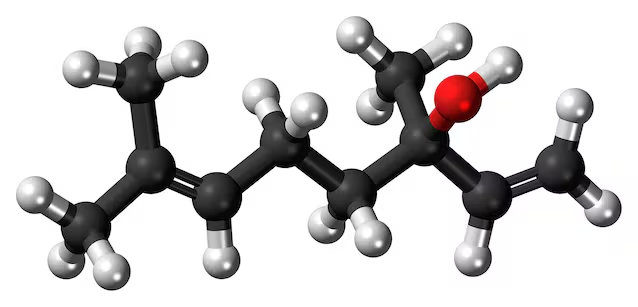
In some varieties, including Genoese basil, a higher concentration of another key compound is observed: il linaloola terpene alcohol that also gives a balancing aroma with sweet and floral notes. In line with these statements, research published on Plants in 2025 claims that Genoese basil tends to have higher concentrations of linalool.
