Royal Cornerthe newsletter that every two weeks tells you the most important news on the European Union’s regional and cohesion policy
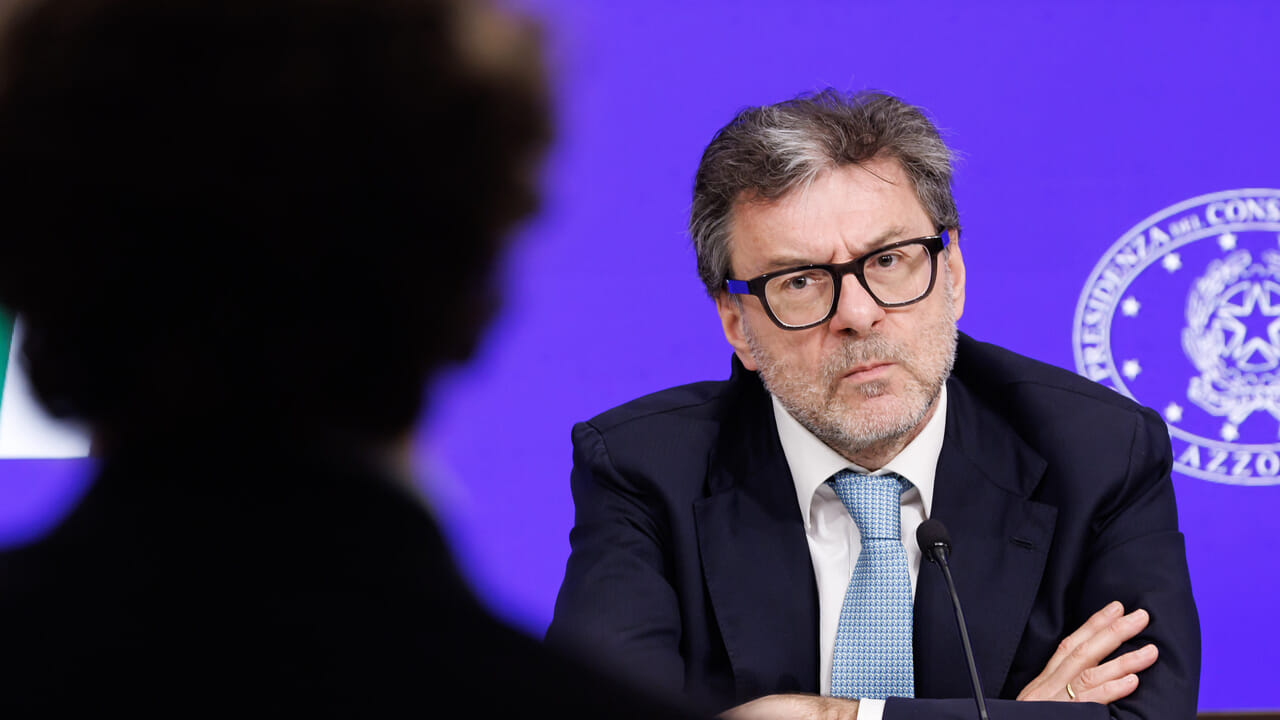
This week the Commission is expected to respond to Italy’s request to grant flexibility with respect to the Stability Pact also for expenditure intended to address the energy crisis. President Ursula von der Leyen will reply in writing to the letter from Prime Minister Giorgia Meloni. But it is very difficult for an opening to come, especially after the Spring Forecasts certified that in 2027 Italian public debt will be the highest in the EU, reaching almost 140 percent of GDP.
On the day of the presentation of the report, Economy Commissioner Valdis Dombrovskis said that the Commission is “conducting assessments to understand what can be done” to respond to the energy crisis triggered by the war in Iran, adding however that there is a need for “fiscal prudence, in particular for highly indebted countries”.
Exceptional circumstances
We live in a context of “exceptional circumstances” which “legitimize an extension of the flexibility that has already been granted for security and defense expenditure also to the investments necessary to deal with the energy crisis”, said Meloni yesterday, during the joint statements released with the Prime Minister of Ireland, Micheál Martin, at the end of a meeting at Palazzo Chigi. “Energy is also security, the economy is also security. It’s not a question of being authorized to take on more debt but of better allocating what is already foreseen”, added Meloni.
Yesterday the Minister of Economy Giancarlo Giorgetti reiterated the request for flexibility in Cyprus, in a bilateral meeting with the commissioner on the sidelines of the informal Ecofin. If a new cautious opening came from Dombrovskis, with the admission that Brussels is “evaluating various options”, there was also a new call for prudence: any measures will have to be “temporary and targeted”, taking into account the “limited fiscal space available”, he warned. ECB President Christine Lagarde also warned that “temporary, targeted and tailor-made” measures should be used.
Little hope for Rome
There is therefore little hope that a positive response will arrive for Italy. “With regards to fiscal flexibility in the field of energy, we would like to underline that, at this stage, the focus is on making full use of the EU funding already available, which is truly huge”, declared the spokespersons of the community executive at the beginning of the week, when Meloni’s letter arrived.
The 95 billion treasure chest
More likely, Palazzo Berlaymont’s responses to Italy’s requests will focus on the 95 billion treasure trove, made up of Cohesion resources and funds still not disbursed from the Next Generation Eu, the Recovery Fund. “Around 300 billion euros have been allocated for investments in the energy sector through instruments such as Next Generation Eu, cohesion policy funds and the Modernization Fund, with around 95 billion euros still to be used. A further element is that we have made the state aid framework more flexible”, the spokespersons had recalled at the beginning of the week. But this was already known to the Italian government. And that’s not enough.
The other main news of the last two weeks on EU cohesion and regional policy
43 billion for housing policies
Forty-three billion euros mobilized by the EU for housing-related investments under the current European budget. This is the figure cited yesterday (Friday 22nd) by the Executive Vice President of the European Commission Raffaele Fitto in a video message at the conference “Casa Firenze: from a city of living to a city of living”.
Fitto recalled that the mid-term review of cohesion policy made it possible to mobilize a further 3.3 billion euros for sustainable and accessible housing. In Italy, European support in this sector “has more than doubled, reaching approximately 1.1 billion euros”. Tuscany, he added, intends to contribute with investments in the renovation and construction of housing for the most vulnerable categories. Italy also finances sustainable urban development programs for around 2.4 billion euros.
New policies are needed
“There is no alternative path other than trying to use available resources effectively, improving implementation and the quality of spending.” Fitto said this on Wednesday 20th, speaking at a meeting on Europe and territorial cohesion during the Trento Economics Festival, in Italy.
The head of Cohesion of the community executive insisted on the need for “right solutions in a changing world, because we cannot think of making the same policies that we had 30 years ago”. In a context of rapid evolution, he concluded, “either we adapt and build a different perspective for Europe or we risk introducing requests that will never find concrete application”.
Energy transition
“Energy security and autonomy represent strategic priorities for Italy and the entire European Union.” Fitto wrote in a letter read on Thursday 14th at the opening of the first edition of “Green Fair – Agorà delle Energie Rinnovabili”, an initiative dedicated to clean technologies and the role of Southern Italy in the energy transition, held in Bari, Italy.
Fitto underlined that “the energy transition must be pursued with balance and pragmatism” and that “cohesion policy can play a decisive role, accompanying territories, businesses and local communities through investments in renewable energy, energy infrastructure, innovation and competitiveness”.
Meloni: Pac and cohesion not in conflict with competitiveness
“The Common Agricultural Policy and cohesion are clearly not in conflict with the concept of competitiveness: they are rather two preconditions for guaranteeing the right competitiveness to our production systems.” This was said yesterday (Friday 22nd) by Prime Minister Giorgia Meloni, receiving Irish Prime Minister Micheál Martin at Palazzo Chigi, a meeting in which the negotiations on the Multiannual Financial Framework 2028-2034 were also discussed.
Meloni also criticized the proposal to spend 800 million euros to renovate the headquarters of the EU Council, defining it as a signal that “is not going in the right direction” at a time when “resources are difficult to find in Brussels”. Martin shared the approach: “Without a strong and competitive economy, Europe will not be able to improve the living conditions of our citizens”.
Photos: no to downsizing
“We cannot accept a downsizing” of cohesion policy. This was said on Wednesday 13th by the Minister for European Affairs, the Pnrr and Cohesion Policies Tommaso Foti, at Palazzo Chigi, meeting the representatives of the Regions on the negotiation for the EU Multiannual Financial Framework 2028-2034.
The government, explained Foti, requests “adequate resources, the maintenance of previous financial levels and a rebalancing mechanism” to correct the distortions of the current financial architecture. “A difficult negotiation awaits us, but Italy will work to build a broad European front in defense of a strong, recognizable and adequately financed cohesion policy”, he concluded.
EU funds for disasters
The European Union Solidarity Fund (EUSF), an instrument of the community budget designed to support member countries affected by serious disasters, is preparing to disburse 144 million euros to Spain, Romania and Cyprus, hard hit by extreme climatic events in 2025. The proposal comes from the European Commission, which has calibrated the amounts based on the extent of the damage declared by each country.
The largest share, 120.4 million, goes to Spain, devastated by prolonged drought, heat waves and three large waves of fires. The funds will be used to restore water, telecommunications, transport and cultural heritage infrastructure, as well as provide temporary accommodation and relief services.
Romania receives 14.3 million to repair the damage caused by the floods of May-June 2025 while Cyprus receives 9.2 million (of which 2.3 have already been paid in advance) after the two catastrophic fires of July 2025 in the regions of Limassol and Paphos.
Norway in the Baltic
Norway enters as a full member in the EU Strategy for the Baltic Sea Region (Eusbsr), the first European macro-regional framework, approved by the European Council in 2009. Oslo was already an active de facto partner; it now acquires a formal role in strategic governance and the common agenda.
On Monday 18, European Commission Executive Vice President Raffaele Fitto said that Norwegian participation “will strengthen our collective capacity to address common challenges, from security and resilience to innovation and territorial cohesion”. The request came in October 2025 from Oslo’s Foreign Minister, Espen Barth Eide.
As a next step, Norway will join the National Coordinators Group, the apex decision-making body of the Strategy, and appoint representatives to the 14 thematic steering groups. Cooperation will cover civil security, health, innovation and social cohesion.
CORner
Türkiye, democratic alarm
The European Committee of the Regions (CoR), an EU consultative body representing local and regional authorities, has expressed concern over the decision of the Ankara Regional Court which on 21 May declared the congress of the Republican People’s Party (CHP) null and void and ordered the temporary removal of its leader, Özgür Özel.
In a joint statement on Thursday 22nd, the president of the CoR Kata Tüttő and Jelena Drenjanin, president of the working group on relations with Turkey, recalled that respect for the rule of law remains fundamental in EU-Turkey relations and recalled the case of the mayor of Istanbul Ekrem Imamoğlu, underlining that pressure on local elected representatives “weakens the trust and representation of citizens”.
Regions in the 2027 program
The Conference of Presidents of the CoR adopted a statement on the priorities to be included in the European Commission’s work program for 2027, following an exchange of views with Pascal Leardini, Deputy Secretary General of the Commission, on Monday 5 May.
At the heart of the declaration is the request to preserve a strong cohesion policy for all regions in the next Multiannual Financial Framework (2028-2034), respecting the principle “do no harm to cohesion”. The document also touches on the growing role of regions in European security and defense and the importance of cross-border health cooperation. The Commission has also committed to involving the CoR more in consultation activities and in the new Simplification Platform.
Tüttő: housing is not enough
“Centralising EU policies, weakening cohesion and allocating funds to large innovative sectors, as in the new budget proposal, can only aggravate the housing emergency”. President Tüttő said this on Wednesday 13th, on the sidelines of an informal meeting on the housing crisis in Cyprus.
“To reduce pressure on affordable housing markets we must build not just homes, but cities, with an integrated approach,” he added, warning that the goal is not to “rapidly build more unusable housing without adequate water, energy, public transport and services.”
