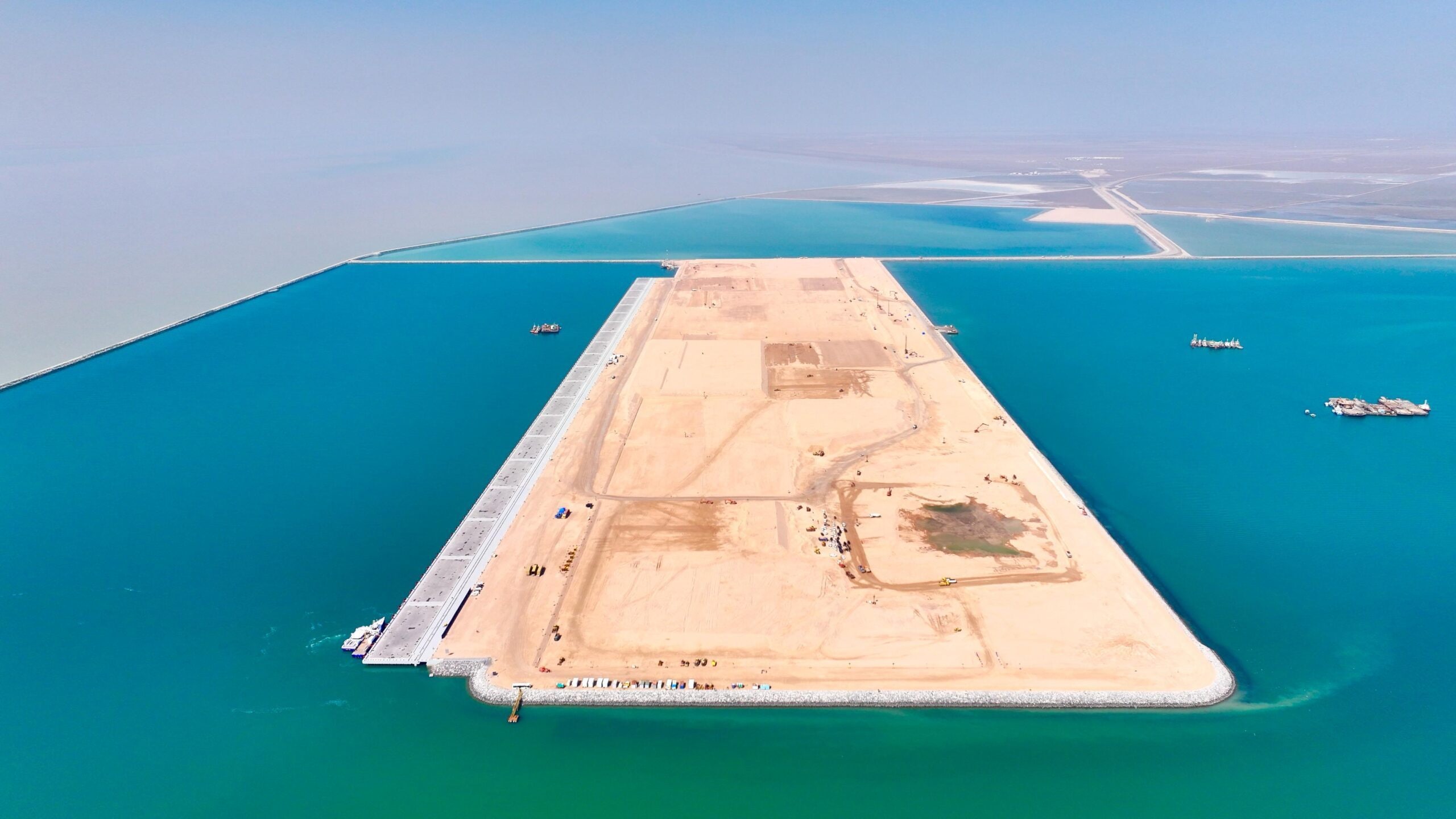
THE’At Faw Grand Port it is, to date, one of the most ambitious and compelling infrastructure projects on the entire global scene. Located in the Al-Faw peninsula, in the Iraqi province of Basra and near the source of the river Shatt al-Arabonce completed it will become the largest port in the Arab worldeven bigger than Jebel Ali in Dubai. Let’s take a closer look at this very interesting mega-project which includes the 14km breakwater (longest in the world) and docks with a fully automated container ship unloading system.
The characteristics of the 5 billion dollar project
The port is located on the Al-Faw peninsula, in the province of Basra. For the construction and operation of the port, a total cost of 5 billion dollarswith a final processing capacity of well 99 million tons of cargo per year.
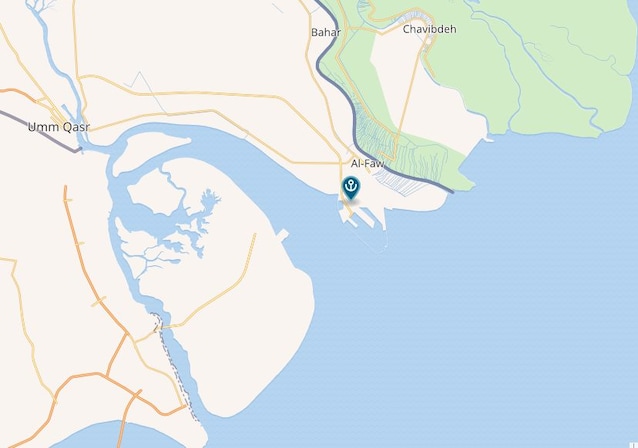
The implementation of this mega project is divided into phases. There phase 1which began in 2020, saw the intervention of the Korean giant Daewoo E&Cwith the support and technical consultancy of the Italian Technital SpAit is practically already perfectly operational. The five moles maininaugurated between the end of 2024 and the beginning of 2025. The project presents the longest breakwater in the world who, with his 14kmwhich has already entered the Guinness World Record. Furthermore, a new one is currently under construction underwater tunnel which will connect the port to the main road network, passing under the Khor Al-Zubair canal.
The further implementation phases of the project will be developed as follows. The second phase, which will develop between 2025 and 2030, will see an expansion of the logistical and industrial infrastructures, with the creation of the Dry Canal (the “Dry Canal”), i.e. the vast railway and motorway network that will connect the port to the Turkish border, transforming Iraq into a strategic transit corridor between Asia and Europe.
The third phase, post 2030 until 2038is, essentially, the phase of full and maximum development. Up to 90 piers will be built, with the entire infrastructure reaching its maximum capacity, and that is well 25 million tonnes of freight per year.
The engineering challenges of the port
The main breakwater (Western Breakwater) represents one of the most important and compelling elements of the entire project. With his 14,523 km longits role is to protect the port from the tidal flows and wave motion of the Gulf sea, in order to ensure that ships can dock in calm waters, for the benefit of docking and disembarking operations. The realization required the use of millions of tons of rock and reinforced concrete, all resting on a seabed on which an important land consolidation work was undertaken.
Another engineering challenge is represented by the need to maintain a constant water depth throughout the area, which is subject to large and important sedimentation phenomena due to the presence of two important rivers, the Shatt al-Arab And Khor Abd Allah. In summary, rivers transport sand that reaches the sea, and this means that the depth of the sea tends to constantly decrease. The harbor was then dredged to a depth of 19.5 meters, thus allowing the docking of even large ships. Furthermore, a 23 km long canal, in order to connect the port area to the deeper waters of the Gulf.
Another important engineering challenge was that relating to the construction of the underwater tunnel. In this case, in order not to interrupt and disturb naval traffic in the Khor Al-Zubair canal, a tunnel with immersed elements. This means that the building blocks of the tunnel are built elsewhere and only then transported and sunk on site. The tunnel will contain inside it a three-lane highway in each direction.
Also the realization of the five main piers it certainly represented an important engineering challenge. In fact, the docks rest on a complex and dense system of pile foundations, which were driven into the ground in order to support the enormous loads foreseen in the design phase. A complex, fully automated container ship unloading system will be created on the docks, with great advantages and gains in terms of efficiency, costs and time.
Lastly, the area on which the port will be built is characterized by alluvial deposits, therefore substantially soft soils, not capable, on their own, of supporting significant loads due to engineering works carried out by man. We then proceeded with complex works soil consolidation, through the pre-application of loads capable of compacting the soil.
In order to make the sandy soil of the area more resistant, further very interesting engineering techniques were also employed. First of all the “Deep Soil Mixing” technique, a technique which involves mixing the subsoil soil with hydraulic binders, which guarantee and maintain greater resistance to the vertical loads applied during the construction of the structures.
The economic impact
It seems clear that the construction of such an important port will have important consequences on the entire economic structure not only of Iraq but of the entire area. In fact, once the work is finished, the country will be able to substantially reduce its dependence on commercial ports of neighboring countries. Another advantage that Iraq will have is that relating to a diversification of your income economies which, to date, are mostly linked to oil extraction but which in the future will also be able to count on transit rights and on construction of industrial zones in neighboring areas.
