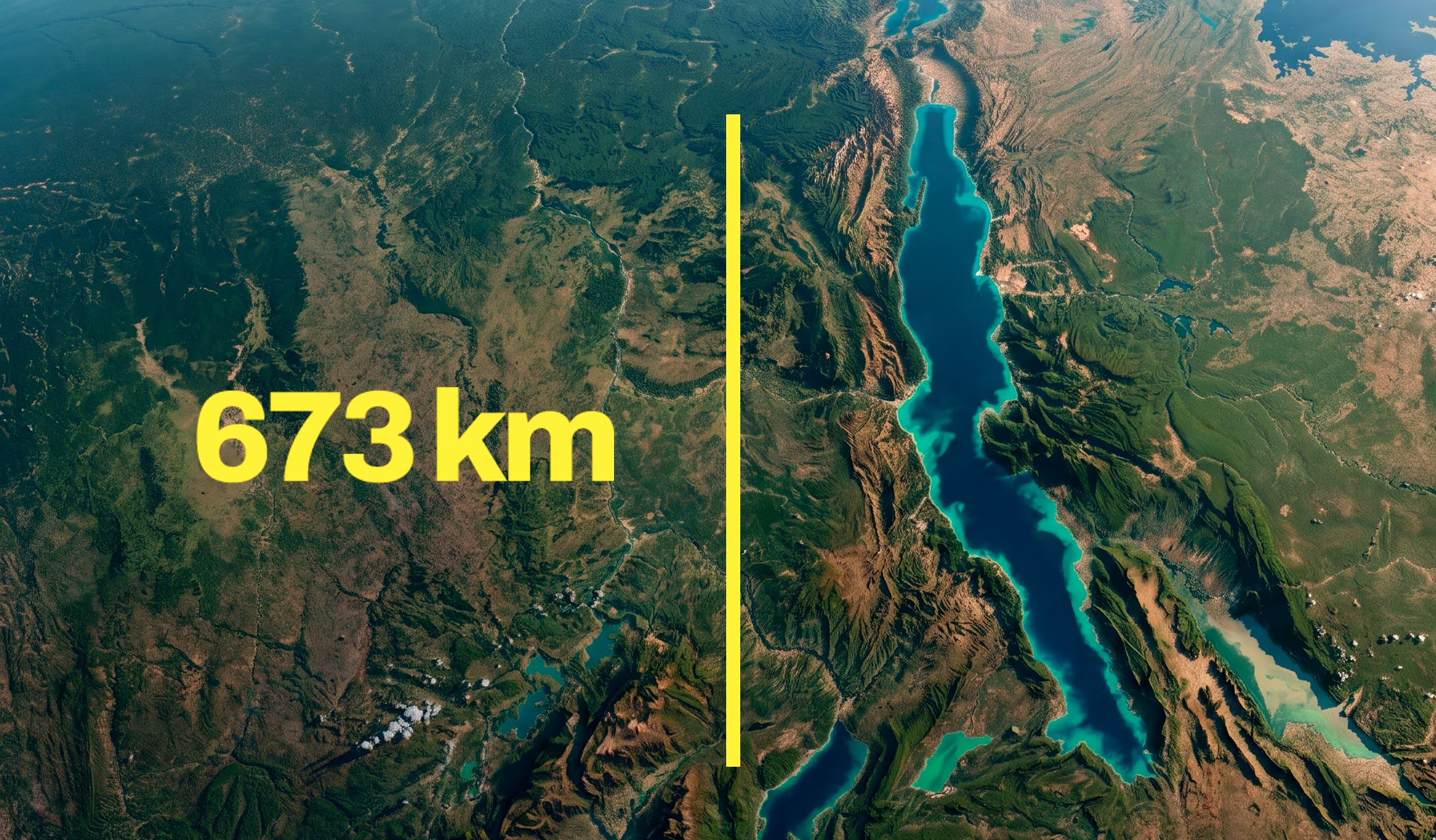
With an extraordinary extension of 673 km – which if projected onto Italy would develop almost as much as the entire peninsula, from Milan to the gates of Bari – Lake Tanganyika in Africa he is not alone the longest freshwater lake on the planetbut a giant with astonishing numbers. With his 1,470 meters deep maximum, second only to Baikal, this immense basin contains well 19,000 cubic kilometers of waterwhich correspond to approximately the 16% of all fresh water liquid present on the earth’s surface. Formed between 9 and 12 million years ago along the Western Rift Valleywhere the geological fault continues to push the Somali plate away from the Nubian plate, today its waters bathe four nations – Burundi, DR Congo, Tanzania and Zambia – and host a unique ecosystem with over 2,000 animal and plant specieslargely endemic. A true evolutionary paradise and an open window on the internal dynamics of our planet.
The record numbers: 1470m deep
According to official data from Guinness World RecordsThe Tanganyika Extends to a maximum length of well 673 kmwhile its average width varies between 16 and 72 kilometers. Its narrow and elongated shape is not at all accidental: it is the direct consequence of its origin. In addition to being extraordinarily long, Tanganyika is also incredibly long deep. At its maximum point it touches approximately 1,470 m of depth, with an average of around 570 m. This makes it the second deepest lake on Earth after Lake Baikal in Russia. Just think that its enormous basin almost encloses 19,000 cubic kilometers of water: an immense quantity, equal to approximately 16% of all the liquid fresh water available on the Earth’s surface.
The signature of geology: birth in the Rift Valley
To understand how it is possible for a lake with such a bizarre shape to exist – long, narrow and deep like a canyon – we need to look at what happens beneath the Earth’s surface. Tanganyika is a classic example of lake of tectonic origin. It is in fact located at the southern end of the Western Rift Valley, a colossal rift valley that crosses East Africa. In this region, the Earth’s endogenous forces are literally pushing the Somali plate to the east away from the Nubian plate to the west. This violent process of “stretching” crustal, which began between 9 and 12 million years ago, creates enormous cracks in the rock. The central blocks of the earth’s crust sink, creating depressions called graben or rift valleyswhile the sides rise up to form steep mountain walls. Over the millennia, the abundant tropical rains and rivers of the region have filled these gigantic valleys with water, giving rise to the spectacular chain of African Great Lakesof which the Tanganyika he is the undisputed king.
A biodiversity hotspot isolated by time
Precisely because of its incredible depth and its geological isolation lasting millions of years, Tanganyika has transformed into an open-air evolutionary laboratory. The lake hosts further 2,000 animal and plant speciesand more than half of these are endemic, meaning they are found nowhere else in the world. Among these, the spectacular fish of the dei family stand out cichlids (there are over 250 different species), famous for their bright colors and for their complex social behaviors. However, this exceptional biodiversity today has to deal with concrete threats such as climate change, intensive fishing and pollution caused by the strong population growth along its banks. Protecting Tanganyika does not just mean protecting a Guinness geographical record, but safeguarding one of the most important ecological and water lungs of our planet.
