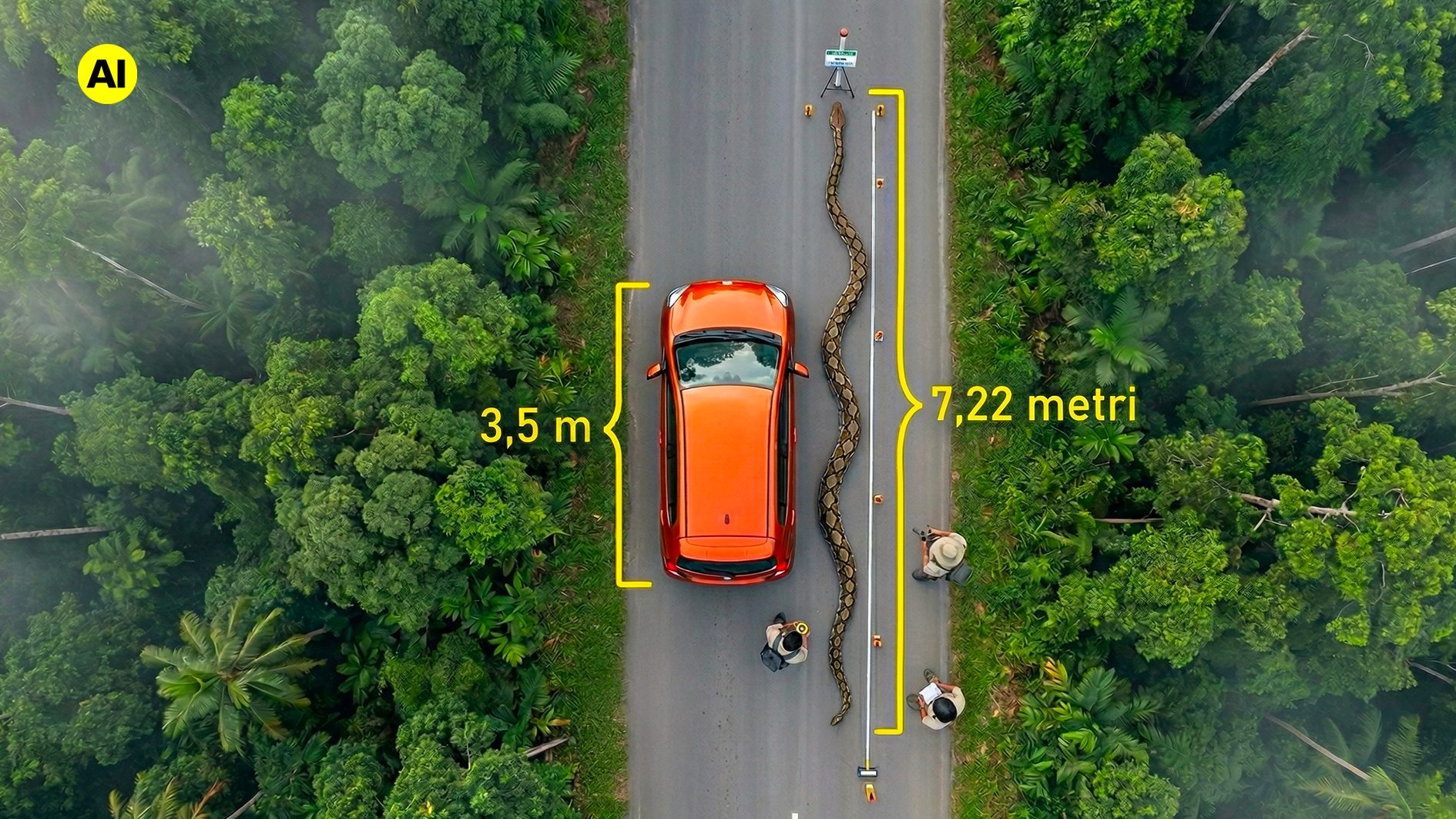
In the south of the island of Sulawesi, Indonesia, the longest wild snake never measured. This is a female reticulated python (Malayopython reticulatus) long well 7.22 meters and with a weight of 96.5kg. The official measurement which took place in January 2026 brought this specimen right into the list Guinness World Records with a new world record. The python was nicknamed “Ibu Baron” which in Italian means The Baroness and beat the previous 1999 record of another reticulated python by about 25 centimeters. In fact, the constrictor (non-venomous) snake species native to Southeast Asia is already known to comprise the longest snakes in the world with an average length of 5-6 meters.
The record specimen of reticulated python: 7.22 m long
The reticulated python (Malayopython reticulatus) longest wild ever measured was discovered in late 2025 in Indonesia. Measured with a measuring tape and a tape, the experts recorded 7 meters and 22 centimeters – as long as a camper or two small cars in a row – with an empty stomach weight of approximately 96 kg. The Baroness – Ibu Baron in the local language – was measured fully awake for avoid the risks of anesthesia. Since snakes can stretch up to 10% plus when their muscles are completely relaxed under sedation, scientists suspect that its actual length, if relaxed, could even touch the 8 meters (7.90 m). In the video below from the Guinness Book of Records you can see the measurement of the snake and understand its length compared to a man.
The name “reticulated” derives precisely from its unmistakable “net” coat, which acts as perfect camouflage. Before the recent discovery, the record for the longest wild snake belonged to a female 6.95 metersmeasured with official tests in 1999 in Borneo. So far, however, we have only talked about specimens in the wild. If we move on to snakes raised in captivitythe record belongs to… another reticulated python. Hosted in Missouri (in the United States), a female named “Medusa” reached the incredible length of 7.67 meters.
Despite their size, reticulated pythons are much more endangered than we are from them. For this reason, the experts who traveled to Indonesia to measure The Baroness were quick to realize the risks these animals face due to humans. Being predators opportunistsit happens that they approach inhabited centers in search of prey, attacking livestock or pets and, rarely, humans. For this reason, they often come killed by local inhabitants out of preventive fear. Furthermore, every year numerous specimens are hunted and killed to fuel the fashion and alternative medicine markets.
Characteristics of the longest snakes in the world: Malayopython reticulatus
The reticulated python (Malayopython reticulatus) of the Pythonidae family is a snake widespread in South-East Asia, from Bangladesh to Indonesia and the Philippines, even if the area that this species occupies is not clear-cut and defined. Its presence has also been reported in some areas of India. Considered the longest snake species in the world, it reaches an average length in adulthood between 5 and 6 metersbut as in the case of the Baroness, it can also exceed 7 metres.
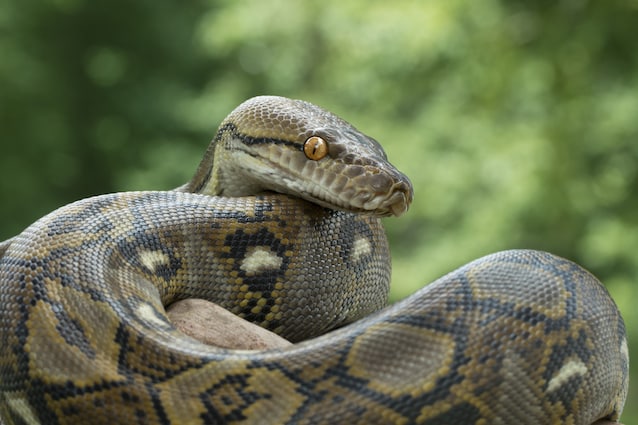
The unusual numbers of reticulated pythons do not stop at their size, these reptiles also have an average weight of 75kg with peaks over 90. Also Malayopython reticulatuslike other snake species, exhibits sexual dimorphism with females being larger than males. Specifically, body size reaches larger widths of equal (or almost) length. Despite these figures, the primacy of snake heavier in the world belongs to females green anaconda (Eunectes murinus – E. akayima) which can even reach 300 kg when pregnant or after eating large prey.
The word snake is immediately associated in the common imagination with “poison”. However, reticulated pythons they are not poisonous but they are constrictor snakes that immobilize their prey using their powerful coils. Their diet is varied and includes mammals, birds and, occasionally, other reptiles, amphibians and, being excellent swimmers, even fish.
This enormous species does not live exclusively in rainforests or swamps but is capable of adapting to them as well tourban ree epiantagions such as oil palm cultivation.
Sources
National Geographic Guinness World Record Taronga Conservation Society Australia Reed, R. N., & Rodda, G. H. (2009). Giant constrictors: biological and management profiles and an establishment risk assessment for nine large species of pythons, anacondas, and the boa constrictor. US Geological Survey Open-File Report 2009-2012. 302pp. Shine, R., Harlow, P. S., Keogh, J. S., & Boeadi. (1998b). The influence of sex and body size on food habits of a giant tropical snake, Python reticulatus. Functional Ecology, 12(2), 248–258.
