
Hygiene freaks, but still smell that strange fishy smell? It might not be your fault. There is in fact a rare disease called trimethylaminuria (TMAU), and also known as “fish odor syndromeAccording to some findings, it affects from 1 person in 200,000 to 1 in a million, although it is believed that the real figure is higherdue to lack of awareness, reticence to consult a specialist and low diagnosis rates. The fault of this bad smell is a molecule, the trimethylamine (TMA), which accumulates in the body due to a malfunctioning enzyme and is excreted from urine and sweat (but also from breathing!), causing a persistent and very unpleasant odor, comparable to that of rotting fish. It does not cause metabolic problems, but can have a strong psychological and social weightworsening the quality of life of those who suffer from it.
The chemistry of “rotten”: what it is and where TMA comes from
There trimethylamine (TMA) is a tertiary amine with chemical formula C₃H₉N, extremely volatile which our nose perceives at very low concentrations, around 0.12 parts per billion.
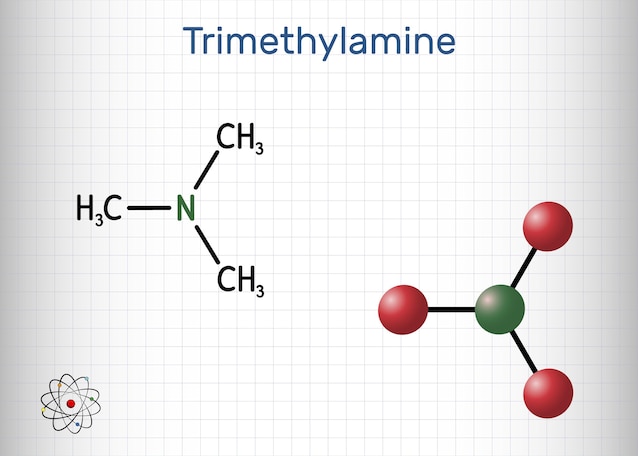
Its oxidized form, la., is present in fish trimethylamine N-oxide (TMAO), which however it is odorless. When we eat fish, some bacteria present in the intestine transform TMAO into TMA, but fish is not the only food source from which we obtain TMA. It is in fact produced by the anaerobic bacteria of the large intestine and also by others food precursors: choline (present in eggs, legumes, meat), carnitine (abundant in red meat and fish), betaine and lecithin.
Once formed, it is absorbed through the intestinal cell membranes, enters the portal system (which connects the intestine and liver) and reaches the liver, where it is oxidized into TMAO by the enzyme flavin monooxygenase 3 (FMO3) and eliminated in the urine.
When the mechanism jams: the causes
Trimethylaminuria (TMAU) occurs when this oxidation process fails. The reason could be a genetic defect of the FMO3 enzyme or its saturation. TMA accumulates in the body and is expelled, with its characteristic odor, from urine, sweat and even our breath!
In the first case we talk about primary trimethylaminuriathe hereditary genetic form due to mutations in the gene that encodes, i.e. contains the instructions for the construction of the FMO3 enzyme. It is transmitted by road autosomal recessive: from two healthy carrier parents, the child inherits two copies of mutated gene and will then produce the defective enzyme. There are several possible mutations: some completely cancel the activity of the enzyme, causing a strong odor and constantwhile others only partially reduce its efficiency, leading to milder or intermittent symptoms.
In other cases, the TMAU is secondary and develops following other pathologies, such as liver failure and viral hepatitis. Or it can be caused by a overload of the oxidation system: the enzyme works normally but is unable to metabolize all the TMA produced and so it accumulates again and is eliminated with urine, sweat and breath.
The psychological burden of TMA
The main symptom, as you can imagine, is the strong smell of rotten fish; and it is also practically the only symptom. However, the intensity of the odor can varyeven in the case of primary TMAU, both based on individual variability and following triggering causes: increases in body temperature, hormonal changesemotional stress, puberty, feverish infections or of course what we eat.
Fish stink syndrome does not create serious metabolic problems, but it can be an unbearable burden from the point of view socio-psychological. Many patients who are affected end up having obsessive hygiene and isolating themselves from social contexts due to embarrassment linked to the strong odor. It is no coincidence that the depression is quite common in those suffering from this pathology.
The difficulty of diagnosis
The first documented clinical case of TMAU dates back to 1970when Dr. Humbert described a six-year-old girl with a marked fishy odor, discovering that the cause was unmetabolized TMA present in body secretions. The smell of rotten fish can appear from birth or manifest later, often coinciding with puberty.
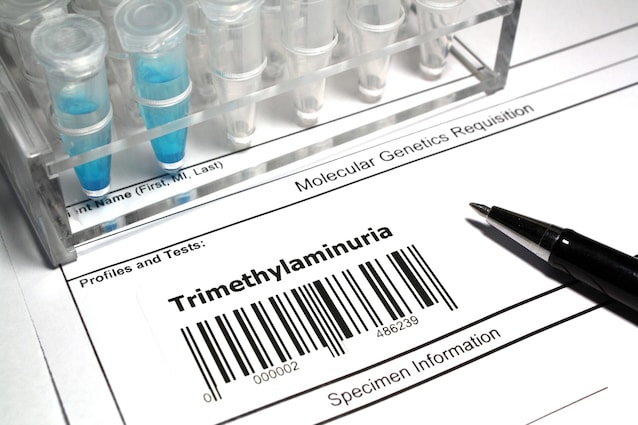
The difficulty of diagnosing TMAU is one of the factors that further increases the psychological burden of those who suffer from it. Requires specialized tests which involve measuring the concentration of TMA and TMAO in the urine, preferably after a meal rich in precursor foods (so if you have to do these analyses, eat plenty of fish). In the most doubtful cases, we resort to genetic analyses looking for mutations in the gene for the enzyme and any mutations.
Management and care for the syndrome
Unfortunately there is no cure yet for fish stink syndrome, but only strategies to reduce odor and improve quality of life. Food interventions are often used, under the supervision of dieticians and nutritionists, reducing foods rich in TMAO, choline and betaine: cuts out fish, eggs, legumes, dairy products and red meat.
In some cases, short cycles are used antibioticssuch as metronidazole, rifaximin and neomycin in an attempt to reduce the bacterial flora, but they are not always effective and the results vary greatly from person to person.
Sources:
Awosika AO, Anastasopoulou C. Trimethylaminuria. Mackay, R. J., McEntyre, C. J., Henderson, C., Lever, M., & George, P. M. (2011). Trimethylaminuria: causes and diagnosis of a socially distressing condition. The Clinical biochemist. Reviews Chhibber-Goel, J., Gaur, A., Singhal, V., Parakh, N., Bhargava, B., & Sharma, A. (2016). The complex metabolism of trimethylamine in humans: endogenous and exogenous sources. Expert reviews in molecular medicine Messenger, J., Clark, S., Massick, S., & Bechtel, M. (2013). A review of trimethylaminuria: (fish odor syndrome). The Journal of clinical and aesthetic dermatology
