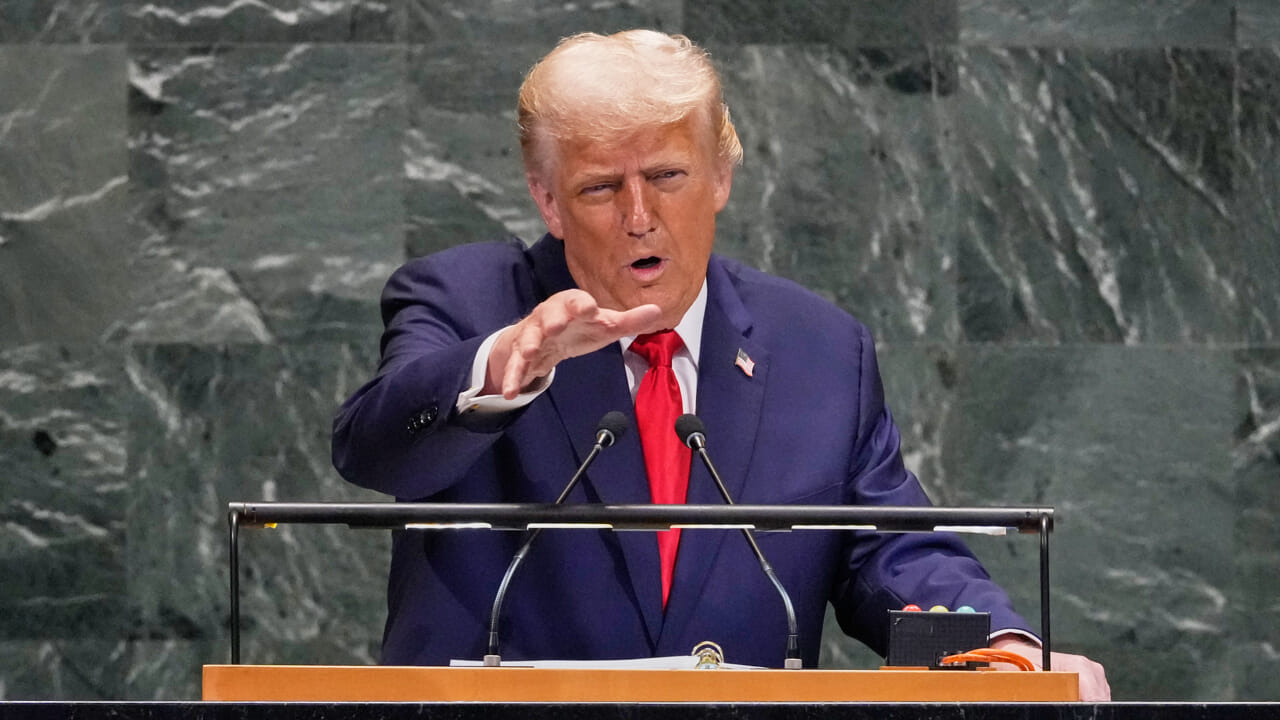
Trump, Europe and Ukraine: the end of a friendship, the beginning of a deal
Trump has accustomed us to sudden changes of attitude. For this reason, it is always better to take his statements with caution and, above all, his real intentions. However, if we consider consolidated some key points of its sorceress policy – the American economic interest as priority, the renunciation of an organic leadership of the West through international institutions, the creation of economic and military “spheres of influence” in which the American one remains dominant, and the respect due only to strong leaders, including him – some conclusion can be drawn.
What will be of NATO
Transatlantic trust is compromised. It remains to be understood if they are a temporary or definitive fracture. Certainly the relationship must be redefined: we are no longer “friends”, because friendship is by definition disinterested. If mutual help has an economic price, then we are only members. And between shareholders, precise guarantees are needed. Hence the idea of ”Rearmeu”: putting Europe in the condition to defend itself even alone, not because Russia will attack tomorrow, but because someone – including Russia – could do it within the next ten years. And it is not certain that America would intervene in our rescue.
Trump’s America does not want to isolate itself. Renounces the guidance of the West, but intends to maintain a geopolitical superiority, intimidating opponents and counting on reliable partners, more for interest than for shared values. The real opponent is China: containing it on the economic and diplomatic level is the central goal. The economy, for Trump, is a weapon. The duties are its favorite artillery, mining resources its strategic objectives. The other actors – Russia, Europe, India – are evaluated by capacity, not for cultural or political affinities. And then classified as partners, customers, suppliers or prey, treated with methods more as a businessman than by diplomat.
Trump is convinced that he can read the counterparties well and knowing how to close business with them. In the first months of his presidency he also applied this logic to foreign policy. The results were mixed: some success, but less than expected. The most evident case is Ukraine.
Trump thought he could impose at least one truce in the conflict. He did not succeed. Initially he attributed the failure to Zelensky’s “stubbornness” and, consequently, took on a hostile attitude towards the Ukrainian president and critical towards the European allies of Kiev. However, his vision was born from a widespread disinformation also in the West: the one that presents Russia as invincible and Ukraine as irrelevant, and which leads to considering a compromise with Putin inevitable.
From this perspective, Zelensky appeared unreasonable and Europe naive, because they insisted on “abstract” concepts such as sovereignty and territorial integrity. International law, in Trump’s logic, is only an artifice of “globalism” used to limit America.
Trump’s perspective
Convinced that he can mediate between Putin and Zelensky, Trump searched a “deal” that brought economic advantages to the United States and, perhaps, the Nobel Peace Nobel Peace. For this he distanced himself from Ukraine, presenting himself as an impartial interlocutor. But here came the first surprise: the European allies did not align as he thought, indeed they made a common forehead with Kiev. An affront that Trump wanted to punish on an economic level, opening the current phase of transatlantic tensions.
Putin, for his part, accepted the game of mediation just to earn time. But he did not take steps back. Trump offered him time and even impossible concessions – Ukrainian territories – but the Russian leader continued the war, rejecting the offer and launching a bankruptcy offensive failed in the field. Russia has undergone heavy losses and Ukraine has hit its oil network hard.
Ukrainian attacks are leaving the Russians without petrol
For Trump it was a lesson: Putin is not the strong and reliable partner who imagined, but a weakened opponent and unable to win. On the contrary, Ukraine has shown resilience and ability, especially with European and born support.
Hence the change of tone. The recent meeting in New York with Zelensky was surprisingly friendly. Trump recognized that “Russia has not been capable” and that Ukraine, with western help, has strength to recover its pre -war boundaries. Now all that remains is to wait for Putin’s answer.
Rain of drones and missiles on Kiev: “Among the most serious attacks”
