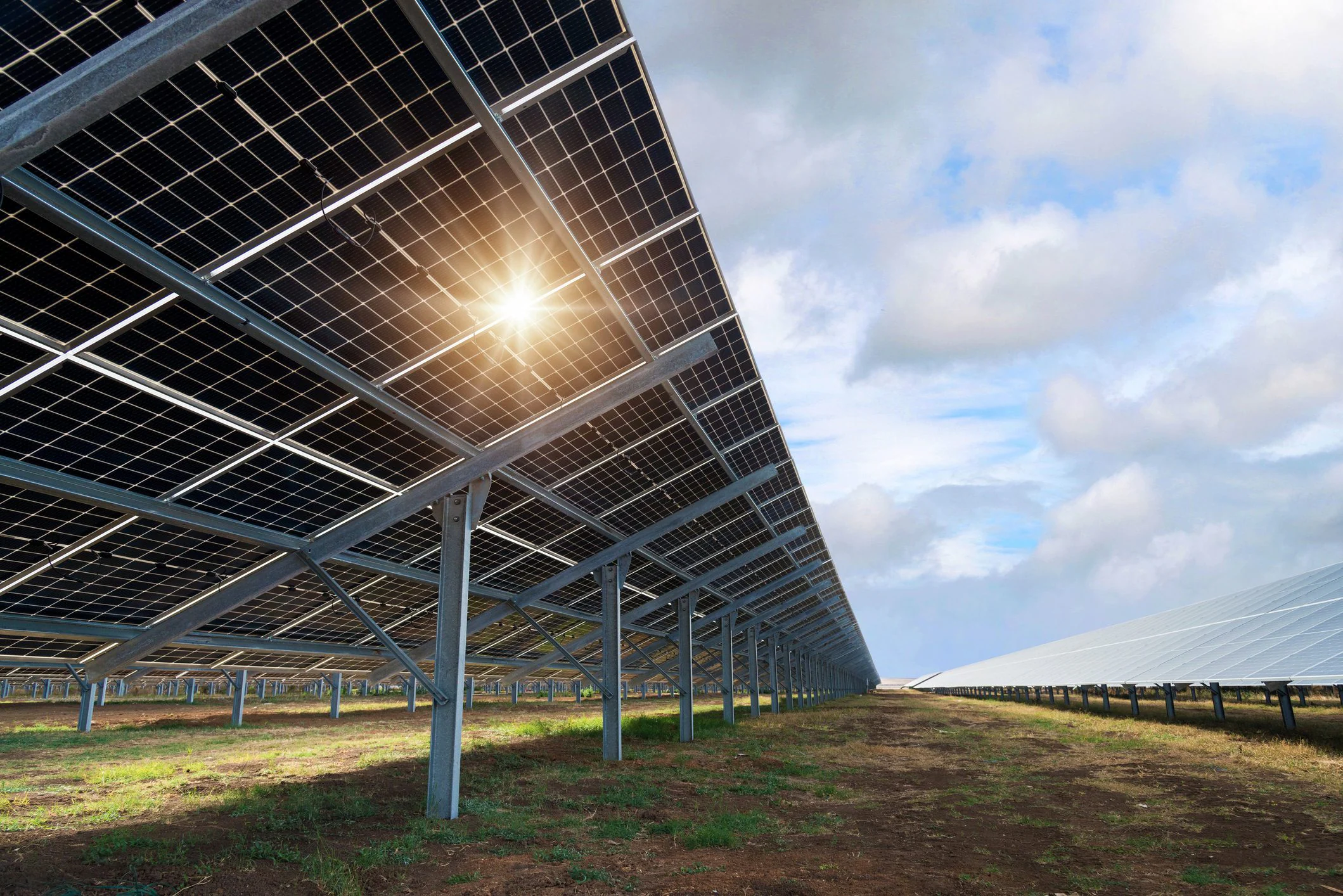
Solar panels bifacial they are modules designed for absorb solar energy from both sides of the photovoltaic cell: unlike classic panels – called single-sided – which capture light only from the side facing the sun, double-sided ones also collect energy from the back side, which usually faces the ground or roof.
This solution created in the 1960s in Japan allows you to exploit not only the direct light but that too reflected from the groundincreasing the electricity produced with the same surface area available for solar panels. Under favorable conditions, scientific studies speak of a maximum efficiency increase of 30% compared to a traditional panel. It’s a promising avenue for reduce solar energy costseven if it is not fully developed to date.
History and technology of bifacial solar panels
Double-sided panels are not a recent invention. The first theoretical proposal dates back to 1960, with a Japanese patent filed by Hiroshi Mori. The first practical demonstrations arrived only in the 1970s: the Soviet space program installed them on board the Salyut 3 and Salyut 5 orbiting stations.
As for the technological aspects, in traditional panels the back is covered with a opaque material which protects the cells but prevents light from passing through it. In the double-sided panelshowever, the back side is made of transparent glass or with a translucent polymerso as to allow the cells to also exploit the light reflected from the underlying surface. In practice, photovoltaic cells are enclosed between two transparent layers rather than between a transparent and an opaque layer. The bifacial cells they can be made with different materials. The most widespread are those al crystalline siliconwhich guarantee high efficiencies and now low costs. They also exist thin film cellslighter and cheaper, organic cellsstill in the experimental phase, e cells based on advanced nanotechnology.
How they work and how much more energy they can produce
Because they take advantage of the light on both sidesphotovoltaic cells produce more energy. Also the hidden side of the panel, therefore, contributes to the generation of electricity. Its power depends on several factors, among the most important thepanel mounting height el’albedothat is, how much light the surface under the panel reflects. If the panel is close to the ground, there is less chance for indirect light rays to reach the back, resulting in lower energy gains. As for the albedo, for example a meadow reflects around the 25% of the lightwhile a white wall at least the 70%.
THE’typical increase in electricity production annual it starts from a few percentage points but can go up up to 30% with highly reflective terrain and raised panels. A study published in Applied Energy confirmed that with a low albedo (25%) the profit remains under 10%, but with 50% albedo and with panels raised one meter it can reach up to 30% of more energy. The same study modeled performance as a function of the orientation of the bifacial panels. With a 50% albedothe vertical bifacial panels directed to east-west and mounted on the ground they produce up to 15% more compared to those oriented north-south and optimally inclined, but only for latitudes lower than 30 degrees.
THE double-sided panels I am therefore a promising alternative to the single-sided onessince they exploit solar radiation both on the front and on the back and produce more energy per unit of occupied surface. Being one emerging technologyhowever, is not yet fully mature and widespread.
